
Stöbern
genialokal zum Startbildschirm hinzufügen
Installieren Sie die genialokal App auf Ihrem Startbildschirm für einen schnellen Zugriff und eine komfortable Nutzung.
Installieren Sie die genialokal App auf Ihrem Startbildschirm für einen schnellen Zugriff und eine komfortable Nutzung.
Tippen Sie einfach auf Teilen:
 Und dann auf "Zum Home-Bildschirm [+]".
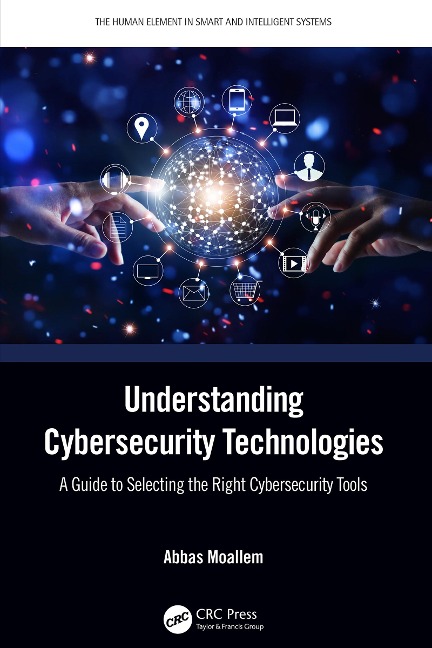
Cyberattacks on enterprises, government institutions, and individuals are exponentially growing. At the same time, the number of companies, both small and large, offering all types of solutions has been increasing too. Since companies rely on technological solutions to protect themselves against cyberattacks, understanding and selecting the right solutions among those offered presents a significant challenge for professionals, company executives, and newcomers to the cybersecurity field. FEATURES - Presents descriptions for each type of cybersecurity technology and their specifications - Explains applications, usages, and offers case studies to enhance comprehension - Offers an easy-to-understand classification of existing cybersecurity technologies - Provides an understanding of the technologies without getting lost in technical details - Focuses on existing technologies used in different solutions, without focusing on the companies that offer these technologies This book is intended to help all professionals new to cybersecurity, students, and experts to learn or educate their audiences on the foundations of the available solutions.
Dr. Abbas Moallem is a consultant and adjunct professor at San Jose State University, California where he teaches human-computer interaction, cybersecurity, information visualization and human factors. He is the program chair of HCI-CPT, the International Conference on HCI for Cybersecurity, Privacy and Trust. Dr. Moallem is the editor of "HCI in cybersecurity Handbook" and the author of "Cybersecurity Awareness Among College Students and Faculty". He is also the editor of a book series from CRC PRESS called "The Human Element in Smart and Intelligent Systems Series".
1. Cybersecurity Technologies Classification 2. Encryption 3. Authentication 4. Biometrics 5. Firewall Technologies 6. Virus Detection 7. Phishing Detection 8. Endpoint Protection 9. Malware Protection Technology 10. The Internet of Things (IoT) 11. Network Security 12. Location Tracking 13. Surveillance 14. Insider Threat Protection 15. Intrusion Detection 16. Vulnerability Scanning 17. Penetration Testing 18. Conclusion
Dieses eBook wird im PDF-Format geliefert und ist mit einem Adobe Kopierschutz (DRM) versehen. Sie können dieses eBook mit allen Geräten lesen, die das PDF-Format und den Adobe Kopierschutz (DRM) unterstützen.
Zum Beispiel mit den folgenden Geräten:
• tolino Reader
Laden Sie das eBook direkt über den Reader-Shop auf dem tolino herunter oder übertragen Sie das eBook auf Ihren tolino mit einer kostenlosen Software wie beispielsweise Adobe Digital Editions.
• Sony Reader & andere eBook Reader
Laden Sie das eBook direkt über den Reader-Shop herunter oder übertragen Sie das eBook mit der kostenlosen Software Sony READER FOR PC/Mac oder Adobe Digital Editions auf ein Standard-Lesegeräte mit epub- und Adobe DRM-Unterstützung.
• Tablets & Smartphones
Möchten Sie dieses eBook auf Ihrem Smartphone oder Tablet lesen, finden Sie hier unsere kostenlose Lese-App für iPhone/iPad und Android Smartphone/Tablets.
• PC & Mac
Lesen Sie das eBook direkt nach dem Herunterladen mit einer kostenlosen Lesesoftware, beispielsweise Adobe Digital Editions, Sony READER FOR PC/Mac oder direkt über Ihre eBook-Bibliothek in Ihrem Konto unter „Meine eBooks“ - „online lesen“.
Schalten Sie das eBook mit Ihrer persönlichen Adobe ID auf bis zu sechs Geräten gleichzeitig frei.
Bitte beachten Sie, dass die Kindle-Geräte das Format nicht unterstützen und dieses eBook somit nicht auf Kindle-Geräten lesbar ist.