Und dann auf "Zum Home-Bildschirm [+]".

Stöbern
genialokal zum Startbildschirm hinzufügen
Installieren Sie die genialokal App auf Ihrem Startbildschirm für einen schnellen Zugriff und eine komfortable Nutzung.
Installieren Sie die genialokal App auf Ihrem Startbildschirm für einen schnellen Zugriff und eine komfortable Nutzung.
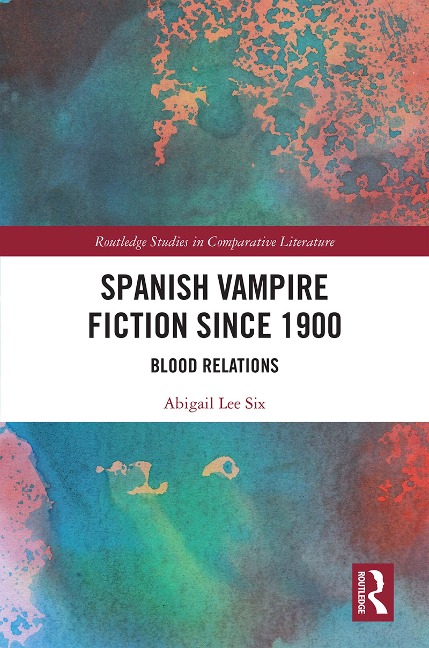
Spanish Vampire Fiction since 1900: Blood Relations, as that subtitle suggests, makes the case for considering Spanish vampire fiction an index of the complex relationship between intercultural phenomena and the specifics of a time, place, and author. Supernatural beings that drink blood are found in folklore worldwide, Spain included, and writers ranging from the most canonical to the most marginal have written vampire stories, Spanish ones included too. When they do, they choose between various strategies of characterization or blend different ones together. How much will they draw on conventions of the transnational corpus? Are their vampires to be local or foreign; alluring or repulsive; pitiable or pure evil, for instance? Decisions like these determine the messages texts carry and, when made by Spanish authors, may reveal aspects of their culture with striking candidness, perhaps because the fantasy premise seems to give the false sense of security that this is harmless escapism and, since metaphorical meaning is implicit, it is open to argument and, if necessary, denial. Part I gives a chronological text-by-text appreciation of all the texts included in this volume, many of them little known even to Hispanists and few if any to non-Spanish Gothic scholars. It also provides a plot summary and brief background on the author of each. These entries are free-standing and designed to be consulted for reference or read together to give a sense of the evolution of the paradigm since 1900. Part II considers the corpus comparatively, first with regard to its relationship to folklore and religion and then contagion and transmission. Spanish Vampire Fiction since 1900: Blood Relations will be of interest to Anglophone Gothic scholars who want to develop their knowledge of the Spanish dimension of the mode and to Hispanists who want to look at some canonical texts and authors from a new perspective but also gain an awareness of some interesting and decidedly non-canonical material.
Abigail Lee Six is Professor of Spanish at Royal Holloway, University of London, UK. Among the first Hispanists to argue for taking the Gothic beyond a narrow chronological definition, The Gothic Fiction of Adelaida García Morales: Haunting Words and Gothic Terrors: Incarceration, Duplication, and Bloodlust in Spanish Narrative showcase her research.
Acknowledgements Introduction Part I: Text-by-Text Analysis 1. Ramón del Valle-Inclán, "Beatriz/Satanás" 2. Emilia Pardo Bazán, "Vampiro" 3. Antonio de Hoyos y Vinent, "Una hora de amor" and "El señor Cadáver y le señorita Vampiro" 4. Carmen de Burgos, La mujer fría 5. Wenceslao Fernández Flórez, "El claro del bosque" 6. Alfonso Sastre, "Las noches del Espíritu Santo" 7. Juan G. Atienza, "Sangre fresca para el muerto" 8. Alfons Cervera, "Historia de amor" 9. Adelaida García Morales, La lógica del vampiro 10. Mercedes Abad, Sangre 11. Javier García Sánchez, Ella, Drácula: Erzsébet Báthory 12. Clara Tahoces, Gothika 13. Santiago Exímeno, "Al caer la noche" 14. David Jasso, "Víctimas inocentes" 15. Alfredo Álamo, "El hombre de la pala" 16. Elia Barceló, "La belle dame sans merci" 17. Nuria C. Botey, "Viviendo con el tío Roy" 18. Miguel Puente Molins, "Caries" 19. Juan Ignacio Carrasco, Entre nosotros 20. José de la Rosa, Vampiro 21. Marc R.Soto, "Siempre en mi recuerdo" 22. José María Tamparillas, "El sabor de la buena tierra", "Sangre de mi sangre, carne de mi carne" and "La vieja, la muy vieja Betty" 23. Lorenzo Fernández Bueno, El vampiro de Silesia 24. Carlos Molinero, Verano de miedo 25. Gema del Prado Marugán, "Comer con los ojos" 26. Edgar Sega, "Los dos mundos de Lord Barrymore" Part II: Comparative Analysis27. Folklore and Religion 28. Contagion and Transmission Conclusion Bibliography Index
Dieses eBook wird im PDF-Format geliefert und ist mit einem Adobe Kopierschutz (DRM) versehen. Sie können dieses eBook mit allen Geräten lesen, die das PDF-Format und den Adobe Kopierschutz (DRM) unterstützen.
Zum Beispiel mit den folgenden Geräten:
• tolino Reader
Laden Sie das eBook direkt über den Reader-Shop auf dem tolino herunter oder übertragen Sie das eBook auf Ihren tolino mit einer kostenlosen Software wie beispielsweise Adobe Digital Editions.
• Sony Reader & andere eBook Reader
Laden Sie das eBook direkt über den Reader-Shop herunter oder übertragen Sie das eBook mit der kostenlosen Software Sony READER FOR PC/Mac oder Adobe Digital Editions auf ein Standard-Lesegeräte mit epub- und Adobe DRM-Unterstützung.
• Tablets & Smartphones
Möchten Sie dieses eBook auf Ihrem Smartphone oder Tablet lesen, finden Sie hier unsere kostenlose Lese-App für iPhone/iPad und Android Smartphone/Tablets.
• PC & Mac
Lesen Sie das eBook direkt nach dem Herunterladen mit einer kostenlosen Lesesoftware, beispielsweise Adobe Digital Editions, Sony READER FOR PC/Mac oder direkt über Ihre eBook-Bibliothek in Ihrem Konto unter „Meine eBooks“ - „online lesen“.
Schalten Sie das eBook mit Ihrer persönlichen Adobe ID auf bis zu sechs Geräten gleichzeitig frei.
Bitte beachten Sie, dass die Kindle-Geräte das Format nicht unterstützen und dieses eBook somit nicht auf Kindle-Geräten lesbar ist.