
Stöbern
genialokal zum Startbildschirm hinzufügen
Installieren Sie die genialokal App auf Ihrem Startbildschirm für einen schnellen Zugriff und eine komfortable Nutzung.
Installieren Sie die genialokal App auf Ihrem Startbildschirm für einen schnellen Zugriff und eine komfortable Nutzung.
Tippen Sie einfach auf Teilen:
 Und dann auf "Zum Home-Bildschirm [+]".
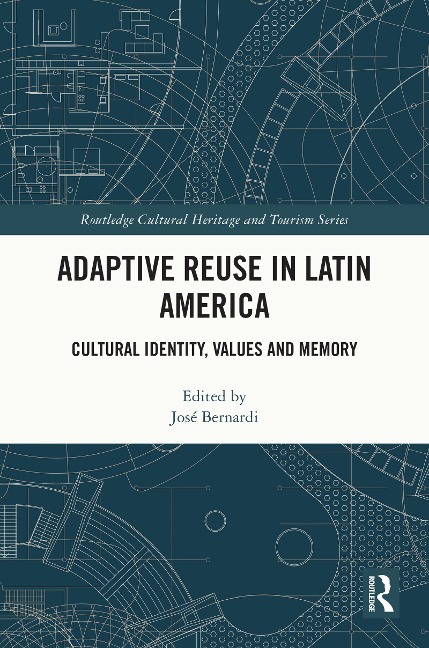
This book seeks to explore the theoretical and architectural connections between memory, values, cultural identity, and adaptive reuse in Latin America. It does so by critically analyzing ideas and works within the context from where they emerge. With rich and layered historic centers, a wealth of colonial and 19th-century buildings, and the heritage from the modern era, Latin America offers a unique architectural patrimony and its contribution and impact on contemporary culture and architecture still require critical study and discussion. The chapters of this timely book consider the conflicted relationship between colonialism, native cultures, and immigration. It also explores the connections between modern projects and national identity, and contemporary interventions serving the needs of diverse societies while being cultural receptacles of memory. While most books on adaptive reuse focus on the larger general concepts, different technical approaches, and case studies, this book will contribute to the study of adaptive reuse moving away from Europe and North America, focusing instead on cases in Brazil, Mexico, Argentina, Ecuador, and Peru. This book is an important resource for researchers and students in the area of architecture, cultural, global, and design studies, heritage, geography, sociology, and history.
José Bernardi is associate professor in The Design School at The Herberger Institute for Design and the Arts at Arizona State University. His work is focused on modern and contemporary design and architecture in Latin America.
Introduction: Expanding and diversifying the field of adaptive reuseJosé Bernardi Topic I Whose Memories, whose values? The search for identity 1. Whose memories, whose values? Reflecting on the spatial history of the Americas. Fernando Luiz Lara 2. Open Work as a seed for change in adaptive reuse Ana Etkin 3. Essential Documentation: Lucio Costa and the Modernist MissionaryCatherine Seavitt Nordenson 4. From a project of modernization to a strategy of community building Monica Bertolino Topic II Other Modernities 5. Housing Policies in Brazil and Dwellers perspectives, a Comparative Study Ana Paula Koury 6. Renovation and reuse in Brazil: Cases in Sao Paulo, Bahia and Porto Alegre Marta Peixoto 7. Adaptive Reuse in Brazil: Lessons from Lina Bo Bardi Isabella Trindade, and Ana Luisa Rolim 8. Resilient spaces: modern and historic legacy in Brazilian built heritage Cláudia Costa Cabral Topic III Perpetual Transformations: Adaptive Reuse in Mexico City 9. Mexican Iconoclasms: From the Post-Revolutionary Era to the 1980s Cristóbal Jácome-Moreno 10. Exhibiting Contemporary Art in a Colonial Context at the Ex Santa Teresa in Mexico City Derek Burdette 11. Cosmologies of Ruins and Ruination: Infrastructures and the Anthropocene Christopher Morehart Topic IV Places of Defiance and Resilience 12. How body memory "actualizes" to the architectural heritage the Latin American dwelling as the new public space Diana Maldonado 13. Hidden Landscapes of Palimpsestic Urban Memories: The Case of Lima, Peru Kathryn Golda- Pongratz 14. Reversing neo-Plantations: From Guayusa Monocultures to Chakras and Managed Forests in Mushullakta Ana María Durán Calisto 15. Matachín Codex Complex Cristóbal Martínez
Dieses eBook wird im PDF-Format geliefert und ist mit einem Adobe Kopierschutz (DRM) versehen. Sie können dieses eBook mit allen Geräten lesen, die das PDF-Format und den Adobe Kopierschutz (DRM) unterstützen.
Zum Beispiel mit den folgenden Geräten:
• tolino Reader
Laden Sie das eBook direkt über den Reader-Shop auf dem tolino herunter oder übertragen Sie das eBook auf Ihren tolino mit einer kostenlosen Software wie beispielsweise Adobe Digital Editions.
• Sony Reader & andere eBook Reader
Laden Sie das eBook direkt über den Reader-Shop herunter oder übertragen Sie das eBook mit der kostenlosen Software Sony READER FOR PC/Mac oder Adobe Digital Editions auf ein Standard-Lesegeräte mit epub- und Adobe DRM-Unterstützung.
• Tablets & Smartphones
Möchten Sie dieses eBook auf Ihrem Smartphone oder Tablet lesen, finden Sie hier unsere kostenlose Lese-App für iPhone/iPad und Android Smartphone/Tablets.
• PC & Mac
Lesen Sie das eBook direkt nach dem Herunterladen mit einer kostenlosen Lesesoftware, beispielsweise Adobe Digital Editions, Sony READER FOR PC/Mac oder direkt über Ihre eBook-Bibliothek in Ihrem Konto unter „Meine eBooks“ - „online lesen“.
Schalten Sie das eBook mit Ihrer persönlichen Adobe ID auf bis zu sechs Geräten gleichzeitig frei.
Bitte beachten Sie, dass die Kindle-Geräte das Format nicht unterstützen und dieses eBook somit nicht auf Kindle-Geräten lesbar ist.