Und dann auf "Zum Home-Bildschirm [+]".

Stöbern
genialokal zum Startbildschirm hinzufügen
Installieren Sie die genialokal App auf Ihrem Startbildschirm für einen schnellen Zugriff und eine komfortable Nutzung.
Installieren Sie die genialokal App auf Ihrem Startbildschirm für einen schnellen Zugriff und eine komfortable Nutzung.
Ihr gewünschter Artikel ist in 0 Buchhandlungen vorrätig - wählen Sie hier eine Buchhandlung in Ihrer Nähe aus:

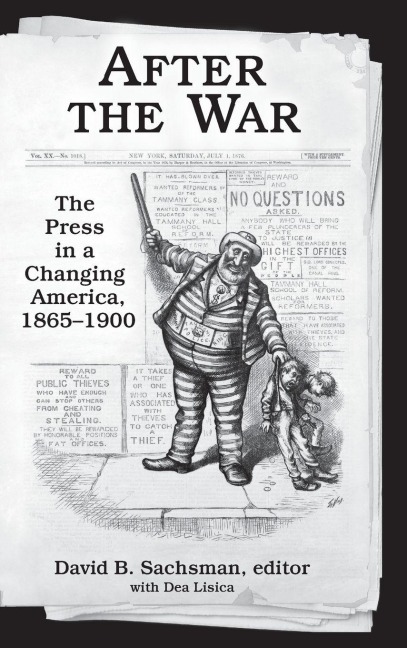
After the Civil War, the United States became a nation of industrialized cities crisscrossed by a vast network of railroads. The changes in America were so dramatic that they transformed the social structure of the country and the nature of journalism.
David B. Sachsman holds the George R. West, Jr. Chair of Excellence in Communication and Public Affairs at the University of Tennessee at Chattanooga, where he also serves as director of the annual Symposium on the 19th Century Press, the Civil War, and Free Expression. He is the editor of A Press Divided: Newspaper Coverage of the Civil War (2014) and Sensationalism: Murder, Mayhem, Mudslinging, Scandals, and Disasters in 19th-Century Reporting (2013).
List of Images, Illustrations, and Tables Preface - David B. Sachsman Introduction - David B. Sachsman Part I. Press, Politics, and Restoration 1 Rebel Yells and Idle Vaporings: The Lost Cause Rises and Dissipates in the Chicago Tribune, the Atlanta Constitution, and the New York Times, 1860-1914Thomas C. Terry and Donald L. Shaw 2 The New Departure: The Northern Democratic Press and Reconstruction, 1868-1876Erik B. Alexander 3 The Forgotten Issue: The Little Bighorn and the Election of 1876James E. Mueller 4 Thomas Nast, Harper's Weekly, and the Election of 1876William E. Huntzicker 5 The President's Private Life: A New Explanation for "The Right to Privacy"Patricia Ferrier 6 "Always to be the 'Tocsin'": Josephus Daniels, the News & Observer, and the Rise of Jim CrowThomas C. Terry and Donald L. Shaw Part II. Journalism in the Gilded Age: Entertaining the Masses, Serving the Public, and Raking the Muck 7 Haunted Times? Ghosts in Crime Stories Printed by the New York Times, 1851-1901Paulette D. Kilmer 8 The Rocky Mountains, Yosemite, and Other Natural Wonders: Western Landscape in Travel Correspondence of the Post-Civil War PressKatrina J. Quinn 9 Consuelo, the Duke, and the Press: Celebrity and Sensationalism in the Gilded AgeWallace B. Eberhard 10 Are You Going to the Hanging? Georgia Editors and the Movement to End Public HangingsWallace B. Eberhard 11 Abolishing Wage Slavery in the Gilded Age: John Swinton and the American Labor Movement'sMemory of the Civil WarMaryan Soliman 12 Babies as Breadwinners: Child Labor Prior to Federal Reform in the Industrial North and theIndustrializing South, 1890-1899Amber Welch Part III. Images of Immigrants, Race, and Gender 13 Sickness from Abroad: How Media Framing of New Immigrants and Disease Fueled the Immigration Debate, 1891-1893Harriet Moore 14 Changes in the News: Characterizing Immigration, 1850-1890Timothy L. Moran 15 Riot, Race, and Placing Blame: Press Coverage of the 1885 Rock Springs Chinese MassacreRich Shumate16 "Black Fiends" and "Atrocious Murders": Redefining "Sensationalism" through Coverage of Interracial Crime in the Nineteenth-Century PressLee Jolliffe 17 Ida B. Wells and Coverage of Lynchings and Antilynching Efforts in Selected MainstreamNewspapers, 1892-1894Aleen J. Ratzlaff 18 Custer and the "Savages": Newspaper Coverage of the Indian War, Summer 1876Thomas C. Terry and Donald L. Shaw 19 A Moral Panic on the Plains? Press Culpability and the 1890 Massacre at Wounded KneeBrian Gabrial 20 Why Women Dared to Make Journalism Their CallingPaulette D. Kilmer 21 "They'd Vote for What is Pure and Good": Representations of Women in the Gilded Age PressJennifer E. Moore 22 The New Woman as Athlete: Coverage of the Sporting Woman in the Gilded Age PressAmber Roessner About the Editor Contributors Index