
Stöbern
genialokal zum Startbildschirm hinzufügen
Installieren Sie die genialokal App auf Ihrem Startbildschirm für einen schnellen Zugriff und eine komfortable Nutzung.
Installieren Sie die genialokal App auf Ihrem Startbildschirm für einen schnellen Zugriff und eine komfortable Nutzung.
Tippen Sie einfach auf Teilen:
 Und dann auf "Zum Home-Bildschirm [+]".
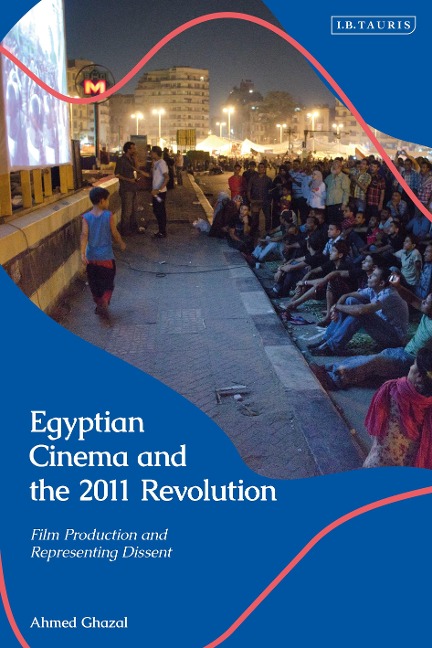
Egypt's film industry is the largest in the Middle East, with an output that spreads across the region and the world. In the run-up to and throughout the 2011 Revolution, a complex relationship formed between the industry and the people's uprising. Both a form of political expression and a documentation of historical events, 'revolutionary' film techniques have contributed to the cultural memory of 2011. At the same time, these films and their makers have been the target of increasing state control and intervention.
Ahmed Ghazal, drawing upon his own background in film-making, looks at the way in which Egyptian film has shaped, and been shaped by, the events leading up to and beyond Egypt's 2011 revolution. Drawing on interviews with protagonists in the industry, analysis of films, and archival research, he analyses the critical issues affecting the political economy of the industry. He also explores the technological developments of independent productions and the cinematic themes of dictatorship, poverty, corruption and police brutality that have accompanied the people's calls for freedom - and the counterrevolution that has tried to suppress them.
Ahmed Ghazal was awarded a PhD in Media and Communication Studies from the University of Auckland, New Zealand, in 2018. He has an extensive filmography, including having directed Bey'oulo (2011), winner of the Tropfest Arabia Short Film Festival.
1. Introduction
2. International Cinema and Revolutions
3. Historicising Egyptian Cinema
4. The Crisis of the Egyptian Film Industry
5. Representing the National Crisis: Films Before the Revolution
6. Constructing Cultural Memory: Fiction and Documentary Films
7. Technology and Revolution: The Continuity of 'Independent' Films
8. Conclusion
9. Bibliography
10. Index
Dieses eBook wird im PDF-Format geliefert und ist mit einem Adobe Kopierschutz (DRM) versehen. Sie können dieses eBook mit allen Geräten lesen, die das PDF-Format und den Adobe Kopierschutz (DRM) unterstützen.
Zum Beispiel mit den folgenden Geräten:
• tolino Reader
Laden Sie das eBook direkt über den Reader-Shop auf dem tolino herunter oder übertragen Sie das eBook auf Ihren tolino mit einer kostenlosen Software wie beispielsweise Adobe Digital Editions.
• Sony Reader & andere eBook Reader
Laden Sie das eBook direkt über den Reader-Shop herunter oder übertragen Sie das eBook mit der kostenlosen Software Sony READER FOR PC/Mac oder Adobe Digital Editions auf ein Standard-Lesegeräte mit epub- und Adobe DRM-Unterstützung.
• Tablets & Smartphones
Möchten Sie dieses eBook auf Ihrem Smartphone oder Tablet lesen, finden Sie hier unsere kostenlose Lese-App für iPhone/iPad und Android Smartphone/Tablets.
• PC & Mac
Lesen Sie das eBook direkt nach dem Herunterladen mit einer kostenlosen Lesesoftware, beispielsweise Adobe Digital Editions, Sony READER FOR PC/Mac oder direkt über Ihre eBook-Bibliothek in Ihrem Konto unter „Meine eBooks“ - „online lesen“.
Schalten Sie das eBook mit Ihrer persönlichen Adobe ID auf bis zu sechs Geräten gleichzeitig frei.
Bitte beachten Sie, dass die Kindle-Geräte das Format nicht unterstützen und dieses eBook somit nicht auf Kindle-Geräten lesbar ist.