Und dann auf "Zum Home-Bildschirm [+]".

Stöbern
genialokal zum Startbildschirm hinzufügen
Installieren Sie die genialokal App auf Ihrem Startbildschirm für einen schnellen Zugriff und eine komfortable Nutzung.
Installieren Sie die genialokal App auf Ihrem Startbildschirm für einen schnellen Zugriff und eine komfortable Nutzung.
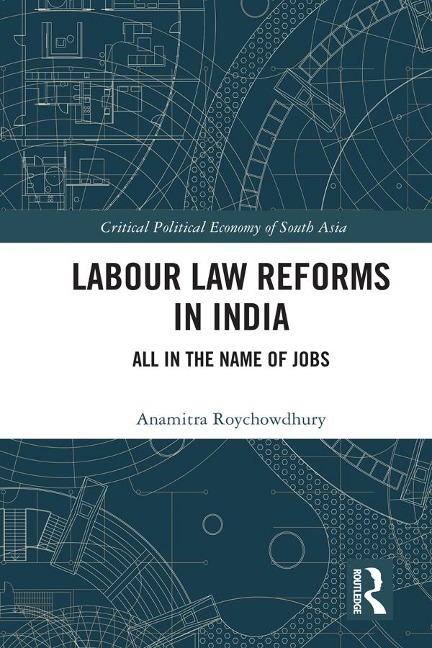
Labour market flexibility is one of the most closely debated public policy issues in India. This book provides a theoretical framework to understand the subject, and empirically examines to what extent India's 'jobless growth' may be attributed to labour laws. There is a pervasive view that the country's low manufacturing base and inability to generate jobs is primarily due to rigid labour laws. Therefore, job creation is sought to be boosted by reforming labour laws. However, the book argues that if labour laws are made flexible, then there are adverse consequences for workers: dismantled job security weakens workers' bargaining power, incapacitates trade union movement, skews class distribution of output, dilutes workers' rights, and renders them vulnerable. The book: - identifies and critically examines the theory underlying the labour market flexibility (LMF) argument - employs innovative empirical methods to test the LMF argument - offers an overview of the organised labour market in India - comprehensively discusses the proposed/instituted labour law reforms in the country - contextualises the LMF argument in a macroeconomic setting - discusses the political economy of labour law reforms in India. This book will interest scholars and researchers in economics, development studies, and public policy as well as economists, policymakers, and teachers of human resource management.
Anamitra Roychowdhury teaches economics at Jawaharlal Nehru University, New Delhi, India. Previously, he taught at St. Stephen's College, University of Delhi. He completed his doctoral studies at Jawaharlal Nehru University and his areas of interest include development economics, labour economics, Indian economy and macroeconomics. He has published a number of research articles in many renowned international and national journals including International Labour Review, Agrarian South: Journal of Political Economy, Economic and Political Weekly and Social Scientist. His commentaries on contemporary economic issues have appeared in Global Labour Column, Mainstream and Macroscan.
List of Figures. List of Tables. Foreword. Acknowledgements. List of Abbreviations. Introduction 1. Present Status of Labour Laws in India and their Proposed Amendments 2. A Critical Examination of the Labour Market Flexibility Debate in India 3. Explanation of Jobless Growth in Indian Manufacturing and Trends in Labour Conditions 4. Identifying the Theoretical Structure Underlying Labour Market Flexibility and its Critical Examination 5. Some Market Clearing Models on Labour Market Flexibility 6. Effectiveness of Labour Market Flexibility in Face of Effective Demand Constraint 7. Labour Market Flexibility in an Open Economy Context 8. Concluding Remarks: Labour Market Flexibility and the Proposal for Laissez-Faire Capitalism. Bibliography
Dieses eBook wird im PDF-Format geliefert und ist mit einem Adobe Kopierschutz (DRM) versehen. Sie können dieses eBook mit allen Geräten lesen, die das PDF-Format und den Adobe Kopierschutz (DRM) unterstützen.
Zum Beispiel mit den folgenden Geräten:
• tolino Reader
Laden Sie das eBook direkt über den Reader-Shop auf dem tolino herunter oder übertragen Sie das eBook auf Ihren tolino mit einer kostenlosen Software wie beispielsweise Adobe Digital Editions.
• Sony Reader & andere eBook Reader
Laden Sie das eBook direkt über den Reader-Shop herunter oder übertragen Sie das eBook mit der kostenlosen Software Sony READER FOR PC/Mac oder Adobe Digital Editions auf ein Standard-Lesegeräte mit epub- und Adobe DRM-Unterstützung.
• Tablets & Smartphones
Möchten Sie dieses eBook auf Ihrem Smartphone oder Tablet lesen, finden Sie hier unsere kostenlose Lese-App für iPhone/iPad und Android Smartphone/Tablets.
• PC & Mac
Lesen Sie das eBook direkt nach dem Herunterladen mit einer kostenlosen Lesesoftware, beispielsweise Adobe Digital Editions, Sony READER FOR PC/Mac oder direkt über Ihre eBook-Bibliothek in Ihrem Konto unter „Meine eBooks“ - „online lesen“.
Schalten Sie das eBook mit Ihrer persönlichen Adobe ID auf bis zu sechs Geräten gleichzeitig frei.
Bitte beachten Sie, dass die Kindle-Geräte das Format nicht unterstützen und dieses eBook somit nicht auf Kindle-Geräten lesbar ist.