Und dann auf "Zum Home-Bildschirm [+]".

Stöbern
genialokal zum Startbildschirm hinzufügen
Installieren Sie die genialokal App auf Ihrem Startbildschirm für einen schnellen Zugriff und eine komfortable Nutzung.
Installieren Sie die genialokal App auf Ihrem Startbildschirm für einen schnellen Zugriff und eine komfortable Nutzung.
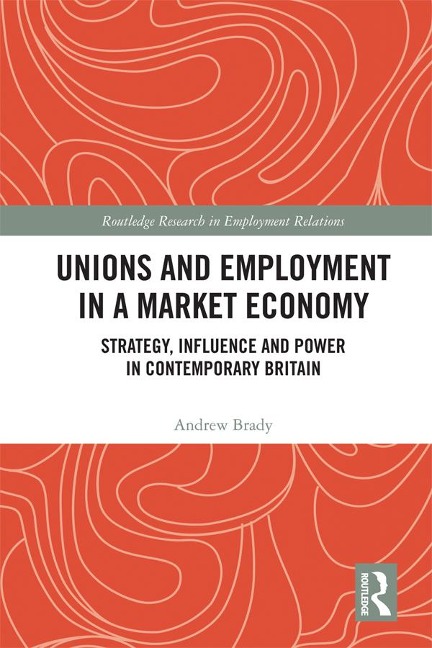
Due to the sharp declines in trade union density and collective bargaining coverage post-1979, the shift by trade unions towards political action has had significant implications for employment relations regulation in contemporary Britain. Yet, there remains insufficient discussion of the factors of influence affecting changes in the political action process from a historical and contemporary perspective. Unions and Employment in a Market Economy will evidence how trade unions were able to offset environmental constraints through a progressive focus on political action, despite diminished power in the Labour Party's structures and the wider economy. The book presents four legislative events categorised as functional equivalents enacted in two different periods of Labour governance (1974-79 and 1997-2010). The selected events are the Social Contract (1974-79), National Minimum Wage (1998), Employment Relations Act (1999) and the Warwick Agreement (2004). The book's findings lend credence to the proposition that in a liberal market economy there is a valuable dividend associated with trade union political exchange through the Labour Party.
Andrew Brady is an academic with a PhD from the University of Strathclyde and works in the British labour movement.
List of Tables List of Boxes Preface Chapter 1: Trade Union Strategy, Influence and Power in Contemporary Britain: An Introduction Introduction Varieties of Capitalism Deconstruction and Reconstruction New Labour: Continuation of neoliberalism or breaking with the past? Labour Party: A Channel for Trade Union Political Action Trade Union Leadership, Strategy and Structure Conclusion Chapter 2: The Social Contract (1974-79) Introduction Donovan Commission and In Place of Strife The Industrial Relations Act (1971) The Social Contract in Formation The Social Contract in Operation The Winter of Discontent 1978/9 Evaluation and Reflections Chapter 3: Employment Relations Reform under New Labour: Context, Continuity and Change Introduction Conservative Liberal Market Reform Political Action: New Mechanisms Ideological Disunity, Space and Convergence: Opposition Years Progressive Centralisation Formal to Informal Processes 1993/7 Political Fund Ballots New Policy-Making Processes Agency and Diminishing Trust Chapter 4: The National Minimum Wage (1998) Introduction The Development of the NMW The Low Pay Commission Policy contestation and division Evaluation and Reflections Chapter 5: The Employment Relations Act (1999) Introduction Fairness at Work (May 1998) Employment Relations Bill ERA (1999) Evaluation and Reflections Chapter 6: The Warwick Agreement (2004) Introduction Exeter Policy Forum (2000) Leadership Dynamics The Big Four Institutional Reconfiguration: TULO The Agreement Implementation Evaluation and Reflections Chapter 7: Strategy, Influence and Power: lessons from history Introduction Structural Context: shifting fronts Degree of Coordination Transition to Informality Concluding Observations Chapter 8: Conclusion Leadership and Strategic Choice Political Action and Electoral Reform New Structural Pressures Appendix A: List of Interviews as Introduced Appendix B: Key provisions of the Employment Act 2002 Appendix C: Key Warwick Agreement pledges Glossary Index
Dieses eBook wird im PDF-Format geliefert und ist mit einem Adobe Kopierschutz (DRM) versehen. Sie können dieses eBook mit allen Geräten lesen, die das PDF-Format und den Adobe Kopierschutz (DRM) unterstützen.
Zum Beispiel mit den folgenden Geräten:
• tolino Reader
Laden Sie das eBook direkt über den Reader-Shop auf dem tolino herunter oder übertragen Sie das eBook auf Ihren tolino mit einer kostenlosen Software wie beispielsweise Adobe Digital Editions.
• Sony Reader & andere eBook Reader
Laden Sie das eBook direkt über den Reader-Shop herunter oder übertragen Sie das eBook mit der kostenlosen Software Sony READER FOR PC/Mac oder Adobe Digital Editions auf ein Standard-Lesegeräte mit epub- und Adobe DRM-Unterstützung.
• Tablets & Smartphones
Möchten Sie dieses eBook auf Ihrem Smartphone oder Tablet lesen, finden Sie hier unsere kostenlose Lese-App für iPhone/iPad und Android Smartphone/Tablets.
• PC & Mac
Lesen Sie das eBook direkt nach dem Herunterladen mit einer kostenlosen Lesesoftware, beispielsweise Adobe Digital Editions, Sony READER FOR PC/Mac oder direkt über Ihre eBook-Bibliothek in Ihrem Konto unter „Meine eBooks“ - „online lesen“.
Schalten Sie das eBook mit Ihrer persönlichen Adobe ID auf bis zu sechs Geräten gleichzeitig frei.
Bitte beachten Sie, dass die Kindle-Geräte das Format nicht unterstützen und dieses eBook somit nicht auf Kindle-Geräten lesbar ist.