Und dann auf "Zum Home-Bildschirm [+]".

Stöbern
genialokal zum Startbildschirm hinzufügen
Installieren Sie die genialokal App auf Ihrem Startbildschirm für einen schnellen Zugriff und eine komfortable Nutzung.
Installieren Sie die genialokal App auf Ihrem Startbildschirm für einen schnellen Zugriff und eine komfortable Nutzung.

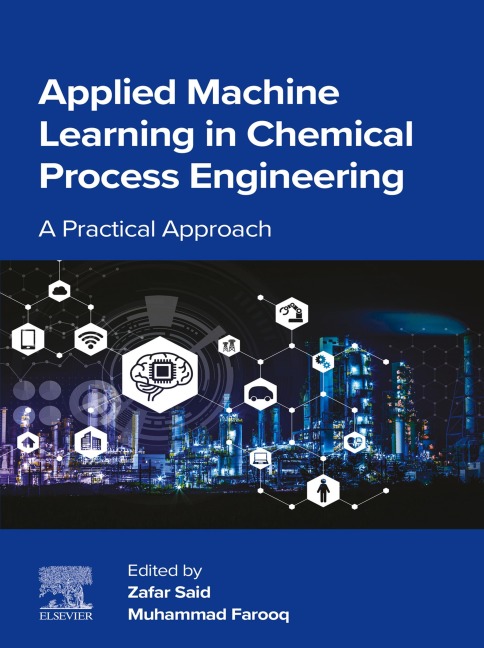
As machine learning capabilities and functionality increases, more industry experts and researchers are integrating applied machine learning into their research. Applied Machine Learning in Chemical Process Engineering: A Practical Approach serves as a comprehensive guide to equip the reader with the fundamental theory, practical guidance, methodologies, experimental design and troubleshooting knowledge needed to integrate machine learning into their processes. This book offers a comprehensive overview of all aspects of machine learning, from inception to integration that will allow readers from any scientific discipline to begin to examine the capabilities of machine learning. This book will then build upon this overview to offer worked examples and case studies, alongside practical methods-based guidance to walk the reader through integrating machine learning end-to-end. Finally, this book will offer critical discussion of concepts that are interwoven into the ever-evolving principles of machine learning such as ethics, safety and culpability that are crucial when working with machine learning. Applied Machine Learning in Chemical Process Engineering: A Practical Approach will be an invaluable resource for researchers, professionals in industry and academia, and students at graduate level and above who work in chemical engineering and are looking to automate, optimize or intensify their chemical processes. This book will also help professionals in other disciplines and industries looking into integrate machine learning into their work, such as though looking to scale up their processes to an industrial scale or conduct novel research. - Provides an integrated view of chemical and process engineering basics and machine learning - Provides a complete reference on machine learning foundations and chemical and process engineering applications - Includes real-world worked examples and case studies to show how machine learning techniques are applied in process design, optimization, and control - Evaluates the difficulties, ethical implications, and prospects of chemical industry machine learning integration - Provides troubleshooting and solutions to common problems associated with data collecting, preprocessing, and model deployment in live operations
1. Introduction to Machine Learning for Chemical Engineers2. Data Handling and Preprocessing in Chemical Datasets3. Predictive Modeling for Chemical Processes4. Unsupervised Learning and Pattern Recognition in Chemical Data5. Process Optimization and Control using Machine Learning6. Molecular Simulations and Deep Learning7. Reinforcement Learning in Process Design8. Challenges and Ethical Considerations in Implementing ML9. Case Studies: Breakthroughs at the Intersection of ML and Chemical Engineering10. Physics-Informed Neural Networks in Chemical Engineering11. Explainable AI and Sustainable Computing in Machine Learning12. Future of AI in Chemical and Process Engineering Scope: Future trends and technologies in ML for chemical engineering