
Stöbern
genialokal zum Startbildschirm hinzufügen
Installieren Sie die genialokal App auf Ihrem Startbildschirm für einen schnellen Zugriff und eine komfortable Nutzung.
Installieren Sie die genialokal App auf Ihrem Startbildschirm für einen schnellen Zugriff und eine komfortable Nutzung.
Tippen Sie einfach auf Teilen:
 Und dann auf "Zum Home-Bildschirm [+]".
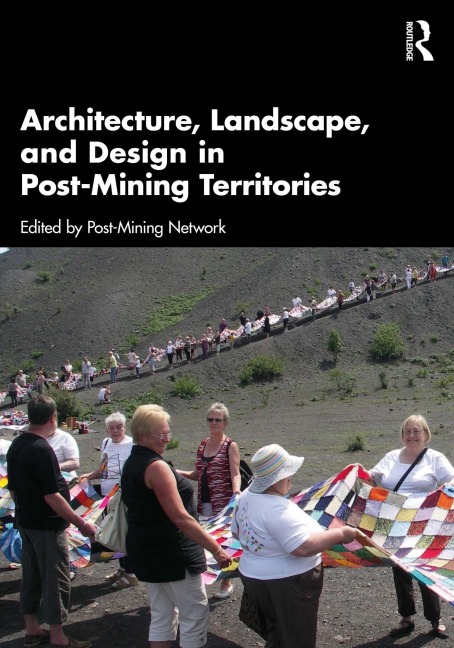
This edited collection explores how architects, planners, and landscape architects can engage with former mining sites and communities. Chapters investigate how to move from an extractivist system towards a territorialist project, working towards the reappropriation of territorial resources after centuries of subordination of local and immigrant populations. The first part reviews cases from European sites, including examples from France, Germany, and Romania that highlight intangible heritage as the subject of a territorial project. A special focus is placed on the coalfields of northern France, a UNESCO World Heritage site since 2012, where many experimental projects are being carried out. The second part explores the great American landscapes transformed by the extractive industry in the United States, Brazil, and Chile. Fully illustrated throughout, this book features photos showcasing architectural and landscape achievements, as well as drawings of future projects. Contributors respond to the design challenges of post-mining landscapes, foreshadowing new and varied transformative horizons. The cases present a rich and articulate collection of 'on-the-ground' projects. This book is essential for practitioners and students of architecture and urban planning, as well as associations and political and technical actors in post-mining communities.
The Post-Mining Network is an organisation that brings together people and institutions from the world of architecture and urban planning from over 25 countries. It was founded by the 'Acclimatize post-mining territories' chair created by Bétrice Mariolle, professor at the Ecole nationale supéieure d'architecture et de paysage de Lille and researcher at IPRAUS.
General introduction: what can post-mining territories tell us about our contemporary society? Part 1. The Nord and Pas-de-Calais Mining Basin, emblem of a post-mining territory in projects Part 1 Introduction: the Nord and Pas-de-Calais Mining Basin, projects in an emblematic post-mining territory 1. Loos-en-Gohelle, a resilient town 2. The mining vine, a source of projects for the Nord Pas-de-Calais Mining Basin, UNESCO World Heritage Site 3. From extractivism to acclimatisation: post-extractivist mining renovations in the Nord and Pas-de-Calais Mining Basin 4. Light-touch retrofitting, earth, and textile 5. An architectural permanence to fight against energy poverty 6. The electrician's town Part 1 Conclusion Part 2. Architectural and social heritage in Europe Part 2 Introduction: architectural and social heritage in Europe 7. Spatial strategy process 2038+ in Rhenish Mining District and the consideration of the intangible cultural heritage 8. Repairing and caretaking or managing and curating: how to build a "milieu" in the post-mining region of Saint-Étienne (France)? 9. Working-class neighbourhoods as a resource: reconnecting form, use, and meaning for an inclusive transition. Immersion in a post-mining territory 10. Post-mining in a post-socialist context. Planeta Petrila, a long-term bottom-up strategy for a post-mining city and area. 11. Geographical and cultural limitations in the post-mining development strategy, case study from the Jiu Valley Coal Basin, Romania 12. Charleroi: landscape "as found" - mapping as a tool for visioning Part 2 Conclusion Part 3. Transformations of the great American landscapes Part 3 Introduction 13. Ecological restoration infrastructure at the Copiapó River in a degraded post-mining landscape in Tierra Amarilla (Chile) 14. Brazilian post-mining context: the case of Minas Gerais region 15. The somewhere project Part 3 Conclusion Part 4. Prologue: mining stories Part 4 Introduction 16. Materials and territory 17. Redescribing mining territories: literature, fragments, elements
Dieses eBook wird im PDF-Format geliefert und ist mit einem Adobe Kopierschutz (DRM) versehen. Sie können dieses eBook mit allen Geräten lesen, die das PDF-Format und den Adobe Kopierschutz (DRM) unterstützen.
Zum Beispiel mit den folgenden Geräten:
• tolino Reader
Laden Sie das eBook direkt über den Reader-Shop auf dem tolino herunter oder übertragen Sie das eBook auf Ihren tolino mit einer kostenlosen Software wie beispielsweise Adobe Digital Editions.
• Sony Reader & andere eBook Reader
Laden Sie das eBook direkt über den Reader-Shop herunter oder übertragen Sie das eBook mit der kostenlosen Software Sony READER FOR PC/Mac oder Adobe Digital Editions auf ein Standard-Lesegeräte mit epub- und Adobe DRM-Unterstützung.
• Tablets & Smartphones
Möchten Sie dieses eBook auf Ihrem Smartphone oder Tablet lesen, finden Sie hier unsere kostenlose Lese-App für iPhone/iPad und Android Smartphone/Tablets.
• PC & Mac
Lesen Sie das eBook direkt nach dem Herunterladen mit einer kostenlosen Lesesoftware, beispielsweise Adobe Digital Editions, Sony READER FOR PC/Mac oder direkt über Ihre eBook-Bibliothek in Ihrem Konto unter „Meine eBooks“ - „online lesen“.
Schalten Sie das eBook mit Ihrer persönlichen Adobe ID auf bis zu sechs Geräten gleichzeitig frei.
Bitte beachten Sie, dass die Kindle-Geräte das Format nicht unterstützen und dieses eBook somit nicht auf Kindle-Geräten lesbar ist.