
Stöbern
genialokal zum Startbildschirm hinzufügen
Installieren Sie die genialokal App auf Ihrem Startbildschirm für einen schnellen Zugriff und eine komfortable Nutzung.
Installieren Sie die genialokal App auf Ihrem Startbildschirm für einen schnellen Zugriff und eine komfortable Nutzung.
Tippen Sie einfach auf Teilen:
 Und dann auf "Zum Home-Bildschirm [+]".

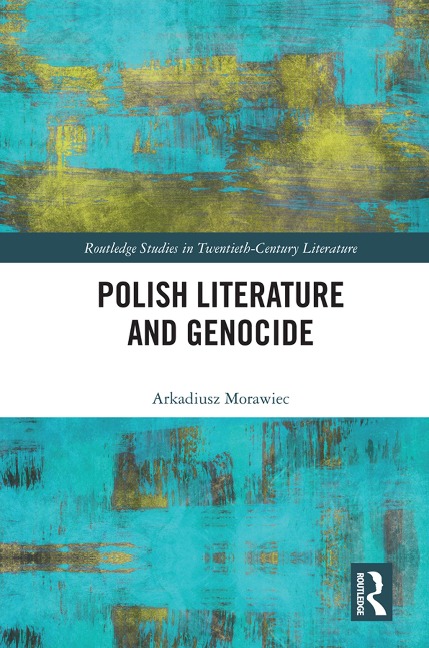
Polish Literature and Genocide presents the attitude of Polish literature to the 20th-century acts of genocide. This volume examines the literary representations of the Armenian genocide, the Holocaust, and the massacre in Srebrenica in a rich, detailed, and comprehensive way, expanding the existing research and, in some cases, challenging the former sometimes ossified ideas. Polish literature not only reflects the obvious extermination of Jews and Poles, but also records what had been largely overlooked: the extermination of disabled and mentally ill people, the Roma and Sinti, and the Soviet prisoners of war by the Nazis. This volume includes analysis of the literary works of Wladyslaw Szlengel, the most prominent Polish-language poet in the Warsaw ghetto; the peculiar reception of Julian Tuwim's famous poem for children "Locomotive;" the memoir of Leon Weliczker, a prisoner of the Janowska concentration camp in Lvov and a member of the 'death brigade' (Sonderkommando); the origins of Medallions by Zofia Nalkowska, who 'processed' historical documents into literature and contributed to the making of professor Rudolf Spanner's 'dark legend,' and the textual origins of Tadeusz Rózewicz's 'poetry after Auschwitz.' Furthermore, this volume addresses issues related to the genesis and function of 'genocide literature' - aesthetic, cognitive, ideological, and social. This volume will be a crucial resource for academics interested in genocide and Holocaust literary studies.
Arkadiusz Morawiec is a professor at the Faculty of Philology at the University of Lódz and a literary critic. His research interests primarily include the history of Polish literature of the 20th and 21st centuries, in particular literary texts representing totalitarianism, genocide (including the Holocaust), concentration and extermination camps. His research also concerns literature as a medium of memory. He has published six books: Poetyka opowiadan Gustawa Herlinga-Grudzinskiego. Autentyzm -- dyskursywnosc -- parabolicznosc [The poetics of Gustaw Herling-Grudzinski's short stories: Authenticity -- discursiveness -- parables] (2000), Seweryna Szmaglewska (1916-1992). Bibliografia [Seweryna Szmaglewska (1916-1992): Bibliography] (2007), Literatura w lagrze, lager w literaturze. Fakt - temat - metafora [Literature in concentration camps, concentration camps in literature: Fact -- theme -- metaphor] (2009), Polityczne, prywatne, metafizyczne. Szkice o literaturze polskiej ostatnich dziesiecioleci [The political, the private, and the metaphysical: Essays on the Polish literature of the last decades] (2014), Zofia Romanowiczowa. Pisarka nie tylko emigracyjna [Zofia Romanowiczowa: More than an émigré writer] (2016), and Literatura polska wobec ludobójstwa [Polish literature on genocide] (2018). He has edited eleven monographs, including: The Literature in/after Concentration and Death Camps (2017), Lager, lagier, obóz -- zapis. Obszary [Konzentrationslager, gulag, obóz -- records: Research areas] (2017), Lager, lagier, obóz -- zapis. Lektury [Konzentrationslager, gulag, obóz -- records: Texts] (2018), and Zaglada wobec innych ludobójstw [Holocaust in the face of other genocides] (2020).
List of Figures Introduction: The Holocausts Prologue: Echoes of the Armenian Genocide 1 "Disinfection": The Extermination of the Mentally Ill 2 Wladyslaw Szlengel (in the Warsaw Ghetto) 3 The Locomotive (to Belzec) 4 The Death Brigade (Leon Weliczker's) 5 Not Only Asfitz: The Destruction of the Gypsies 6 "History Rounds Off Skeletons to the Nearest Zero": The Extermination of the Soviet Prisoners of War 7 "Professor Spanner" by Zofia Nalkowska and "Soap from Human Fat" 8 Tadeusz Rózewicz's Excursion to the Museum (and Library) Epilogue: "It Repeats Itself Before Our Eyes" -- Srebrenica Bibliography Index of Names