
Stöbern
genialokal zum Startbildschirm hinzufügen
Installieren Sie die genialokal App auf Ihrem Startbildschirm für einen schnellen Zugriff und eine komfortable Nutzung.
Installieren Sie die genialokal App auf Ihrem Startbildschirm für einen schnellen Zugriff und eine komfortable Nutzung.
Tippen Sie einfach auf Teilen:
 Und dann auf "Zum Home-Bildschirm [+]".
Ihr gewünschter Artikel ist in 0 Buchhandlungen vorrätig - wählen Sie hier eine Buchhandlung in Ihrer Nähe aus:

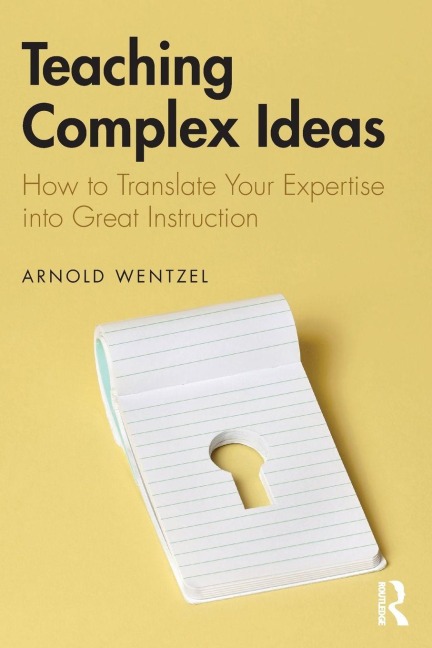
Integrating insights from learning science with practical guidelines and stepwise approaches, Teaching Complex Ideas helps educators masterfully translate their expertise into easy-to-understand, interesting, and memorable instruction. Covering areas such as identifying the critical ideas within a complex topic, designing clear explanations, and making lectures useful and engaging, this resource brings together subjects and skills never before adequately addressed in a single book. Using real world examples and full of practical tips, this book guides college instructors to improve their understanding of their subjects, select the most valuable ideas to teach, and integrate those concepts with other aspects of teaching such as presentation design, technology, and assessment of understanding. This practical book helps professors at any stage in their career convert even the most complex ideas into great teaching.
Arnold Wentzel is Professor of Innovation Methodology, Management, and Research Writing in the Faculty of Industrial Engineering at the Universidad Antonio Nariño, Colombia.
List of Figures List of Tables Preface Acknowledgments Chapter 1: Know what not to teach Chapter 2: What makes an explanation great? Chapter 3: A step-by-step approach to explain complex ideas clearly Chapter 4: Help students to remember creatively and forget as much as possible Chapter 5: How to make boring and complex ideas interesting Chapter 6: If you want students to reason like experts, don't teach them how to reason Chapter 7: Transform assessments into learning experiences and eliminate cheating Chapter 8: Create valid conventional assessments but consider alternatives Chapter 9: Rethink educational technology by noticing what everyone else misses Chapter 10: Design presentations that make your lectures much more useful Chapter 11: The future of professor-experts