Und dann auf "Zum Home-Bildschirm [+]".

Stöbern
genialokal zum Startbildschirm hinzufügen
Installieren Sie die genialokal App auf Ihrem Startbildschirm für einen schnellen Zugriff und eine komfortable Nutzung.
Installieren Sie die genialokal App auf Ihrem Startbildschirm für einen schnellen Zugriff und eine komfortable Nutzung.
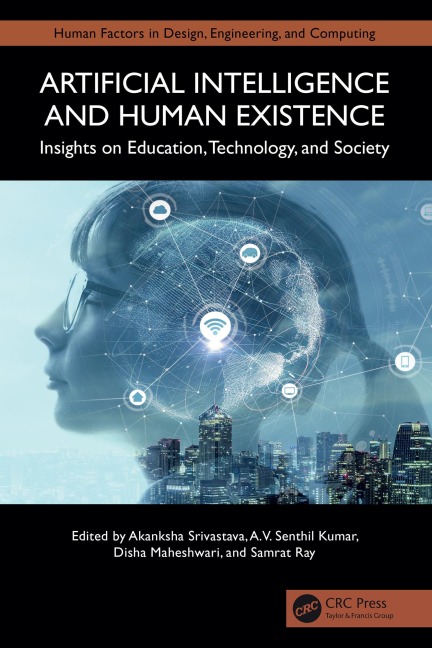
Artificial Intelligence (AI) has become part and parcel of many aspects of our lives, impacting how we approach tasks and understand the world around us. This book recognizes the impact that Artificial Intelligence (AI) has on education, computer science, and society. Taking an interdisciplinary approach, it looks at the positive and negative implications and delivers a comprehensive understanding of how the integration of AI is shaping the future of human existence. This book covers twelve topics that reveal the links between AI and humans. The topics range from the transformational role of technology in education to the ethical considerations surrounding AI's application, plus many more. Specifically, it investigates how AI algorithms are pushing the boundaries of inventions in computer science and driving innovations in human-computer interaction and software development, through themes such as 'Computer Science and Technological Frontiers'. It also reflects on the societal impact of AI and offers tools to navigate the changing landscape of technology and humanity. With discussions on the latest advancements in AI and their implications for future innovations, readers of this book will learn of the ethical challenges posed by AI through in-depth analysis, including coverage of equity, privacy, and algorithmic bias. Artificial Intelligence and Human Existence: Insights on Education, Technology, and Society is for researchers, educators policymakers in the fields of human factors, human-computer interaction and computer science, plus anyone interested in the links between AI and human society.
Dr. Akanksha Srivastava is an Associate Professor at the School of Education, Sharda University, Greater Noida, India, and has over 17 years of experience in teacher education, educational technology, and academic leadership. Her areas of expertise span AI in education, digital pedagogy, educational psychology, and inclusive learning in alignment with NEP 2020. An internationally certified soft skills trainer and MOOC developer for SWAYAM, she also actively supervises doctoral research, contributes to curriculum design, and mentors educators in adopting tech-enabled teaching methodologies. Dr. A.V.Senthil Kumar is a Professor and Director of PG and Research within the Department of Computer Applications at Hindusthan College of Arts & Science, India. A teacher with over 28 years of experience, he has also spent time working in industry. He is the Editor-in-Chief for many journals and a Key Member for India within the Machine Intelligence Research Lab (MIR Labs). He has contributed to 66 book chapters, 231 papers in international and national journals, 77 papers in international and national conferences, and edited 17 books and three textbooks. Dr. Disha Maheshwari is a scholar of Education with a Ph.D. from the University of Delhi, India. She was a Commonwealth Scholar at the Centre for Applied Linguistics at the University of Warwick, UK, and her research interests span Gender and Education, Discourse and Identity, and Higher Education Pedagogy. She currently teaches at Sharda University, India, where she offers courses in Gender Studies, Communication, and Qualitative Research Methodology, including Pedagogy at undergraduate, postgraduate, and doctoral levels. Her research engagements include working as a Research Assistant on the British Council-funded ELT Survey of India with Dr. Richard Smith (University of Warwick), and as a Project Associate on the University of Delhi's R&D-funded project Children and Teachers as Co-researchers: Exploring Young Learner Classrooms in India. She is the co-editor of Subverting Social Inequalities: Gender as a Social Reality (Apple Academic Press, CRC Press, Taylor & Francis Group), and her work has appeared in several national and international academic journals. Dr Samrat Ray is a Senior Researcher at Peter the Great Saint Petersburg Polytechnic University, Russia, specializing in the economics of innovation, entrepreneurship and managerial aspects of economics. He is associated with the Industrial and Trade Management Institute of the university, which handles cross-border industrial and economic incubation for product discovery and patenting. He has over 15 years of experience dealing with academic leadership and thought direction in the UAE, Russia and across Europe and possesses a PhD from Polytechnical University, Russia. He has written over 100 Scopus-indexed papers and has been granted seven international and national patents in his name.
1. Impacts of Artificial Intelligence on Education. 2. The Gloomy aspect of AI: Negative impact of AI on Society. 3. AI-Powered Academic Knowledge Management: Transforming Academic Research and Teaching. 4. AI and storytelling: Reimagining learning in Film Institutes of India. 5. Equity in AI-Driven Education: Addressing Gender Bias and Promoting Inclusive. 6. Artificial Intelligence in English Literature: Close to Distant Reading. 7. Transforming Classrooms: AI-Driven Innovations in School Education. 8. Digital Renaissance: Ai's Role In Academic Transformation And Career Innovation. 9. AI-Enhanced Health Communication: A Netnographic Analysis of Indian Pediatrician Influencers on Instagram Promoting Child Health Literacy. 10. AI in Enhancing Social Services for Vulnerable Populations. 11. AI-Driven Disaster Management: Case Studies and Best Practices. 12. The Evolution of Modern Data Platforms: Powering the AI-Driven World. 13. AI-Driven Data Excellence- Enhancing Governance Quality and Business Outcome. 14. Exploring the Frontiers of Generative AI: Applications, Hurdles, and the Synergy of AI and Human Interaction. 15. Ethical Considerations in AI: Balancing Innovation with Responsibility. 16. Exploring Gender Bias in Google Search Results: Disparities in Responses to Queries. 17. Artificial Intelligence In International Relations: Complexities Involved. 18. From Threads To Tangles: Ai's Disruption Of The Social Fabric. 19. Use Of AI In Selected Financial Institutions: A Double-Edged Sword Effect.
Dieses eBook wird im PDF-Format geliefert und ist mit einem Adobe Kopierschutz (DRM) versehen. Sie können dieses eBook mit allen Geräten lesen, die das PDF-Format und den Adobe Kopierschutz (DRM) unterstützen.
Zum Beispiel mit den folgenden Geräten:
• tolino Reader
Laden Sie das eBook direkt über den Reader-Shop auf dem tolino herunter oder übertragen Sie das eBook auf Ihren tolino mit einer kostenlosen Software wie beispielsweise Adobe Digital Editions.
• Sony Reader & andere eBook Reader
Laden Sie das eBook direkt über den Reader-Shop herunter oder übertragen Sie das eBook mit der kostenlosen Software Sony READER FOR PC/Mac oder Adobe Digital Editions auf ein Standard-Lesegeräte mit epub- und Adobe DRM-Unterstützung.
• Tablets & Smartphones
Möchten Sie dieses eBook auf Ihrem Smartphone oder Tablet lesen, finden Sie hier unsere kostenlose Lese-App für iPhone/iPad und Android Smartphone/Tablets.
• PC & Mac
Lesen Sie das eBook direkt nach dem Herunterladen mit einer kostenlosen Lesesoftware, beispielsweise Adobe Digital Editions, Sony READER FOR PC/Mac oder direkt über Ihre eBook-Bibliothek in Ihrem Konto unter „Meine eBooks“ - „online lesen“.
Schalten Sie das eBook mit Ihrer persönlichen Adobe ID auf bis zu sechs Geräten gleichzeitig frei.
Bitte beachten Sie, dass die Kindle-Geräte das Format nicht unterstützen und dieses eBook somit nicht auf Kindle-Geräten lesbar ist.