
Stöbern
genialokal zum Startbildschirm hinzufügen
Installieren Sie die genialokal App auf Ihrem Startbildschirm für einen schnellen Zugriff und eine komfortable Nutzung.
Installieren Sie die genialokal App auf Ihrem Startbildschirm für einen schnellen Zugriff und eine komfortable Nutzung.
Tippen Sie einfach auf Teilen:
 Und dann auf "Zum Home-Bildschirm [+]".
Ihr gewünschter Artikel ist in 0 Buchhandlungen vorrätig - wählen Sie hier eine Buchhandlung in Ihrer Nähe aus:

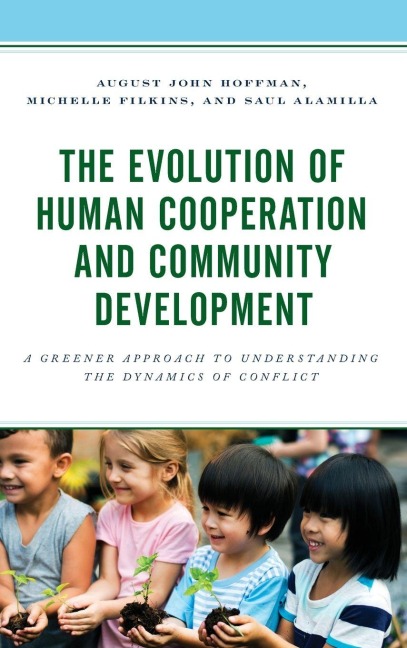
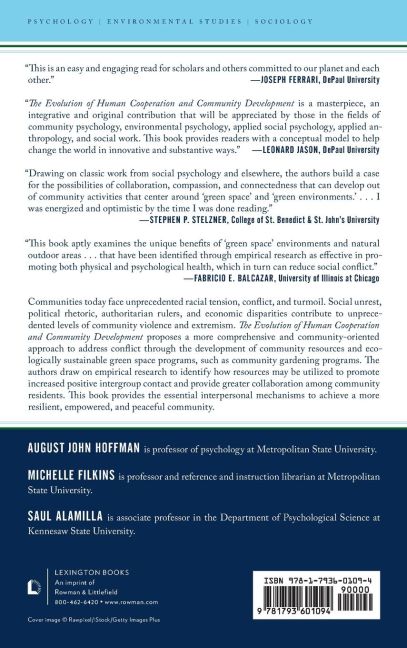
Communities today face unprecedented racial tension, conflict, and turmoil. Social unrest, political rhetoric, authoritarian rulers, and economic disparities contribute to unprecedented levels of community violence and extremism. The Evolution of Human Cooperation and Community Development: A Greener Approach to Understanding the Dynamics of Conflict proposes a more comprehensive and community-oriented approach to address conflict through the development of community resources and ecologically sustainable green space programs, such as community gardening programs. The authors draw on empirical research to identify how resources may be utilized to promote increased positive intergroup contact and provide greater collaboration among community residents. This book provides the essential interpersonal mechanisms to achieve a more resilient, empowered, and peaceful community.
August John Hoffman is professor of psychology at Metropolitan State University. Michelle Filkins is professor and reference and instruction librarian at Metropolitan State University. Saul Alamilla is associate professor in the Department of Psychological Science at Kennesaw State University.
Chapter 1: The Changing Faces of Diversity within Communities: Why Ethnic Hate Crimes, Extremism, and Violence are Increasing among Global Populations Chapter 2: The Evolution of Violence, Bullying, Compassion and Forgiveness: Planting the Seeds of a More Peaceful and Tolerant Society Chapter 3: Immigration, Sustainable Green Spaces and The Social Contract: Developing a Strength-Based Model to Reduce Conflict Chapter 4: Teaching Tolerance and the Roles of Community Development in Reducing Intergroup Conflict Chapter 5: The Interpersonal Benefits of "Green" Environments and Providing Pathways to Greater Connectedness and Social Capital to the Community Chapter 6: The Polarized Community, Antisocial Behaviors, and The "Lone Wolf" Syndrome: Identifying Potential Catastrophe via Proactive Community Intervention Chapter 7: The Role of Libraries as Essential Community Resources Chapter 8: Multiculturalism: The Role of Culture, Acculturation, and Contextual Factors in Intergroup Relations in Diverse Societies