Und dann auf "Zum Home-Bildschirm [+]".

Stöbern
genialokal zum Startbildschirm hinzufügen
Installieren Sie die genialokal App auf Ihrem Startbildschirm für einen schnellen Zugriff und eine komfortable Nutzung.
Installieren Sie die genialokal App auf Ihrem Startbildschirm für einen schnellen Zugriff und eine komfortable Nutzung.
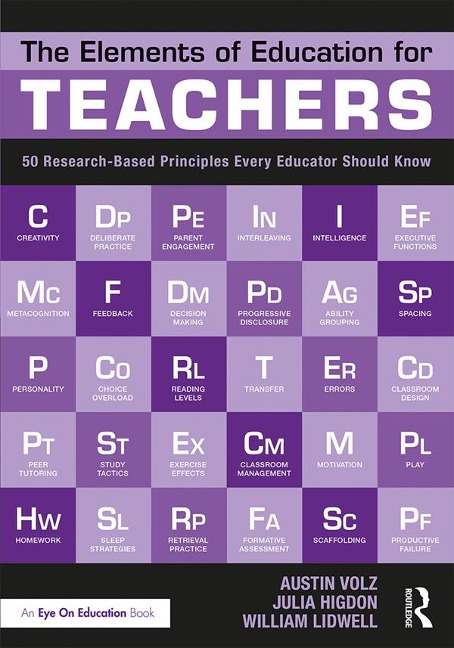
What makes some teachers more effective than others? What pedagogies and practices are fads and which are backed with quality evidence? Which teaching strategies give teachers the biggest learning bang for their buck? The authors have surveyed the research literature and carefully curated 50 elements of effective teaching-elements such as direct instruction, executive functions, metacognition, motivation, and scaffolding-to answer such questions and demystify the secrets of master teachers. Designed specifically for clarity and ease of use, this book is perfect for both new and experienced educators. Each element uses a consistent architecture: a simple definition, concise overview of the research, practical Dos and Don'ts for the classroom, and a select quote to inspire reflection. The Elements of Education for Teachers is an essential addition to any teacher's library and important reading for teachers' professional development.
Austin Volz is Senior Learner-Experience Designer on the "Tiger Works" Research and Development team at Avenues: The World School. A recipient of both a Fulbright scholarship and Foreign Language and Area Studies Fellowship, Austin holds a bachelor's from St. John's College and a master's from the Harvard Graduate School of Education. Julia Higdon is Senior Research Scientist on the "Tiger Works" Research and Development team at Avenues: The World School. Julia began her career as a teacher and holds a doctorate in education research from the Harvard Graduate School of Education. William Lidwell is Vice President of the "Tiger Works" Research and Development team at Avenues: The World School. He is the author of several books, including the best-selling Universal Principles of Design.
1. 80/20 Rule 2. Ability Grouping 3. Assessment, Formative 4. Assessment, Self 5. Assessment, Summative 6. Choice Overload 7. Chunking 8. Classroom Design 9. Classroom Management 10. Creativity 11. Decision Making 12. Deliberate Practice 13. Depth of Processing 14. Direct Instruction 15. Discussion-Based Learning 16. Dual Coding 17. Engagement, Parent 18. Engagement, Student 19. Errors 20. Executive Functions 21. Exercise Effects 22. Expectation Effects 23. Feedback 24. Flexibility Tradeoffs 25. Homework 26. Intelligence 27. Interleaving 28. Metacognition 29. Mnemonic Devices 30. Motivation 31. Peer Tutoring 32. Performance Load 33. Personality 34. Play 35. Productive Failure 36. Progressive Disclosure 37. Project-Based Learning 38. Reading Levels 39. Retrieval Practice 40. Scaffolding 41. Serial Position Effects 42. Sleep Strategies 43. Social-Emotional Learning 44. Spacing 45. Student-Directed Learning 46. Student-Teacher Relationship 47. Study Tactics 48. Teach-to-Learn 49. Technology-Based Instruction 50. Transfer
Dieses eBook wird im PDF-Format geliefert und ist mit einem Adobe Kopierschutz (DRM) versehen. Sie können dieses eBook mit allen Geräten lesen, die das PDF-Format und den Adobe Kopierschutz (DRM) unterstützen.
Zum Beispiel mit den folgenden Geräten:
• tolino Reader
Laden Sie das eBook direkt über den Reader-Shop auf dem tolino herunter oder übertragen Sie das eBook auf Ihren tolino mit einer kostenlosen Software wie beispielsweise Adobe Digital Editions.
• Sony Reader & andere eBook Reader
Laden Sie das eBook direkt über den Reader-Shop herunter oder übertragen Sie das eBook mit der kostenlosen Software Sony READER FOR PC/Mac oder Adobe Digital Editions auf ein Standard-Lesegeräte mit epub- und Adobe DRM-Unterstützung.
• Tablets & Smartphones
Möchten Sie dieses eBook auf Ihrem Smartphone oder Tablet lesen, finden Sie hier unsere kostenlose Lese-App für iPhone/iPad und Android Smartphone/Tablets.
• PC & Mac
Lesen Sie das eBook direkt nach dem Herunterladen mit einer kostenlosen Lesesoftware, beispielsweise Adobe Digital Editions, Sony READER FOR PC/Mac oder direkt über Ihre eBook-Bibliothek in Ihrem Konto unter „Meine eBooks“ - „online lesen“.
Schalten Sie das eBook mit Ihrer persönlichen Adobe ID auf bis zu sechs Geräten gleichzeitig frei.
Bitte beachten Sie, dass die Kindle-Geräte das Format nicht unterstützen und dieses eBook somit nicht auf Kindle-Geräten lesbar ist.