
Stöbern
genialokal zum Startbildschirm hinzufügen
Installieren Sie die genialokal App auf Ihrem Startbildschirm für einen schnellen Zugriff und eine komfortable Nutzung.
Installieren Sie die genialokal App auf Ihrem Startbildschirm für einen schnellen Zugriff und eine komfortable Nutzung.
Tippen Sie einfach auf Teilen:
 Und dann auf "Zum Home-Bildschirm [+]".
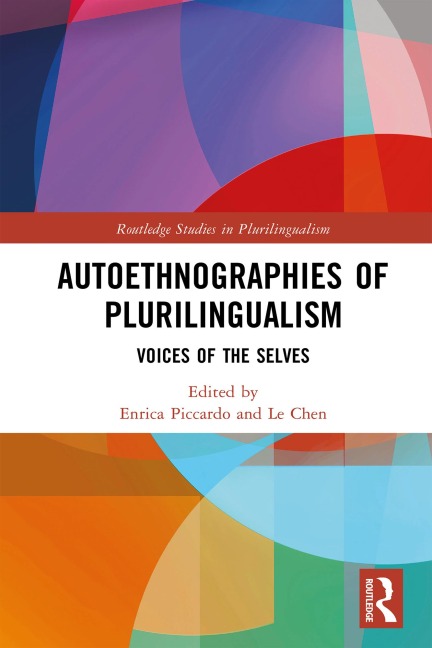
This collection spotlights the authentic voices of plurilingual learners, bringing together autoethnographies of over twenty graduate students to deepen current understandings of lived experiences of plurilingualism. The volume begins with outlining foundational work on plurilingualism in language education up to this point, with the body of work on plurilingual subjectivities historically focusing on researchers' and practitioners' gazes, rather than students. The book moves into short autoethnographies of graduate students at the University of Toronto enrolled in a graduate education course over three years. Employing autoethnography as the primary methodology allows the space for privileging authentic voices of plurilingual learners in their own words, learners whose individual lived experiences are uniquely contextualized within the lens of plurilingual theory. The volume and diversity of perspectives showcased offer a unique window into the diversity and commonalities among plurilingual learners, offering opportunities for reflection on directions for future research. This book will be of interest to students and scholars in applied linguistics, language teaching and learning, and language education.
Enrica Piccardo is Professor of Applied Linguistics and Language Education at the Ontario Institute for Studies in Education at the University of Toronto, Canada. Le Chen is a postdoctoral fellow at the Ontario Institute for Studies in Education at the University of Toronto, Canada.
List of Contributors Introduction - Le Chen & Enrica Piccardo Part 1: Reimagining plurilingual/pluricultural identities Chapter 1: Adopting a Plurilingual Attitude: A Reimagining of Linguistic and Cultural Identity - Rebecca Schmor Chapter 2: "Yet oddly enough, Arabic was my mother tongue": The (Re)Emergence of my Ethnolinguistic Roots - Karam Noel Chapter 3: New Perspectives on Language Learning, Culture, and Identity: A Plurilingual Journey - Felicia Popplewell-Stanek Chapter 4: A Journey to Self (Re-)discovery through a Plurilingual Lens - Ekaterina Prigaro Chapter 5: Embracing a Plurilingual Life Trajectory as a Latina - Aracely Aguilera Chapter 6: Where Do I Really Fit: A Journey to Self-Acceptance - Vivian Hoang Chapter 7: All in a Name: Tracing Languages, Cultures, and Identities - Adriana Ortiz Chapter 8: Finding Myself Plurilingually: A Tale of Two People - Mauran Manogaran Chapter 9: Bypassing Bilingualism: My Journey from Monolingualism to Plurilingualism - Riah Werner Part 2: Lessons from plurilingualism across time and space Chapter 10: Me, Myself, and My Relationship with Languages: A Personal Narrative - Julia Manarin Chapter 11: 'I No Longer Consider Myself Monolingual': A Plurilingual Ethnography Across Timescales - Michael Koslowski Chapter 12: My Plurilingual Journey as a Learner and a Language Educator - Elena Danilina Chapter 13: Affordances of Plurilingualism: Reflections of an English Teacher and Heritage Language Learner - Christopher Gradin Chapter 14: It Starts Once Awakened: You May be Plurilingual Even If You are Monolingual - Selçuk Emre Ergüt Chapter 15: Creating a Linguistic Repertoire Through Space Instead of Time - Ashley Sikorski Chapter 16: I Shush My Cat in Turkish: Unfinished Lessons from Plurilingualism - Sarah Jones Chapter 17: Discovering My Multiple Plurilingual Identities - Lisa Lackner Chapter 18: My Journey to Become a Plurilingual Adult - Lu Xi (Tracy) Part 3: Plurilingualism as empowerment Chapter 19: A Tujia Minority Student Developing from Monolingualism to Plurilingualism - Weiwei Huang Chapter 20: My Autoethnography: A Joga Khichuri of Languages - S. M. Sanzana Rahman Chapter 21: Du bilinguisme au multilinguisme au plurilinguisme : un récit personnel - Pierre Gregory (Translation: From Bilingualism to Multilingualism to Plurilingualism: An Autoethnography) Chapter 22: My Story as an Awakening Chinese Plurilingual in China, Malaysia, and Canada - Vera Jing Huang Chapter 23: Meeshaatang Huluniixsuwaakan: Language Learning Reflections from an Indigenous Perspective- Ian McCallum Chapter 24: The Road Map: How Learning German Helps Relocate Myself - Zhiqi Zhang Chapter 25: Building a Critical Disposition by Attending to Plurilingual Privileges - Jennifer Walsh Marr Chapter 26: "Mi o Likey Snow!": My Journey from an Unaware Plurilingual Child to a Plurilingual Advocate - Aisha Bunmi Adebayo Conclusion: Converging Voices: Reflections, Insights, and Horizons in Language Education - Enrica Piccardo and Le Chen Afterword - Joseph Lo Bianco Index
Dieses eBook wird im PDF-Format geliefert und ist mit einem Adobe Kopierschutz (DRM) versehen. Sie können dieses eBook mit allen Geräten lesen, die das PDF-Format und den Adobe Kopierschutz (DRM) unterstützen.
Zum Beispiel mit den folgenden Geräten:
• tolino Reader
Laden Sie das eBook direkt über den Reader-Shop auf dem tolino herunter oder übertragen Sie das eBook auf Ihren tolino mit einer kostenlosen Software wie beispielsweise Adobe Digital Editions.
• Sony Reader & andere eBook Reader
Laden Sie das eBook direkt über den Reader-Shop herunter oder übertragen Sie das eBook mit der kostenlosen Software Sony READER FOR PC/Mac oder Adobe Digital Editions auf ein Standard-Lesegeräte mit epub- und Adobe DRM-Unterstützung.
• Tablets & Smartphones
Möchten Sie dieses eBook auf Ihrem Smartphone oder Tablet lesen, finden Sie hier unsere kostenlose Lese-App für iPhone/iPad und Android Smartphone/Tablets.
• PC & Mac
Lesen Sie das eBook direkt nach dem Herunterladen mit einer kostenlosen Lesesoftware, beispielsweise Adobe Digital Editions, Sony READER FOR PC/Mac oder direkt über Ihre eBook-Bibliothek in Ihrem Konto unter „Meine eBooks“ - „online lesen“.
Schalten Sie das eBook mit Ihrer persönlichen Adobe ID auf bis zu sechs Geräten gleichzeitig frei.
Bitte beachten Sie, dass die Kindle-Geräte das Format nicht unterstützen und dieses eBook somit nicht auf Kindle-Geräten lesbar ist.