Und dann auf "Zum Home-Bildschirm [+]".

Stöbern
genialokal zum Startbildschirm hinzufügen
Installieren Sie die genialokal App auf Ihrem Startbildschirm für einen schnellen Zugriff und eine komfortable Nutzung.
Installieren Sie die genialokal App auf Ihrem Startbildschirm für einen schnellen Zugriff und eine komfortable Nutzung.

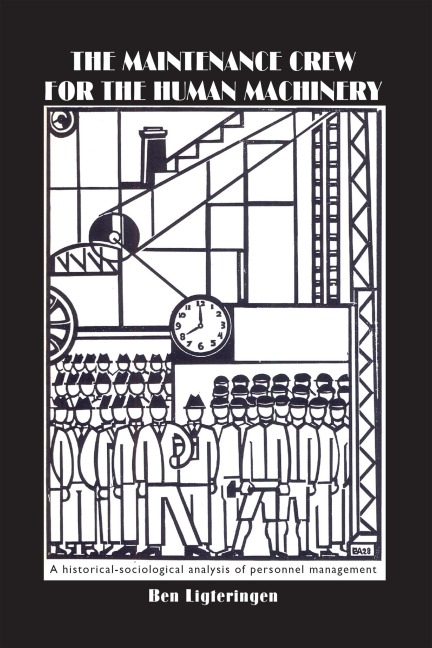
The book, written as a doctoral thesis, examines the development of the personnel function in labour organisations. Starting from a history of personnel management in the Netherlands during the second half of the 20th century, it analyses the structural transformation in the societal-economic environment from which originate far-reaching changes in employee relations. The transformation from the post-war model of guided capitalism towards its neo-liberal variety has serious consequences for intra-organisational power relations which result in a one-sided articulation of interests. This erodes the moral fabric of the labour organisation as a social institution. In this context special attention is paid to the wide-spread erosion of corporate ethics in the 21st century. The intensification of the labour process - a consistent phenomenon in industrial capitalism - has got a new impulse, due to the lack of countervailing power within an eroding system of labour relations as well as to superior production techniques and technologies. These tendencies have a deteriorating effect on the substance of the personnel discipline, ending up in a loss of function.
Bernardus Hendrikus Ligteringen
THE MAINTENANCE CREW FOR THE HUMAN MACHINERY, Introduction, PART I. THE SUBJECT AND HOW TO DORESEARCH ON IT, 1. How Personnel Management Changed in theNetherlands, 2. Research philosophy:The case for qualitative research, PART II. THE HEART OF THE MATTERAN ESSAY ON THE DIVISION OF LABOURAND MANAGERIAL POWER, 3. The Origins of Managerial Control, 4. The division of labour and social cohesion, PART III. STRUCTURE AND IDEAS ECONOMIC DEVELOPMENT AND MANAGEMENT IDEOLOGY IN THE 20TH CENTURY, 5. Guided Capitalism and Beyond, 6. The Inside and Outside of Work, 7. The ideology of management, PART IV. PAST, PRESENT AND FUTURE, 8. A radical theory on personnel management, 9. The End of HRM: Two Scenarios