Und dann auf "Zum Home-Bildschirm [+]".

Stöbern
genialokal zum Startbildschirm hinzufügen
Installieren Sie die genialokal App auf Ihrem Startbildschirm für einen schnellen Zugriff und eine komfortable Nutzung.
Installieren Sie die genialokal App auf Ihrem Startbildschirm für einen schnellen Zugriff und eine komfortable Nutzung.
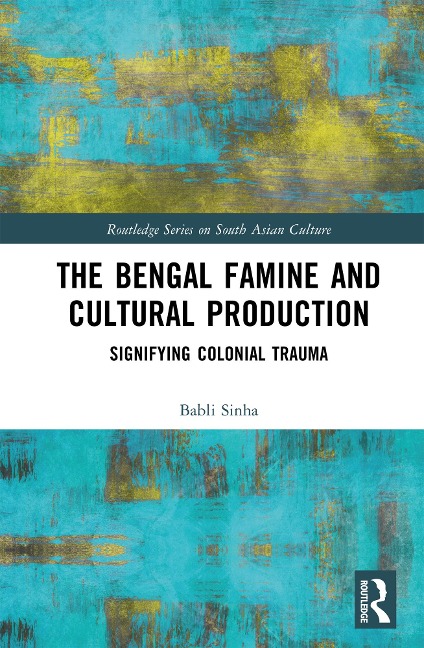
The Bengal Famine and Cultural Production: Signifying Colonial Trauma analyses the various modes of representation used by Anglophone authors and artists in response to the Bengal Famine of 1943. Official imperial narratives blamed the famine on natural disaster, war, exploitation by merchants, and incompetent local officials rather than members of the imperial government and have remained dominant in the global public imaginary until recent years. The authors and artists referenced in this study appealed to elite Bengali, South Asian, and international audiences to resist imperial narratives that minimized or erased suffering and instead encouraged relief efforts, promoted nationalist movements, maintained collective memory, innovated ethical forms of representation, and prompted systemic change. They were part of an established tradition of English in the subcontinent as the language of empire and cosmopolitanism but are not accessible, widely taught, or well-known. The direct encounter with suffering was and remains insufficient for prompting systemic change or even engagement, and yet, the recognition of trauma is crucial for personal and collective well-being. The cultural production of famine writers and artists sought to integrate the suffering and agency of the destitute into narratives of Bengali and South Asian identity and of the Second World War. It is crucial to the Humanities to recognize this body of work as a cultural counter-discourse to the biopower of empire and to engage these texts as relevant to theories of trauma. The book will be of interest to researchers in the field of South Asian history, the history of the Bengal famine, South Asian Anglophone literature, twentieth century art history, and trauma theory.
Babli Sinha is Associate Professor of English and Director of Media Studies at Kalamazoo College, USA. She is the author of Cinema, Transnationalism, and Colonial India: Entertaining the Raj (2013) and editor of South Asian Transnationalisms: Cultural Exchange in the Twentieth Century (2012), also published by Routledge.
Introduction; Chapter One: The Long Famine in The Bengal Tragedy and Famine and Rehabilitation in Bengal; Chapter Two: Emotion and Resistance in T.G. Narayan's Famine Over Bengal; Chapter Three: Love as a Decolonial Framework in Freda Bedi's Bengal Lamenting; Chapter Four: Trauma and Referentiality in Bhabani Bhattacharya's Famine Novels; Chapter Five: Opacity and Witnessing in Ela Sen's and Zainul Abedin's Darkening Days; Chapter Six: The Recognition of Suffering in Chittaprosad's Hungry Bengal; Chapter Seven: Activism and Restraint in the Famine Photography of Sunil Janah; Chapter Eight: "Innumerable Wounds": The Marked Bodies of Somnath Hore; Epilogue: Continuities
Dieses eBook wird im PDF-Format geliefert und ist mit einem Adobe Kopierschutz (DRM) versehen. Sie können dieses eBook mit allen Geräten lesen, die das PDF-Format und den Adobe Kopierschutz (DRM) unterstützen.
Zum Beispiel mit den folgenden Geräten:
• tolino Reader
Laden Sie das eBook direkt über den Reader-Shop auf dem tolino herunter oder übertragen Sie das eBook auf Ihren tolino mit einer kostenlosen Software wie beispielsweise Adobe Digital Editions.
• Sony Reader & andere eBook Reader
Laden Sie das eBook direkt über den Reader-Shop herunter oder übertragen Sie das eBook mit der kostenlosen Software Sony READER FOR PC/Mac oder Adobe Digital Editions auf ein Standard-Lesegeräte mit epub- und Adobe DRM-Unterstützung.
• Tablets & Smartphones
Möchten Sie dieses eBook auf Ihrem Smartphone oder Tablet lesen, finden Sie hier unsere kostenlose Lese-App für iPhone/iPad und Android Smartphone/Tablets.
• PC & Mac
Lesen Sie das eBook direkt nach dem Herunterladen mit einer kostenlosen Lesesoftware, beispielsweise Adobe Digital Editions, Sony READER FOR PC/Mac oder direkt über Ihre eBook-Bibliothek in Ihrem Konto unter „Meine eBooks“ - „online lesen“.
Schalten Sie das eBook mit Ihrer persönlichen Adobe ID auf bis zu sechs Geräten gleichzeitig frei.
Bitte beachten Sie, dass die Kindle-Geräte das Format nicht unterstützen und dieses eBook somit nicht auf Kindle-Geräten lesbar ist.