
Stöbern
genialokal zum Startbildschirm hinzufügen
Installieren Sie die genialokal App auf Ihrem Startbildschirm für einen schnellen Zugriff und eine komfortable Nutzung.
Installieren Sie die genialokal App auf Ihrem Startbildschirm für einen schnellen Zugriff und eine komfortable Nutzung.
Tippen Sie einfach auf Teilen:
 Und dann auf "Zum Home-Bildschirm [+]".
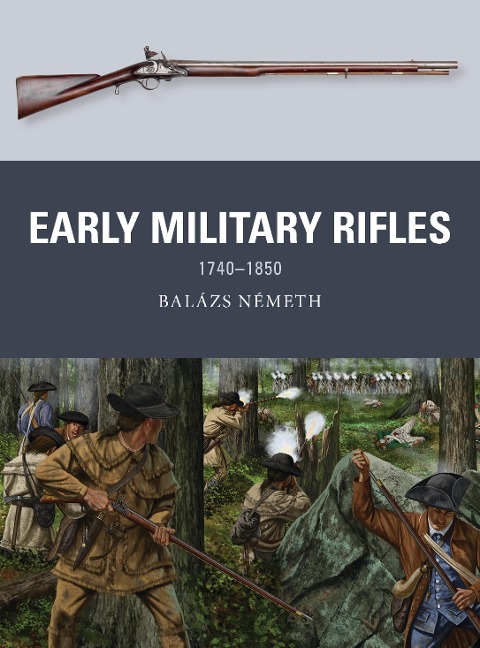
The conduct of combat operations in open order during the 18th and 19th centuries required an improved firearm with more accuracy than the standard-issue smoothbore infantry musket.
Consequently, the appearance of a new type of regular light infantry soldier and an innovative military firearm, the rifle, marked a new age in the history of warfare. During the 18th century both Austria and Prussia fielded light troops armed with rifled firearms, while conflicts in North America involved the deadly long rifle and the innovative Ferguson breech-loader. Rifle-armed specialists also fought for several nations during the Napoleonic Wars.
However, it was the decades after 1815 that saw the appearance of successful rifled percussion firearms, paving the way for the widespread issue of rifled weapons. This development was accelerated by the Prussian adoption of the Dreyse 'needle gun' in 1848 and in 1849, the French Minié rifle was the first successful conical ball rifle concept to be issued to regular troops in large numbers.
Illustrated throughout with stunning full-colour artwork, this study charts the development, combat use, influence and legacy of rifled firearms in a host of conflicts, from the War of the Austrian Succession of 1740-48 to the Mexican-American War of 1846-48.
Balázs Németh teaches military history at the Public Service University of Budapest's Faculty of Military Science and Officer Training. He has a particular interest in the infantry tactics and firearms history of the mid-19th century and has published many scientific papers in Hungarian. He is based in Hungary.
Johnny Shumate has been a freelance illustrator since 1987. Most of his work is rendered in Adobe Photoshop using a Cintiq monitor.
Alan Gilliland spent 18 years as the graphics editor of the Daily Telegraph, winning 19 awards in that time. He now writes, illustrates and publishes fiction (ravensquill.com), as well as illustrating for a variety of publishers (alangillilandillustration.blogspot.com).
Introduction
Development
Use
Impact
Conclusion
Bibliography
Index
Dieses eBook wird im PDF-Format geliefert und ist mit einem Adobe Kopierschutz (DRM) versehen. Sie können dieses eBook mit allen Geräten lesen, die das PDF-Format und den Adobe Kopierschutz (DRM) unterstützen.
Zum Beispiel mit den folgenden Geräten:
• tolino Reader
Laden Sie das eBook direkt über den Reader-Shop auf dem tolino herunter oder übertragen Sie das eBook auf Ihren tolino mit einer kostenlosen Software wie beispielsweise Adobe Digital Editions.
• Sony Reader & andere eBook Reader
Laden Sie das eBook direkt über den Reader-Shop herunter oder übertragen Sie das eBook mit der kostenlosen Software Sony READER FOR PC/Mac oder Adobe Digital Editions auf ein Standard-Lesegeräte mit epub- und Adobe DRM-Unterstützung.
• Tablets & Smartphones
Möchten Sie dieses eBook auf Ihrem Smartphone oder Tablet lesen, finden Sie hier unsere kostenlose Lese-App für iPhone/iPad und Android Smartphone/Tablets.
• PC & Mac
Lesen Sie das eBook direkt nach dem Herunterladen mit einer kostenlosen Lesesoftware, beispielsweise Adobe Digital Editions, Sony READER FOR PC/Mac oder direkt über Ihre eBook-Bibliothek in Ihrem Konto unter „Meine eBooks“ - „online lesen“.
Schalten Sie das eBook mit Ihrer persönlichen Adobe ID auf bis zu sechs Geräten gleichzeitig frei.
Bitte beachten Sie, dass die Kindle-Geräte das Format nicht unterstützen und dieses eBook somit nicht auf Kindle-Geräten lesbar ist.