
Stöbern
genialokal zum Startbildschirm hinzufügen
Installieren Sie die genialokal App auf Ihrem Startbildschirm für einen schnellen Zugriff und eine komfortable Nutzung.
Installieren Sie die genialokal App auf Ihrem Startbildschirm für einen schnellen Zugriff und eine komfortable Nutzung.
Tippen Sie einfach auf Teilen:
 Und dann auf "Zum Home-Bildschirm [+]".
Ihr gewünschter Artikel ist in 0 Buchhandlungen vorrätig - wählen Sie hier eine Buchhandlung in Ihrer Nähe aus:

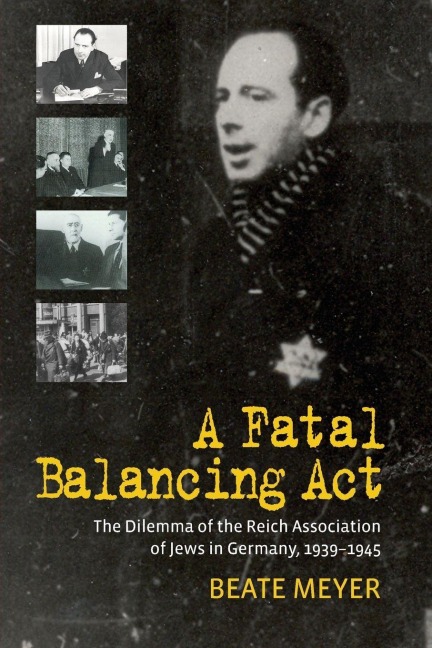
First comprehensive study on the German-Jewish leadership during the Holocaust
Gives a new perspective on the persecution of Jews in Germany
Presents different inner-Jewish perspectives on the years 1939-1945
Beate Meyer is a Senior Researcher at the Institute for the History of German Jews in Hamburg, Germany and is a lecturer in the Department of History at the University of Hamburg. She has been a Fellow at the International Institute of Holocaust Research in Yad Vashem/Jerusalem (2000/2001) and the USHMM (2010). Recent publications include Jews in Nazi Berlin: From Kristallnacht to Liberation (co-edited, University of Chicago Press 2009).
Abbreviations in the Text and Notes
List of Tables
Acknowledgements Introduction Part I: From "Forced Emigration" to Assisting with the Deportations Chapter 1. Created in Chaos
Chapter 2. "Forced Emigration"
Chapter 3. The "Territorial Solution": "Reservations for Jews" and Early Deportations
Chapter 4. Welfare
Part II: Walking on a Thin Line - The Participation of the Reichsvereinigung and the Berlin Jewish Community in the Time of the Deportations Chapter 1. Decision on a Basic Principle: Avoid Hardship, Participate in "Partial Operations"
Chapter 2. "Every Day More Terrifying News" - The Year 1942
Chapter 3. The Stepwise Liquidation of the Reichsvereinigung (1943)
Chapter 4. Theresienstadt as a New Field of Activity of the German-Jewish Functionaries
Part III: The "Psychological Environment" (Hilberg) in the Countryside. Latitude for Action by Jewish Functionaries in the District Branches Chapter 1. The District Branches
Chapter 2. A Troubled Relationship: The District Branches and the RV Central Office
Chapter 3. The District Branches and the Deportations
Chapter 4. A Comparative Look at District Branches
Chapter 5. Strategies for Dealing with the Authorities. Chapter 6. The Fate of the District Branch Directors
Part IV: The Residual Reichsvereinigung Chapter 1. The Last Compulsory Members: Jews in Mixed Marriages Chapter 2. Structure and Tasks of the Residual Reichsvereinigung
Chapter 3. Vertrauensmänner, Gestapo and Jews in the Final Phase of the War Chapter 4. The War is Over - Liberation and/or a Horrible End?
Part V: A Look at Later Developments: The "Strategy of Cooperation" as an Incriminating Legacy for a New Start Chapter 1. Proceedings Before a Court of Honor and Employment Bans in Berlin Chapter 2. Under Suspicion: Former Jewish Functionaries in the Western Occupation Zones and the Fledgling Federal Republic Chapter 3. "Gestapo Collaborators": Former Jewish Functionaries in the Soviet Occupation Zone and the GDR Chapter 4. Aftermath
Bibliography
Archival materials cited
Literature and printed sources
Index