
Stöbern
genialokal zum Startbildschirm hinzufügen
Installieren Sie die genialokal App auf Ihrem Startbildschirm für einen schnellen Zugriff und eine komfortable Nutzung.
Installieren Sie die genialokal App auf Ihrem Startbildschirm für einen schnellen Zugriff und eine komfortable Nutzung.
Tippen Sie einfach auf Teilen:
 Und dann auf "Zum Home-Bildschirm [+]".

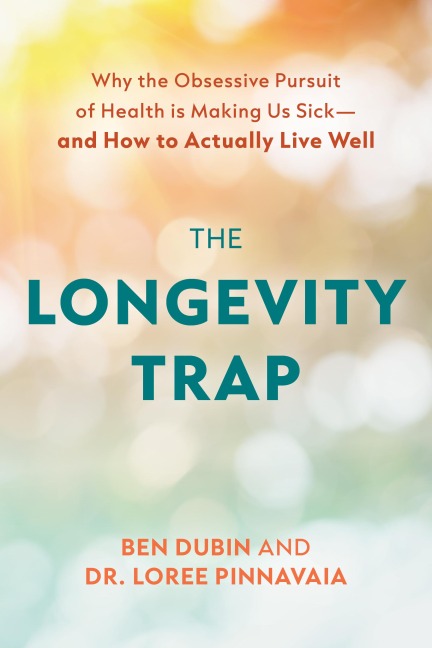

What if the obsessive pursuit of health is itself making us sick? The global wellness economy is booming: biometric wearables, longevity podcasts, and biohacking influencers peddling supplements, cold plunges, and five-figure drug regimens. The pursuit of health and longevity has never been more complicated or more expensive. In this bracing, research-backed book, Dr. Loree Pinnavaia, a functional medicine clinician, and Ben Dubin, a healthcare venture capitalist and recovering biohacker, dismantle the longevity-industrial complex. Across movement, sleep, nutrition, and stress, The Longevity Trap shows that some of the most powerful interventions are also the simplestand that the habits most consistently associated with longer, healthier lives are ones humans have practiced for millennia. Their goal isn't to shame anyone for wanting to be healthy. It's to offer a grounded framework so that your time, money, and attention go toward what actually works. Drawing on real-life stories from the exam room and the boardroom, insider analysis, and rigorous scientific research, the authors show that exercise, sleep, and social belonging are the keys to a healthy life. Yet the longevity industry keeps selling the opposite lesson: that your health is too complex to manage without endless testing, tracking, and tweaking. Sleep is reduced to a nightly performance test, eating is engineered into anxiety and isolation, movement is turned into punishment, and health becomes a discipline that quietly erodes relationships and joy. In fact, the stress of chasing optimization may itself be accelerating the aging you're trying to slow. At the heart of the book is a deeper conviction: the foundations of a long, healthy life should be available to everyone, not packaged as luxury products that require wealth, elite clinics, and the stamina for constant self-surveillance. The Longevity Trap is your escape plan and your permission slip: stop chasing a longer life and start living the one you have.
Ben Dubin is a venture capitalist with an investing focus in healthcare companies. With an engineering background and an MBA from Harvard Business School, Dubin spent years inside hardware and software companies before moving to investing side. This professional life has given him an unusual window into how the health and wellness industry actually workshow companies are built, how products are marketed, and how the gap between what research shows and what consumers are told is filled with hope and hype. Dr. Loree Pinnavaia is a Doctor of Chiropractic and Functional Medicine Practitioner with over two decades of clinical experience. She has spent more than a thousand hours in advanced training with the Institute for Functional Medicine, educated healthcare professionals on clinical nutrition and hormone regulation, and built a practice dedicated to finding root causes rather than treating symptoms. She is a member of the Institute for Functional Medicine and the American Academy of Anti-Aging Medicine. Together, they cover the longevity landscape from both sides: the industry that creates and markets interventions, and the clinical and research reality of what those interventions actually do.
Table of Contents Introduction 1 Chapter 1: The Longevity Industrial Complex 13 Chapter 2: The Psychology of Optimization 29 Chapter 3: The Inconvenient Research 47 Chapter 4: Sleep - The Unsexy Superpower 65 Chapter 5: Movement - Not Exercise Science, Just Movement 83 Chapter 6: Real Food - Not Nutritional Biochemistry 103 Chapter 7: Connection - The Longevity Factor Nobody Wants to Optimize 121 Chapter 8: Stress and Purpose - What the Research Actually Shows 139 Chapter 9: The Anti-Aging Industry - Profiting from Fear 155 Chapter 10: The Path Forward - A Simpler Way 173 Chapter 11: Aging With Grace - Making Peace with Time 187 Chapter 12: Coming Home - The Life That Was Waiting All Along 205 Quick Reference Guide and Chapter Summary 221 Selected Bibliography and Recommended Sources 231 Afterword 245