
Stöbern
genialokal zum Startbildschirm hinzufügen
Installieren Sie die genialokal App auf Ihrem Startbildschirm für einen schnellen Zugriff und eine komfortable Nutzung.
Installieren Sie die genialokal App auf Ihrem Startbildschirm für einen schnellen Zugriff und eine komfortable Nutzung.
Tippen Sie einfach auf Teilen:
 Und dann auf "Zum Home-Bildschirm [+]".
Ihr gewünschter Artikel ist in 0 Buchhandlungen vorrätig - wählen Sie hier eine Buchhandlung in Ihrer Nähe aus:

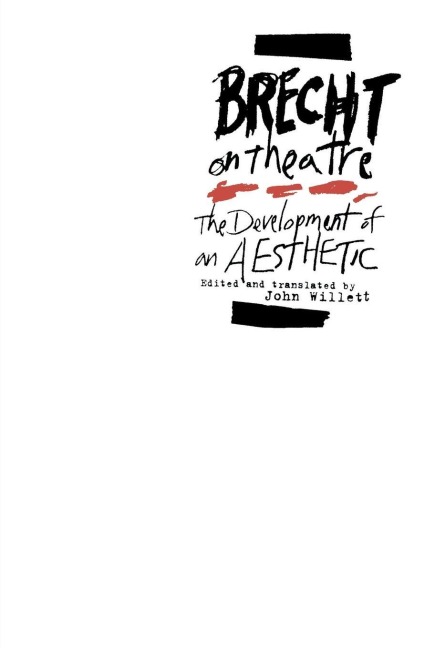
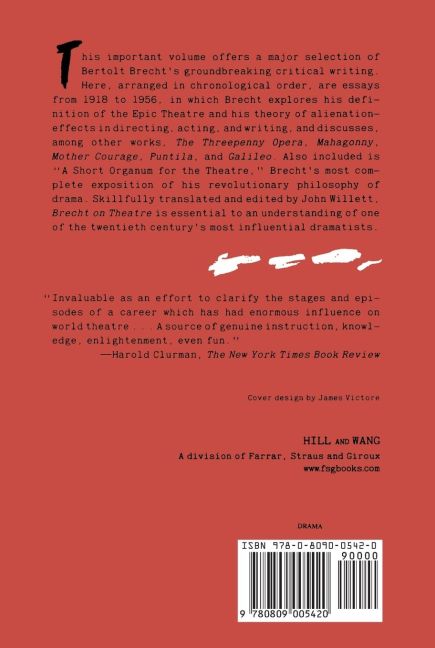
This volume offers a major selection of Bertolt Brecht's groundbreaking critical writing. Here, arranged in chronological order, are essays from 1918 to 1956, in which Brecht explores his definition of the Epic Theatre and his theory of alienation-effects in directing, acting, and writing, and discusses, among other works, The Threepenny Opera, Mahagonny, Mother Courage, Puntila, and Galileo. Also included is "A Short Organum for the Theatre," Brecht's most complete exposition of his revolutionary philosophy of drama. Translated and edited by John Willett, Brecht on Theater is essential to an understanding of one of the twentieth century's most influential dramatists.
Bertolt Bertolt (1898-1956) was the most influential German dramatist and theoretician of the theater in the 20th century. Also a poet of formidable gifts and considerable output, Brecht first attracted attention in the Berlin of the 1920s as the author of provocative plays that challenged the tenets of traditional theater. Forced to flee Germany in 1933 because of his leftist political beliefs and opposition to the Nazi regime of Adolf Hitler, Brecht and his family spent 14 years in exile in Scandinavia and the United States. Although he tried hard to become established in the United States, Brecht failed to make a breakthrough either as a scriptwriter in Hollywood, California, or as a playwright on Broadway. Two years later he moved to East Berlin and remained there until his death. In the 1950s he became an internationally acclaimed playwright and director through productions of his plays by the Berliner Ensemble, a company based in East Berlin and headed by his wife, actor Helene Weigel. John Willett (1917-2002) was a noted scholar, author and translator. From the outset he was the prime editor and translator (with Ralph Manheim and others) behind Brecht in English. He was involved in the planning and translation of the programme book for the Berliner Ensemble's celebrated first visit to London in 1956 (the year of Brecht's own death); in 1959 he published the first general study in any language, The Theatre of Bertolt Brecht; he translated, edited and introduced the enormously influential Brecht on Theatre (1964); and he was a founding member of the International Brecht Society and sometime editor of its Yearbook.
Introduction PART ONE 1918-1982 Frank Wedekind A Reckoning Emphasis on Sport Three Cheers for Shaw Conversation with Bert Brecht A Radio Speech Shouldn't we Abolish Aesthetics? The Epic Theatre and its Difficulties Last Stage: Oedipus A Dialogue about Acting On Form and Subject-Matter An Example of Paedagogics The Modem Theatre is the Epic Theatre The Literarization of the Theatre The Film, the Novel and Epic Theatre The Radio as an Apparatus of Communication The Question of Criteria for Judging Acting Indirect Impact of the Epic Theatre PART TWO 1988-1947 Interview with an Exile Theatre for Pleasure or Theatre for Instruction The German Drama: pre-Hitler Criticism of the New York Production of Die Mutter On the Use of Music in an Epic Theatre Alienation Effects in Chinese Acting Notes to Die Rundköpfe und die Spitzköpfe On Gestic Music The Popular and the Realistic CONTENTS On Rhymeless Verse with Irregular Rhythms The Street Scene On Experimental Theatre New Technique of Acting Two Essays on Unprofessional Acting Notes on the Folk Play Alienation Effects in the Narrative Pictures of the Elder Brueghel A Little Private Tuition for my Friend Max Gorelik Building up a Part: Laughton's Galileo 'Der Messingkauf': an editorial note PART THREE 1947-1948 A Short Organum for the Theatre PART FOUR 1948-1966 Masterful Treatment of a Model From the Mother Courage Model Does Use of the Model Restrict the Artist's Freedom? Formal Problems Arising from the Theatre's New Content Stage Design for the Epic Theatre From a Letter to an Actor Some of the Things that can be Learnt from Stanislavsky Theaterarbeit: an editorial note Notes on Erwin Strittmatter's Play Katzgraben Study of the First Scene of Shakespeare's Coriolanus Cultural Policy and Academy of Arts Conversation about being Forced into Empathy Classical Status as an Inhibiting Factor Can the Present-day World be Reproduced by Means of Theatre? Appendices to the 'Short Organum' 'Dialectics in the Theatre': an editorial note Our London Season Other English Translations Index