Und dann auf "Zum Home-Bildschirm [+]".

Stöbern
genialokal zum Startbildschirm hinzufügen
Installieren Sie die genialokal App auf Ihrem Startbildschirm für einen schnellen Zugriff und eine komfortable Nutzung.
Installieren Sie die genialokal App auf Ihrem Startbildschirm für einen schnellen Zugriff und eine komfortable Nutzung.
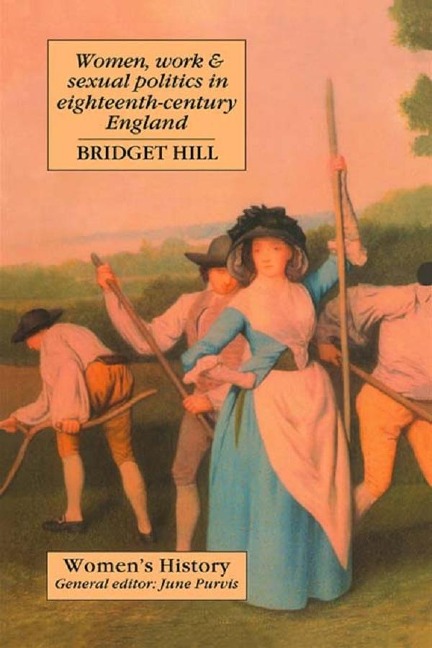
The author offers a reassessment of how women's experience of work in 18th- century England was affected by industrialization and other elements of economic, social and technological change.; This study focuses on the household, the most important unit of production in the 18th century. Hill examines the work done by the women of the household, not only in "housework" but also in agriculture and manufacturing, and explains what women lost as the household's independence as a unit of economic production was undermined.; Considering the whole range of activities in which women were involved - including many occupations unrecorded in censuses which have, therefore, been largely ignored by historians - Hill charts the increasing sexual division of labour and highlights its implications. She also discusses the role of service in husbandry and apprenticeship, as sources of training for women, and the consequences of their decline.; The final part of the book considers how the changing nature of women's work influenced courtship, marriage and relations between the sexes. Among the topics discussed are the importance of the women's contribution to setting up and maintaining a household; labouring women's attitudes to marriage and divorce and the customary alternatives to them; and the role of spinsters and widows. The author concludes by asking to what extent the industrial revolution improved the overall position of women and the opportunities open to them.; This series aims to re-establish women's history, and to challenge the assumptions of much mainstream history. Focusing on the modern period and encouraging perspectives from other disciplines, it seeks to concentrate upon areas of focal importance in the history of Britain and continental Europe.; Bridget Hill is the author of "Eighteenth-Century Women: An Anthology" and "The First English Feminist".
Bridget Hill
Chapter 1 Introduction: Pinchbeck and After; Chapter 2 The Social Context; Chapter 3 Women's Work in the Family Economy; Chapter 4 The Undermining of the Family Economy; Chapter 5 Female Servants in Husbandry; Chapter 6 Female Apprenticeship; Chapter 7 Housework; Chapter 8 Domestic Service; Chapter 9 Ignored, Unrecorded, and Invisible: Some Occupations of Women; Chapter 10 The Economics of Courtship and Marriage; Chapter 11 Clarity and Obscurity in the Law Relating to Wives, Property, and Marriage; Chapter 12 Spinsters and Spinsterhood; Chapter 13 Widows; Chapter 14 Conclusion;
Dieses eBook wird im PDF-Format geliefert und ist mit einem Adobe Kopierschutz (DRM) versehen. Sie können dieses eBook mit allen Geräten lesen, die das PDF-Format und den Adobe Kopierschutz (DRM) unterstützen.
Zum Beispiel mit den folgenden Geräten:
• tolino Reader
Laden Sie das eBook direkt über den Reader-Shop auf dem tolino herunter oder übertragen Sie das eBook auf Ihren tolino mit einer kostenlosen Software wie beispielsweise Adobe Digital Editions.
• Sony Reader & andere eBook Reader
Laden Sie das eBook direkt über den Reader-Shop herunter oder übertragen Sie das eBook mit der kostenlosen Software Sony READER FOR PC/Mac oder Adobe Digital Editions auf ein Standard-Lesegeräte mit epub- und Adobe DRM-Unterstützung.
• Tablets & Smartphones
Möchten Sie dieses eBook auf Ihrem Smartphone oder Tablet lesen, finden Sie hier unsere kostenlose Lese-App für iPhone/iPad und Android Smartphone/Tablets.
• PC & Mac
Lesen Sie das eBook direkt nach dem Herunterladen mit einer kostenlosen Lesesoftware, beispielsweise Adobe Digital Editions, Sony READER FOR PC/Mac oder direkt über Ihre eBook-Bibliothek in Ihrem Konto unter „Meine eBooks“ - „online lesen“.
Schalten Sie das eBook mit Ihrer persönlichen Adobe ID auf bis zu sechs Geräten gleichzeitig frei.
Bitte beachten Sie, dass die Kindle-Geräte das Format nicht unterstützen und dieses eBook somit nicht auf Kindle-Geräten lesbar ist.