
Stöbern
genialokal zum Startbildschirm hinzufügen
Installieren Sie die genialokal App auf Ihrem Startbildschirm für einen schnellen Zugriff und eine komfortable Nutzung.
Installieren Sie die genialokal App auf Ihrem Startbildschirm für einen schnellen Zugriff und eine komfortable Nutzung.
Tippen Sie einfach auf Teilen:
 Und dann auf "Zum Home-Bildschirm [+]".
Ihr gewünschter Artikel ist in 0 Buchhandlungen vorrätig - wählen Sie hier eine Buchhandlung in Ihrer Nähe aus:

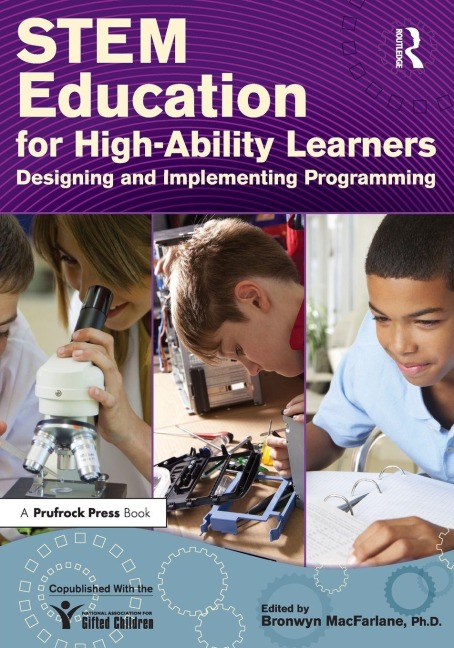
STEM Education for High-Ability Learners: Designing and Implementing Programming focuses on the rigorous articulation of quality STEM education programming to develop STEM talent among high-ability and gifted learners. The intent of this book is to provide a comprehensive resource for educators designing and implementing each of the supports within STEM education by providing a discussion of each critical component for inclusion in a planned, coherent, and high-quality sequenced system. This edited volume provides a cutting-edge discussion of best practices for delivering STEM education by experts in the field. The contributing authors provide a differentiated discussion and recommendations for the learning experiences of gifted students in STEM education programs.
Bronwyn MacFarlane, Ph.D., is a professor of gifted education at the University of Arkansas at Little Rock. She has diverse experiences in teaching gifted students; leading educational programs; designing, reviewing, and evaluating differentiated curriculum for advanced learners; and providing professional development. She has held leadership roles as Associate Dean of the College of Education and Health Professions; Academic Dean of the Summer Institute for Gifted at Princeton University; National Association for Gifted Children (NAGC) Chair of the STEM Network and the Counseling & Guidance Network; editorial assistant and guest editor for Roeper Review; and national columnist of "The Curriculum Corner" for Teaching for High Potential.
Dedication Introduction Part I Foundational Theories, Research, and Best Practices in STEM Education Chapter 1: State Residential STEM Schools: A Case Study Chapter 2: S Is for Science Education at the Elementary Level Chapter 3: S Is for Science Education at the Secondary Level Chapter 4: T Is for Technology Education: Developing Technological Talent and Skill Through Curriculum and Practice Chapter 5: E Is for Engineering Education: Cultivating Applied Science Understandings and Problem-Solving Abilities Chapter 6: M is for Mathematics at the Elementary Level Chapter 7: M is for Mathematics at the Secondary Level Chapter 8: Assessing Aptitude and Achievement in STEM Teaching and Learning Chapter 9: Infrastructure of Comprehensive STEM Programming for Advanced Learners Part II Applications to School-Based Practice With Gifted Education Chapter 10: Connecting the Common Core State, Next Generation Science, and Gifted Programming Standards With STEM Curriculum for Advanced Learners Chapter 11: Biography Builds STEM Understanding for Talented Learners Chapter 12: International STEM Education and the Integrated Role of Second Language Study Chapter 13: Integrating the Arts and Creativity in STEM Education: Emerging Talent Using STEAM Chapter 14: Neuroscience and Gender Issues in STEM Education and Among High-Ability Learners Chapter 15: Designing and Developing an Exceptional Living-Learning Environment for the Highly Able Student: A Grassroots Approach to a Statewide Initiative Conclusion About the Editor About the Authors