
Stöbern
genialokal zum Startbildschirm hinzufügen
Installieren Sie die genialokal App auf Ihrem Startbildschirm für einen schnellen Zugriff und eine komfortable Nutzung.
Installieren Sie die genialokal App auf Ihrem Startbildschirm für einen schnellen Zugriff und eine komfortable Nutzung.
Tippen Sie einfach auf Teilen:
 Und dann auf "Zum Home-Bildschirm [+]".
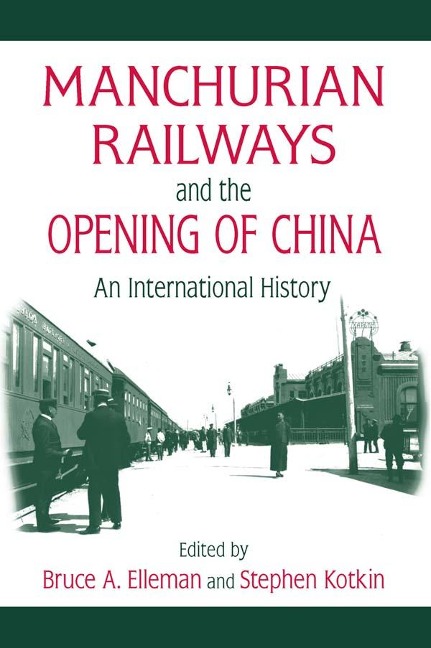
The railways of Manchuria offer an intriguing vantage point for an international history of northeast Asia. Before the completion of the Trans-Siberian railway in 1916, the only rail route from the Imperial Russian capital of St. Petersburg to the Pacific port of Vladivostok transited Manchuria. A spur line from the Manchurian city of Harbin led south to ice-free Port Arthur. Control of these two rail lines gave Imperial Russia military, economic, and political advantages that excited rivalry on the part of Japan and unease on the part of weak and divided China. Meanwhile, the effort to defend and retain that strategic hold against rising Japanese power strained distant Moscow. Control of the Manchurian railways was contested in the Russo-Japanese War of 1904-5; Japan's 1931 invasion and establishment of the puppet state of Manchukuo; the second Sino-Japanese War and World War II in Asia; and, the Chinese civil war that culminated in the Communist victory over the Nationalists. Today, the railways are critical to plans for development of China's sparsely populated interior. This volume brings together an international group of scholars to explore this fascinating history.
Bruce A. Elleman, Stephen Kotkin
Introduction, Bruce A. Elleman, Elisabeth Köll, Y. Tak Matsusaka; Part I Competing Railway Imperialisms; Chapter 1 The Chinese Eastern Railway from the First Sino-Japanese War until the Russo-Japanese War, S.C.M. Paine; Chapter 2 Japan's South Manchuria Railway Company in Northeast China, 1906-34, Y. Tak Matsusaka; Chapter 3 Sino-Soviet Tensions and Soviet Administrative Control over the Chinese Eastern Railway, 1917-25, Bruce A. Elleman; Chapter 4 Railway as Political Catalyst: The Chinese Eastern Railway and the 1929 Sino-Soviet Conflict, Felix Patrikeeff; Part II Competing Railway Nationalisms; Chapter 5 Technology Transfer in Modern China: The Case of Railway Enterprises in Central China and Manchuria, Chang Jui-te; Chapter 6 Chinese Railroads, Local Society, and Foreign Presence: The Tianjin-Pukou Line in pre-1949, Shandong, Elisabeth Köll; Chapter 7 Railways in Communist Strategy and Operations in Manchuria, 1945-48, Harold M. Tanner; Chapter 8 Return of the Chinese Changchun Railway to China by the USSR, Zhang Shengfa; epi Epilogue, Bruce A. Elleman;
Dieses eBook wird im PDF-Format geliefert und ist mit einem Adobe Kopierschutz (DRM) versehen. Sie können dieses eBook mit allen Geräten lesen, die das PDF-Format und den Adobe Kopierschutz (DRM) unterstützen.
Zum Beispiel mit den folgenden Geräten:
• tolino Reader
Laden Sie das eBook direkt über den Reader-Shop auf dem tolino herunter oder übertragen Sie das eBook auf Ihren tolino mit einer kostenlosen Software wie beispielsweise Adobe Digital Editions.
• Sony Reader & andere eBook Reader
Laden Sie das eBook direkt über den Reader-Shop herunter oder übertragen Sie das eBook mit der kostenlosen Software Sony READER FOR PC/Mac oder Adobe Digital Editions auf ein Standard-Lesegeräte mit epub- und Adobe DRM-Unterstützung.
• Tablets & Smartphones
Möchten Sie dieses eBook auf Ihrem Smartphone oder Tablet lesen, finden Sie hier unsere kostenlose Lese-App für iPhone/iPad und Android Smartphone/Tablets.
• PC & Mac
Lesen Sie das eBook direkt nach dem Herunterladen mit einer kostenlosen Lesesoftware, beispielsweise Adobe Digital Editions, Sony READER FOR PC/Mac oder direkt über Ihre eBook-Bibliothek in Ihrem Konto unter „Meine eBooks“ - „online lesen“.
Schalten Sie das eBook mit Ihrer persönlichen Adobe ID auf bis zu sechs Geräten gleichzeitig frei.
Bitte beachten Sie, dass die Kindle-Geräte das Format nicht unterstützen und dieses eBook somit nicht auf Kindle-Geräten lesbar ist.