
Stöbern
genialokal zum Startbildschirm hinzufügen
Installieren Sie die genialokal App auf Ihrem Startbildschirm für einen schnellen Zugriff und eine komfortable Nutzung.
Installieren Sie die genialokal App auf Ihrem Startbildschirm für einen schnellen Zugriff und eine komfortable Nutzung.
Tippen Sie einfach auf Teilen:
 Und dann auf "Zum Home-Bildschirm [+]".
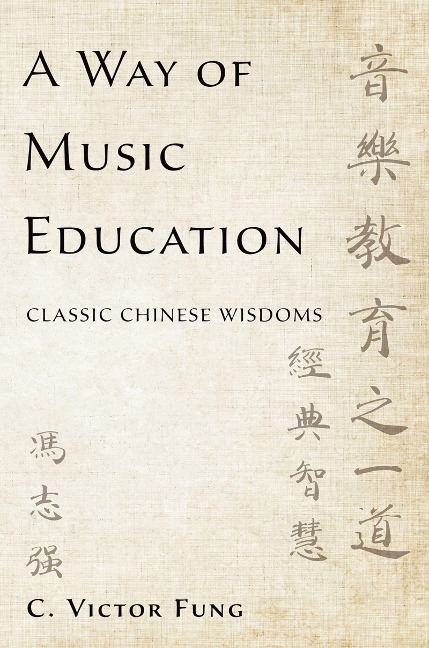
Moving back through Dewey, Heidegger, Nietzsche, and Rousseau, the lineage of Western music education finds its origins in Plato and Pythagoras. Yet theories not rooted in the ancient Greek tradition are all but absent. A Way of Music Education provides a much-needed intervention, integrating ancient Chinese thought into the canon of music education in a structured, systematized, and philosophical way. The book's three central sources - the Yijing (The Book of Changes), Confucianism, and Daoism - inform author C. Victor Fung's argument: that the human being exists as an entity at the center of an organismic world in which all things and events, including music and music education, are connected. Fung ultimately proposes a new educational philosophy based on three key ideas in Chinese thought: change, balance, and liberation. A unique work, A Way of Music Education offers a universal approach engrained in a specific and ancient cultural tradition.
C. Victor Fung is Professor of Music Education and Director of Center for Music Education Research at the University of South Florida, Tampa. His research emphasizes on social psychological aspects, multicultural issues, and international perspectives of music education. He has given over eighty presentations at professional conferences, and open lectures and seminars at over twenty institutions, across five continents. He has served as a Board Member for the International Society for Music Education, the College Music Society, and Florida Music Education Association.
PREFACE
ACKNOWLEDGMENTS
Part I: Classic Chinese Philosophies and Music Educational Interpretations Chapter 1: Introduction Chapter 2: Foundations of Yijing: An Organismic Worldview Chapter 3: Foundations of Classic Confucianism: Cheng (Sincerity), Shan (Kindness), Ren (Benevolence), and Junzi (the Exemplary Person) Chapter 4: Foundations of Classic Daoism: Wuwei (Non-egoistic Action), Guan (Observation), Qiwu (Equality), and Rou (Softness/Flexibility)
Part II: Complementarity and A Trilogy Chapter 5: Complementary Bipolar Continua in Music Education Chapter 6: Change Chapter 7: Balance Chapter 8: Liberation
Part III: A New Way of Thinking and Practical Implications Chapter 9: A Way of Music Education As A Way of Life Chapter 10: Toward Practical Implications
Epilogue
Index
Dieses eBook wird im PDF-Format geliefert und ist mit einem Adobe Kopierschutz (DRM) versehen. Sie können dieses eBook mit allen Geräten lesen, die das PDF-Format und den Adobe Kopierschutz (DRM) unterstützen.
Zum Beispiel mit den folgenden Geräten:
• tolino Reader
Laden Sie das eBook direkt über den Reader-Shop auf dem tolino herunter oder übertragen Sie das eBook auf Ihren tolino mit einer kostenlosen Software wie beispielsweise Adobe Digital Editions.
• Sony Reader & andere eBook Reader
Laden Sie das eBook direkt über den Reader-Shop herunter oder übertragen Sie das eBook mit der kostenlosen Software Sony READER FOR PC/Mac oder Adobe Digital Editions auf ein Standard-Lesegeräte mit epub- und Adobe DRM-Unterstützung.
• Tablets & Smartphones
Möchten Sie dieses eBook auf Ihrem Smartphone oder Tablet lesen, finden Sie hier unsere kostenlose Lese-App für iPhone/iPad und Android Smartphone/Tablets.
• PC & Mac
Lesen Sie das eBook direkt nach dem Herunterladen mit einer kostenlosen Lesesoftware, beispielsweise Adobe Digital Editions, Sony READER FOR PC/Mac oder direkt über Ihre eBook-Bibliothek in Ihrem Konto unter „Meine eBooks“ - „online lesen“.
Schalten Sie das eBook mit Ihrer persönlichen Adobe ID auf bis zu sechs Geräten gleichzeitig frei.
Bitte beachten Sie, dass die Kindle-Geräte das Format nicht unterstützen und dieses eBook somit nicht auf Kindle-Geräten lesbar ist.