Und dann auf "Zum Home-Bildschirm [+]".

Stöbern
genialokal zum Startbildschirm hinzufügen
Installieren Sie die genialokal App auf Ihrem Startbildschirm für einen schnellen Zugriff und eine komfortable Nutzung.
Installieren Sie die genialokal App auf Ihrem Startbildschirm für einen schnellen Zugriff und eine komfortable Nutzung.
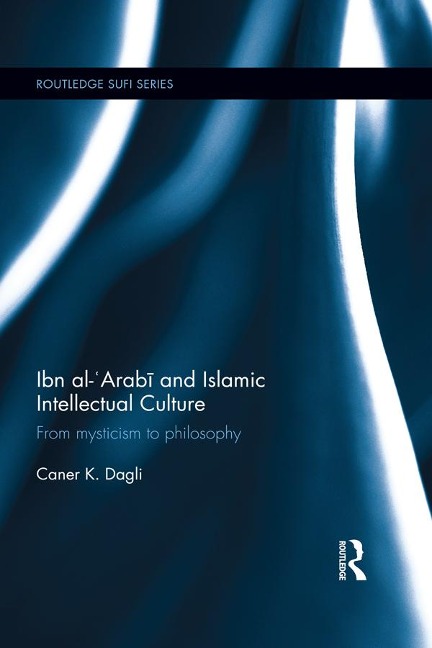
Ibn al-'Arabi (d. 1240) was one of the towering figures of Islamic intellectual history, and among Sufis still bears the title of al-shaykh al-akbar, or "the greatest master." Ibn al-'Arabi and Islamic Intellectual Culture traces the history of the concept of "oneness of being" (wahdat al-wujud) in the school of Ibn al- 'Arabi, in order to explore the relationship between mysticism and philosophy in Islamic intellectual life. It examines how the conceptual language used by early mystical writers became increasingly engaged over time with the broader Islamic intellectual culture, eventually becoming integrated with the latter's common philosophical and theological vocabulary. It focuses on four successive generations of thinkers (Sadr al-Din al-Qunawi, Mu'ayyad al-Din al-Jandi, 'Abd al-Razzaq al-Kashani, and Dawud al-Qaysari), and examines how these "philosopher-mystics" refined and developed the ideas of Ibn al-'Arabi. Through a close analysis of texts, the book clearly traces the crystallization of an influential school of thought in Islamic history and its place in the broader intellectual culture. Offering an exploration of the development of Sufi expression and thought, this book will be a valuable resource for students and scholars of Islamic thought, philosophy, and mysticism.
Caner K. Dagli, Associate Professor of Religious Studies at the College of the Holy Cross, is a specialist in Sufism, Islamic philosophy, interfaith dialogue, and Quranic studies.
Introduction 1 Theoretical Considerations: Cutting the Pie of Mysticism, Philosophy, and Theology 2 Setting the Stage for the School of Ibn al--Arabi 3 Metaphysical Preliminaries 4 Qunawi's Metaphysics 5 Jandi's Use of Wujud and Related Concepts 6 Kashani: Conditioning and Proving God's Existence 7 Qay-ari and the Centrality of Existence Conclusion
Dieses eBook wird im PDF-Format geliefert und ist mit einem Adobe Kopierschutz (DRM) versehen. Sie können dieses eBook mit allen Geräten lesen, die das PDF-Format und den Adobe Kopierschutz (DRM) unterstützen.
Zum Beispiel mit den folgenden Geräten:
• tolino Reader
Laden Sie das eBook direkt über den Reader-Shop auf dem tolino herunter oder übertragen Sie das eBook auf Ihren tolino mit einer kostenlosen Software wie beispielsweise Adobe Digital Editions.
• Sony Reader & andere eBook Reader
Laden Sie das eBook direkt über den Reader-Shop herunter oder übertragen Sie das eBook mit der kostenlosen Software Sony READER FOR PC/Mac oder Adobe Digital Editions auf ein Standard-Lesegeräte mit epub- und Adobe DRM-Unterstützung.
• Tablets & Smartphones
Möchten Sie dieses eBook auf Ihrem Smartphone oder Tablet lesen, finden Sie hier unsere kostenlose Lese-App für iPhone/iPad und Android Smartphone/Tablets.
• PC & Mac
Lesen Sie das eBook direkt nach dem Herunterladen mit einer kostenlosen Lesesoftware, beispielsweise Adobe Digital Editions, Sony READER FOR PC/Mac oder direkt über Ihre eBook-Bibliothek in Ihrem Konto unter „Meine eBooks“ - „online lesen“.
Schalten Sie das eBook mit Ihrer persönlichen Adobe ID auf bis zu sechs Geräten gleichzeitig frei.
Bitte beachten Sie, dass die Kindle-Geräte das Format nicht unterstützen und dieses eBook somit nicht auf Kindle-Geräten lesbar ist.