
Stöbern
genialokal zum Startbildschirm hinzufügen
Installieren Sie die genialokal App auf Ihrem Startbildschirm für einen schnellen Zugriff und eine komfortable Nutzung.
Installieren Sie die genialokal App auf Ihrem Startbildschirm für einen schnellen Zugriff und eine komfortable Nutzung.
Tippen Sie einfach auf Teilen:
 Und dann auf "Zum Home-Bildschirm [+]".
Ihr gewünschter Artikel ist in 0 Buchhandlungen vorrätig - wählen Sie hier eine Buchhandlung in Ihrer Nähe aus:

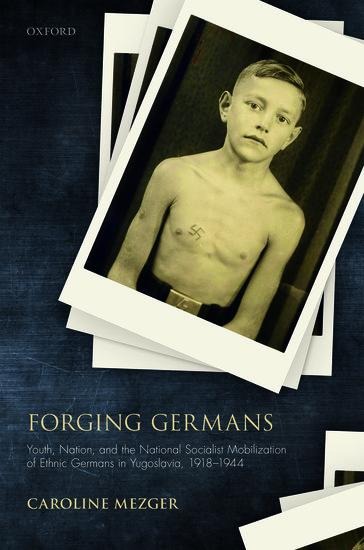
Forging Germans explores the German nationalization and eventual National Socialist radicalization of ethnic Germans in the Batschka and the Western Banat, two multiethnic, post-Habsburg borderland territories currently in northern Serbia. Deploying a comparative approach, Caroline Mezger investigates the experiences of ethnic German children and youth in interwar Yugoslavia and under Hungarian and German occupation during World War II, as local and Third Reich cultural, religious, political, and military organizations wrestled over young people's national (self-) identification and loyalty. Ethnic German children and youth targeted by these nationalization endeavors moved beyond being the objects of nationalist activism to become agents of nationalization themselves, as they actively negotiated, redefined, proselytized, lived, and died for the "Germanness" ascribed to them. Interweaving original oral history interviews, untapped archival materials from Germany, Hungary, and Serbia, and diverse historical press sources, Forging Germans provides incisive insight into the experiences and memories of one of Europe's most contested wartime demographics, probing the relationship between larger historical circumstances and individual agency and subjectivity.
Caroline Mezger is an historian at the Institute for Contemporary History in Munich. She holds degrees in history from Yale University and Central European University (Budapest), as well as a PhD in History and Civilization from the European University Institute (Florence). Her research focuses on the twentieth-century history of Central and Southeastern Europe, World War II and the Holocaust, borderland minorities, migration, communication, and the history of childhood and youth. As of June 2019, she is Junior Research Group Leader of the international, Leibniz Association-funded project 'Man hört, man spricht': Informal Communication and Information 'From Below' in Nazi Europe.
- Prologue - Introduction - Part I: The Interwar Period, 1918-1941 - 1: National Education and Yugoslavia's Donauschwaben Minority Schools, 1918-1941 - 2: Alternate Fronts: Extra-Curricular Youth Groups and the Interwar Nationalization of Yugoslavia's Donauschwaben - Part II: The Western Banat, 1941-1944 - 3: Forging Germans under Germany: Conditions of Occupation in the Western Banat, 1941-1944 - 4: Mobilizing on Germany's Frontier: The Banat's Ethnic German Youth in the Deutsche Jugend and the Waffen-SS, 1941-1944 - Part III : The Batschka, 1941-1944 - 5: Forging Germans under Hungary: Conditions of Occupation in the Batschka, 1941-1944 - 6: Mobilizing across Borders: The Batschka's Donauschwaben in German and Hungarian Youth and Military Formations, 1941-1944 - Conclusion - Appendix - Select Bibliography