Und dann auf "Zum Home-Bildschirm [+]".

Stöbern
genialokal zum Startbildschirm hinzufügen
Installieren Sie die genialokal App auf Ihrem Startbildschirm für einen schnellen Zugriff und eine komfortable Nutzung.
Installieren Sie die genialokal App auf Ihrem Startbildschirm für einen schnellen Zugriff und eine komfortable Nutzung.
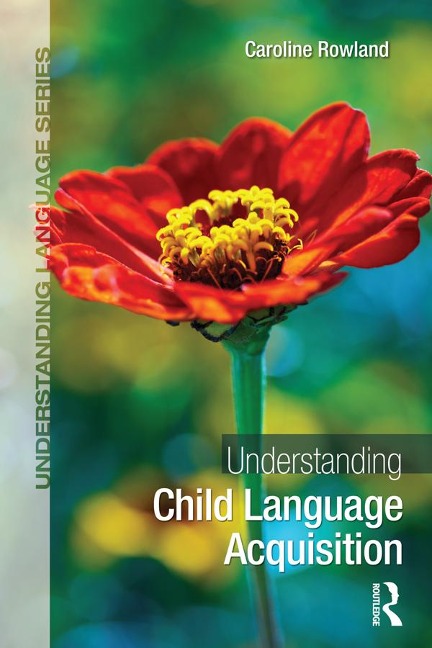
Taking an accessible and cross-linguistic approach, Understanding Child Language Acquisition introduces readers to the most important research on child language acquisition over the last fifty years, as well as to some of the most influential theories in the field. Rather than just describing what children can do at different ages Rowland explains why these research findings are important and what they tell us about how children acquire language. Key features include: - Cross-linguistic analysis of how language acquisition differs between languages - A chapter on how multilingual children acquire several languages at once - Exercises to test comprehension - Chapters organised around key questions that summarise the critical issues posed by researchers in the field, with summaries at the end - Further reading suggestions to broaden understanding of the subject With its particular focus on outlining key similarities and differences across languages and what this cross-linguistic variation means for our ideas about language acquisition, Understanding Child Language Acquisition forms a comprehensive introduction to the subject for students of linguistics, psychology and speech and language therapy. Students and instructors will benefit from the comprehensive companion website that includes a students' section featuring interactive comprehension exercises, extension activities, chapter recaps and answers to the exercises within the book. Material for instructors includes sample essay questions, answers to the extension activities for students and a Powerpoint including all the figures from the book. www.routledge.com/cw/rowland
Caroline Rowland is Professor of Developmental Psychology at the University of Liverpool. Her research focuses on how children acquire language, with a particular interest in grammar and in assessing how the child's environment promotes and shapes language growth. She is a series editor for the Trends in Language Acquisition (TiLAR) book series and an associate editor for the Journal of Child Language.
Chapter 1: Introduction to language acquisition Chapter 2: Learning the sounds of the language Chapter 3: Learning words Chapter 4: Learning morphology Chapter 5: Learning syntax Chapter 6: Learning to communicate Chapter 7: Learning more than one language - multilingualism Chapter 8: Explaining individual differences Chapter 9: The search for language universals Index
Dieses eBook wird im PDF-Format geliefert und ist mit einem Adobe Kopierschutz (DRM) versehen. Sie können dieses eBook mit allen Geräten lesen, die das PDF-Format und den Adobe Kopierschutz (DRM) unterstützen.
Zum Beispiel mit den folgenden Geräten:
• tolino Reader
Laden Sie das eBook direkt über den Reader-Shop auf dem tolino herunter oder übertragen Sie das eBook auf Ihren tolino mit einer kostenlosen Software wie beispielsweise Adobe Digital Editions.
• Sony Reader & andere eBook Reader
Laden Sie das eBook direkt über den Reader-Shop herunter oder übertragen Sie das eBook mit der kostenlosen Software Sony READER FOR PC/Mac oder Adobe Digital Editions auf ein Standard-Lesegeräte mit epub- und Adobe DRM-Unterstützung.
• Tablets & Smartphones
Möchten Sie dieses eBook auf Ihrem Smartphone oder Tablet lesen, finden Sie hier unsere kostenlose Lese-App für iPhone/iPad und Android Smartphone/Tablets.
• PC & Mac
Lesen Sie das eBook direkt nach dem Herunterladen mit einer kostenlosen Lesesoftware, beispielsweise Adobe Digital Editions, Sony READER FOR PC/Mac oder direkt über Ihre eBook-Bibliothek in Ihrem Konto unter „Meine eBooks“ - „online lesen“.
Schalten Sie das eBook mit Ihrer persönlichen Adobe ID auf bis zu sechs Geräten gleichzeitig frei.
Bitte beachten Sie, dass die Kindle-Geräte das Format nicht unterstützen und dieses eBook somit nicht auf Kindle-Geräten lesbar ist.