
Stöbern
genialokal zum Startbildschirm hinzufügen
Installieren Sie die genialokal App auf Ihrem Startbildschirm für einen schnellen Zugriff und eine komfortable Nutzung.
Installieren Sie die genialokal App auf Ihrem Startbildschirm für einen schnellen Zugriff und eine komfortable Nutzung.
Tippen Sie einfach auf Teilen:
 Und dann auf "Zum Home-Bildschirm [+]".
Ihr gewünschter Artikel ist in 0 Buchhandlungen vorrätig - wählen Sie hier eine Buchhandlung in Ihrer Nähe aus:

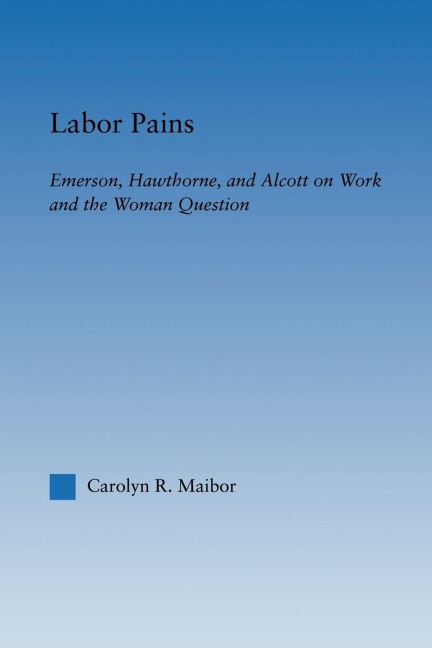
This book explores the importance of work and its role in defining and developing the self. Maibor reveals how the writings of Emerson, Hawthorne, and Alcott delve into notions of equality through this emphasis on labor. In doing so she challenges the traditional view of Emerson as unconcerned with societal issues, and opens the work of Hawthorne and Alcott to new feminist readings.
Carolyn R. Maibor has a background in both English and Philosophy, and received her Ph.D. in English and American Literature from Brandeis University. Currently an assistant Professor of English at Framingham State College, she has taught at the University of Montreal, Simmons College, and Brandeis University. She has published articles on Emerson's aesthetics.
CONTENTS Introduction Chapter One: The Working Self: Emerson's Theory of Vocation Democratic Genius The Division of Labor Thoreau on the Division of Labor The Value of Work The Individual and Society Chapter Two: Working Girls: Female Self-Reliance and Vocation Chapter Three: The Work of the Dark Lady: Hawthorne on Vocation and Women Hester Prynne Zenobia Chapter Four: Little Women and Working Girls: Louisa May Alcott on Women and Work The Civil War Meaningful Work and Meaningful Lives Finding One's Job and Finding Oneself Independence Notes Bibliography Index