Und dann auf "Zum Home-Bildschirm [+]".

Stöbern
genialokal zum Startbildschirm hinzufügen
Installieren Sie die genialokal App auf Ihrem Startbildschirm für einen schnellen Zugriff und eine komfortable Nutzung.
Installieren Sie die genialokal App auf Ihrem Startbildschirm für einen schnellen Zugriff und eine komfortable Nutzung.
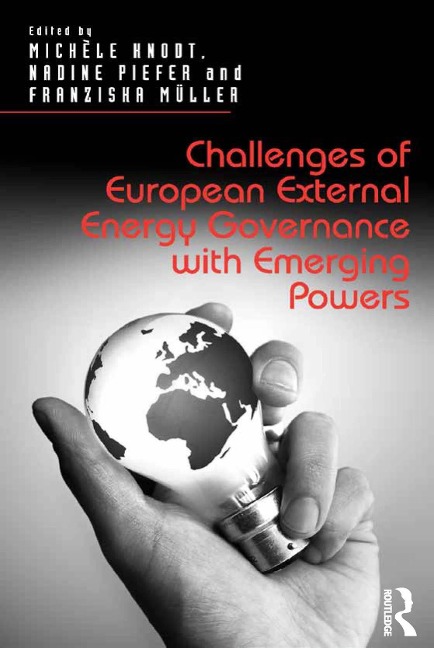
In a multipolar world with growing demand for energy, not least by Emerging Powers such as Brazil, India, China or South Africa (BICS), questions of EU external energy governance would at first hand appear to be a high-priority. Yet, reality tells a different story: the EU's geographical focus remains on adjacent countries in the European neighbourhood and on issues related to energy security. Despite being Strategic Partners and engaging in energy dialogues, it seems that the EU is lacking strategic vision and is not perceived as a major actor in energy cooperation with the BICS. Thus, political momentum for energy cooperation and joint governance of scarce resources is vanishing. Resulting from three years of international, interdisciplinary research cooperation among academics and practitioners in Europe and the BICS countries within a project funded by the Volkswagen Foundation, this volume addresses one of the greatest global challenges. Specific focus lies on the bilateral energy dialogues and Strategic Partnerships between the EU and Emerging Powers regarding bilateral, inter- and transnational energy cooperation. Furthermore, the analysis provides policy recommendations in order to tap the full potential of energy cooperation between the EU and Brazil, India, China and South Africa.
Michèle Knodt is Jean Monnet Professor for European Integration and Comparative Politics at the Technische UniversitÃ-t Darmstadt, Germany. She works on the new role of Emerging Powers in international politics with a special focus on energy and triangular cooperation. Furthermore, her research interests include EU external democracy promotion in Central Asia and Southern Caucasus as well as Civil Society Engagement in the European Multilevel System. Nadine Piefer is a Researcher at the Department of Political Science at the Technische UniversitÃ-t Darmstadt, Germany, and a freelance Consultant. Her research and consultancy work focuses on EU foreign and energy relations with the BICS, new development partners and triangular cooperation. She has research and practical experience in South Africa, Mexico, Brazil, India, China and Germany. Franziska MÃ-ller is a Post-doctoral Research Fellow at the University of Kassel, Germany. Her PhD analyzed governmentality and normative power within EU-ACP relations. Her research interests include EU relations with Emerging Powers, poststructuralist and postcolonial IR theory, international aid governance, and qualitative social research. Her current work focuses on IRENA's role for a global energy transition, thereby exploring transformations of North-South relations at the energy/development nexus.
I: Introduction; 1: Introduction; 2: Conceptualizing Emerging Powers and EU Energy Governance; 3: EU and Emerging Powers in Energy Governance; II: European Energy Governance; 4: Explaining European Union External Energy Governance with Emerging Powers; 5: Bilateral EU Member States' Energy Cooperation with Emerging Powers; 5_1: Denmark's Energy Cooperation with Emerging Powers; 5_2: Germany's Energy Cooperation with Emerging Powers; 5_3: Britain's Energy Cooperation with Emerging Powers; 5.4: Spain's Energy Cooperation with Emerging Powers; III: EU External Energy Relations with China, India, Brazil, South Africa; 6: China-EU Energy Governance; 7: India-EU Energy Relations; 8: Brazil-EU Energy Governance; 9: South Africa-EU Energy Governance; IV: Communicative Challenges of EU-Emerging Powers Energy Relations; 10: More Than Only Words; 11: Energy Poverty and Policy Coherence in India; V: Non-state Actors within EU-Emerging Powers Energy Relations; 12: The Governance of International Technology Transfer; 13: Private Actors in Transnational Energy Governance; VI: Multilateral and Regional Embededdness of the EU and Emerging Powers in Energy Governance; 14: International Energy Governance Revisited; 15: IRENA's Renewable Energy Governance; VII: Concluding Remarks and Policy Recommendations; 16: Understanding EU-Emerging Powers Energy Governance; 17: Policy Recommendations for Enhanced EU-Emerging Powers Energy Cooperation
Dieses eBook wird im PDF-Format geliefert und ist mit einem Adobe Kopierschutz (DRM) versehen. Sie können dieses eBook mit allen Geräten lesen, die das PDF-Format und den Adobe Kopierschutz (DRM) unterstützen.
Zum Beispiel mit den folgenden Geräten:
• tolino Reader
Laden Sie das eBook direkt über den Reader-Shop auf dem tolino herunter oder übertragen Sie das eBook auf Ihren tolino mit einer kostenlosen Software wie beispielsweise Adobe Digital Editions.
• Sony Reader & andere eBook Reader
Laden Sie das eBook direkt über den Reader-Shop herunter oder übertragen Sie das eBook mit der kostenlosen Software Sony READER FOR PC/Mac oder Adobe Digital Editions auf ein Standard-Lesegeräte mit epub- und Adobe DRM-Unterstützung.
• Tablets & Smartphones
Möchten Sie dieses eBook auf Ihrem Smartphone oder Tablet lesen, finden Sie hier unsere kostenlose Lese-App für iPhone/iPad und Android Smartphone/Tablets.
• PC & Mac
Lesen Sie das eBook direkt nach dem Herunterladen mit einer kostenlosen Lesesoftware, beispielsweise Adobe Digital Editions, Sony READER FOR PC/Mac oder direkt über Ihre eBook-Bibliothek in Ihrem Konto unter „Meine eBooks“ - „online lesen“.
Schalten Sie das eBook mit Ihrer persönlichen Adobe ID auf bis zu sechs Geräten gleichzeitig frei.
Bitte beachten Sie, dass die Kindle-Geräte das Format nicht unterstützen und dieses eBook somit nicht auf Kindle-Geräten lesbar ist.