
Stöbern
genialokal zum Startbildschirm hinzufügen
Installieren Sie die genialokal App auf Ihrem Startbildschirm für einen schnellen Zugriff und eine komfortable Nutzung.
Installieren Sie die genialokal App auf Ihrem Startbildschirm für einen schnellen Zugriff und eine komfortable Nutzung.
Tippen Sie einfach auf Teilen:
 Und dann auf "Zum Home-Bildschirm [+]".

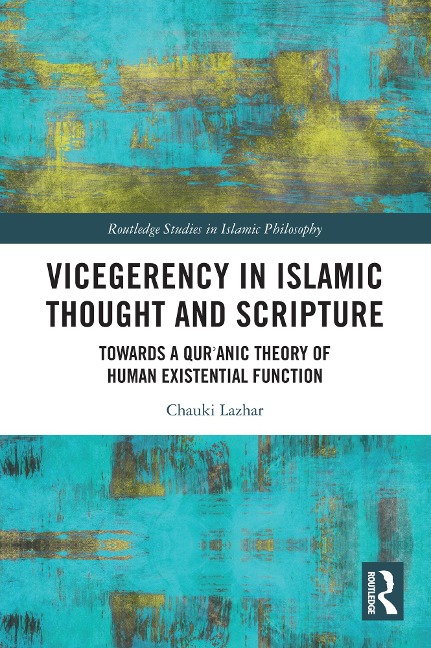
This book explores the reasons for the creation of humanity on Earth from the perspective of ancient and contemporary Muslim thinkers, aiming to lay the outlines of a Qur-anic theory of human existential function. The author proceeds from the assumption that, until now, contemporary Islamic scholarship has suffered from the absence of theorisation about a Qur-anic conception of human existential function (vicegerency), lacking a unified philosophical and epistemological frame of reference. Challenging common perceptions among contemporary Muslim reformists regarding the human existential function, the author examines both classical and contemporary thought as well as conducting a thorough and comprehensive analysis of Qur-anic passages that ground the theory of vicegerency within a cosmic scheme. Ultimately, a new approach for understanding the human existential function from within the Qur-anic worldview is proposed. For the first time then, this book offers an integral induction and categorisation of Qur-anic teleological concepts, combining them within a coherent framework that reveals the outlines of a vicegerency theory and a Qur-anic worldview. Suitable for both scholars and laypersons, the book serves as a landmark textbook in the fields of Islamic Philosophy, Theological Anthropology and Qur-anic Studies.
Chauki Lazhar is Assistant Professor of Islamic Studies at the College of Sharia and Islamic Studies, Qatar University. His research interests in the field of Islamic Studies include theological anthropology, Islamic meta-ethics and metaphysics, the epistemology of Islamic sciences, Islamic worldview studies and the methodology of contemporary ethico-religious reasoning (ijtihad). He is the author of, inter alia, Al-Umuma wa al-Unutha fi al-Islam wa al-Tamyiz Bayn al-Mar-a wa al-Rajul fi al-A-kam al-Shar-iyya [Motherhood, Femininity and Gender Differentiation in Islamic Provisions] (Doha: Hamad Bin Khalifa University Press, 2019).
1. Introduction 2. Islamic Worldview in the Context of Modern Reformism 3. The Concept of Istikhlaf in Islamic Heritage 4. Vicegerency as Existential Function in Contemporary Reformism 5. The Object of Vicegerency: Identifying Human Existential Function 6. Vicegerency in the Qur-anic Worldview Conclusion