
Stöbern
genialokal zum Startbildschirm hinzufügen
Installieren Sie die genialokal App auf Ihrem Startbildschirm für einen schnellen Zugriff und eine komfortable Nutzung.
Installieren Sie die genialokal App auf Ihrem Startbildschirm für einen schnellen Zugriff und eine komfortable Nutzung.
Tippen Sie einfach auf Teilen:
 Und dann auf "Zum Home-Bildschirm [+]".

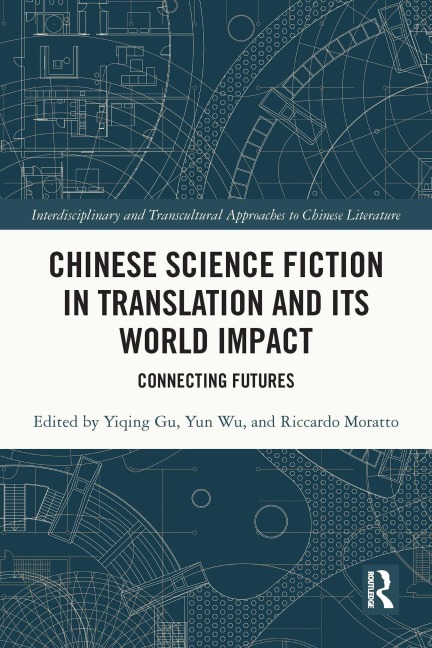
Edited by Gu, Wu, and Moratto, this volume explores how Chinese science fiction transcends cultural and linguistic boundaries through its unique blend of imagination, philosophy, and cultural reflection. Bringing together contributions from leading scholars, the book offers crucial insights into how its translation shapes our understanding of the genre and contributes to the wider discussion on the circulation of non-Western literature in a globalized world. Through a detailed examination of translation practices, multimodal adaptations, and their complexities, this volume sheds new light on the challenges and opportunities that shape Chinese science fiction, and explores how different forms of translation across media - such as films, graphic novels, and online platforms - expand its reach and impact. This leads to a broader exploration of the cultural, political, and economic implications of Chinese science fiction's international influence and how it contributes to global discourses on the future. A comprehensive volume for scholars and students in translation studies, science fiction studies, comparative literature, and Chinese studies, as well as those interested in the intersections of global literature, translation, and intercultural communication.
Yiqing Gu is Associate Professor of Translation Studies at the School of Foreign Studies, Tongji University, China. His research interests include translation history, science fiction translation, global communication, digital humanities, and Wellsian studies. He previously taught at Shanghai International Studies University and was the inaugural curator of the Museum of World Languages. Currently, he serves as Deputy Secretary-General of the Chinese Comparative Literature Association's Translation Studies section. He is working on his first monograph, Translating Science Fiction in China: A Genealogy of Chinese Futurities. Yun Wu is Distinguished Professor of Translation Studies and Dean of the School of Foreign Studies at Tongji University, China. She is also the Director of the Research Center for Chinese Discourse and Global Communication, a key research institute under China's National Language Commission. Her research focuses on cultural translation theory, translation and ideology, as well as the translation of Chinese literature and culture. Riccardo Moratto is Distinguished Professor of Translation and Interpreting Studies at the School of Foreign Studies, Tongji University, and Deputy Director of Research Center for Chinese Discourse and Global Communication, International Association of Conference Interpreters (AIIC) member, and member of Assointerpreti. He is a Chartered Linguist and Fellow Member of Chartered Institute of Linguists (CIoL), an international conference interpreter, and renowned literary translator. He is editor-in-chief of Interpreting Studies for Shanghai Foreign Language Education Press and editor-in-chief of Routledge Studies in East Asian Interpreting and Routledge Interdisciplinary and Transcultural Approaches to Chinese Literature.
Introduction Part I Speculative Horizons 1. Translation as Cultural and Geopolitical Negotiation: A Case Study of an International SF Writing Project in the 1980s 2. Translating Revolution in a Traditional Context 3. Liu Cixin's Cosmic Realism in his Seven Theses of the Future 4. Literary Success, Historical SF, and Translation in the "Post-Three Body" Era, Angie Chau Part II Mediating Worlds 5. Translate Liu Cixin's "Science": A Dialogue Between a Translator and an Astrophysicis 6. The Anglophone Wormhole: A Gateway to Chinese SF, or a Double-edged Sword? 7. Shaping a Shared Future Across the Pacific: Actor-Networking and Socio-Discursive Dynamics of the Three-Body Trilogy in Translation 8. Chinese Dreams and Dream Interpreters: The Reception of Chinese Science Fiction in Italy, Chiara Cigarini Part III Translational Frontiers 9. Future Without Tense? Time and Tense in the Translation of Chinese SF 10. Studying Chinese Science Fictions' Themes through Metaphor: A Corpus-based Study of The Wandering Earth and its English Translation 11. Interlinguistic and Intersemiotic Translation of Chinese Science Fiction in Italy: Con quelle Mani/----from Short Story to Graphic Novel 12. Life is a Vibrant String: Philosophical Implications and Cross-Cultural Translations in Chinese Science Fiction through AI Collaboration.