Und dann auf "Zum Home-Bildschirm [+]".

Stöbern
genialokal zum Startbildschirm hinzufügen
Installieren Sie die genialokal App auf Ihrem Startbildschirm für einen schnellen Zugriff und eine komfortable Nutzung.
Installieren Sie die genialokal App auf Ihrem Startbildschirm für einen schnellen Zugriff und eine komfortable Nutzung.
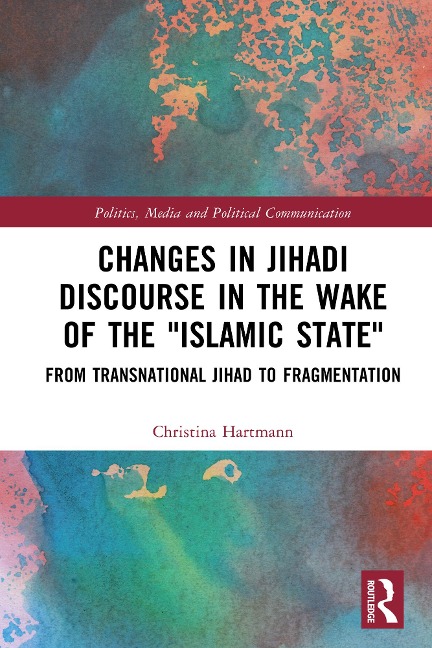
Changes in Jihadi Discourse in the Wake of the "Islamic State" explores how the transnational jihadi discourse changed with the development of the "Islamic State" terrorist group and resulted in the fragmentation of the jihadi movement. From the Middle East, through Africa to South East Asia, today's jihadi movement is more fragmented than ever. Al-Qaida and the "Islamic State" compete not only with each other but also with local jihadi groups. Despite the fact that, in the wake of the "Islamic State", international jihadi groups are in fierce competition for supporters, little has been said on how the process of competition as well as external events changed the ideology of these groups and the topics relevant to them. Countering dominant research focusing on the differences between jihadi strains, this book explores how the appearance and temporary strength of the "Islamic State" changed the topics and talking points of other jihadi actors, such as al-Qaida. By analyzing primary sources in Arabic and English, the author sheds light on the inner- and inter-jihadi discourse and its development over the years. The book does not simply describe changes in topics; it traces these changes quantitatively and relates them to external events. This book is aimed at academics, researchers, and postgraduate students interested in political science, security studies, jihadism, jihadi discourse, al-Qaida, "Islamic State", and Salafism, as well as practitioners and decision-makers in government agencies who wish to understand how transnational jihadi discourse has developed over the previous two decades.
Christina Hartmann completed her PhD in Political Science at Friedrich-Alexander-University Erlangen-Nuremberg, Germany. She works as a consultant for local and international organizations, writing project proposals and project budgets for international donors. Her research interests include Political Islam, Salafism, Jihadism, Arab Spring, Political Transitions, and Art and Revolution.
1. Introduction 1. Setting the Context 2. Historical Development of the Jihadi Fragmentation 3. Talking Points in Jihadi Discourse 4. Findings and Hypotheses Conclusion Appendix
Dieses eBook wird im PDF-Format geliefert und ist mit einem Adobe Kopierschutz (DRM) versehen. Sie können dieses eBook mit allen Geräten lesen, die das PDF-Format und den Adobe Kopierschutz (DRM) unterstützen.
Zum Beispiel mit den folgenden Geräten:
• tolino Reader
Laden Sie das eBook direkt über den Reader-Shop auf dem tolino herunter oder übertragen Sie das eBook auf Ihren tolino mit einer kostenlosen Software wie beispielsweise Adobe Digital Editions.
• Sony Reader & andere eBook Reader
Laden Sie das eBook direkt über den Reader-Shop herunter oder übertragen Sie das eBook mit der kostenlosen Software Sony READER FOR PC/Mac oder Adobe Digital Editions auf ein Standard-Lesegeräte mit epub- und Adobe DRM-Unterstützung.
• Tablets & Smartphones
Möchten Sie dieses eBook auf Ihrem Smartphone oder Tablet lesen, finden Sie hier unsere kostenlose Lese-App für iPhone/iPad und Android Smartphone/Tablets.
• PC & Mac
Lesen Sie das eBook direkt nach dem Herunterladen mit einer kostenlosen Lesesoftware, beispielsweise Adobe Digital Editions, Sony READER FOR PC/Mac oder direkt über Ihre eBook-Bibliothek in Ihrem Konto unter „Meine eBooks“ - „online lesen“.
Schalten Sie das eBook mit Ihrer persönlichen Adobe ID auf bis zu sechs Geräten gleichzeitig frei.
Bitte beachten Sie, dass die Kindle-Geräte das Format nicht unterstützen und dieses eBook somit nicht auf Kindle-Geräten lesbar ist.