Und dann auf "Zum Home-Bildschirm [+]".

Stöbern
genialokal zum Startbildschirm hinzufügen
Installieren Sie die genialokal App auf Ihrem Startbildschirm für einen schnellen Zugriff und eine komfortable Nutzung.
Installieren Sie die genialokal App auf Ihrem Startbildschirm für einen schnellen Zugriff und eine komfortable Nutzung.
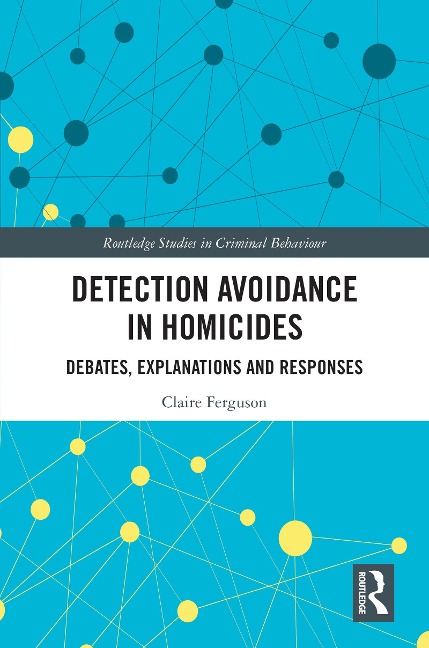
Detection Avoidance in Homicides: Debates, Explanations and Responses presents theory and research on how offenders avoid detection and the challenges and opportunities these efforts pose to investigators. From a scholarly perspective, the book presents a continuing history of research on detection avoidance by offenders, discusses the features of complex death investigations involving detection avoidance, and critiques the current frameworks used for conceptualizing these behaviors. Dr. Ferguson focuses on the key debates in the literature, argues for collaborations between researchers and practitioners to remedy siloing, and explores the reality of detection avoidance in homicides as complex and multifaceted. While detection avoidance behaviors have the potential to negatively impact sudden death investigations and frustrate criminal investigations specifically, their use also creates broader problems. These include many problematic effects on family members of the deceased, police officers, police agencies and the communities they serve. Offenders choosing to use detection avoidance behaviors challenges the efficient use of public resources, puts at risk the successful adjudication of homicides, and creates a public safety issue. The book explains detection avoidance using learning, situational, individual and gender-based theories, including proposing whether it may be a form of coercive control used by intimate partner abusers. Finally, how detection avoidance by offenders is recognized and responded to in sudden death investigations is addressed, with specific reference to useful examples of policy reform implemented by various police agencies internationally. Providing research and theory to explain detection avoidance and best practice for responding to it, this book will be of great interest to students and scholars of criminology, forensic science and psychology. It will also be useful to professionals working with homicide offenders.
Claire Ferguson is a Senior Lecturer and researcher in the School of Justice at Queensland University of Technology in Brisbane Australia. Claire's work bridges the gap between theory and practice in complex sudden death investigations potentially involving detection avoidance. While she has published over 40 articles in many academic journals, she also uses her research to inform training and expert consultancy for assisting police, attorneys, and coroners investigating missing persons, equivocal deaths, and suspected homicides.
1. A continuing history of research into detection avoidance 2. The basics of detection avoidance in homicide 3. Categorizing detection avoidance behavior using typologies 4. Discovering crime scene staging through deception detection 5. Explaining offenders' use of detection avoidance 6. Towards a theory of detection avoidance as a form of coercive control 7. Challenges and opportunities in uncovering concealed homicides Index
Dieses eBook wird im PDF-Format geliefert und ist mit einem Adobe Kopierschutz (DRM) versehen. Sie können dieses eBook mit allen Geräten lesen, die das PDF-Format und den Adobe Kopierschutz (DRM) unterstützen.
Zum Beispiel mit den folgenden Geräten:
• tolino Reader
Laden Sie das eBook direkt über den Reader-Shop auf dem tolino herunter oder übertragen Sie das eBook auf Ihren tolino mit einer kostenlosen Software wie beispielsweise Adobe Digital Editions.
• Sony Reader & andere eBook Reader
Laden Sie das eBook direkt über den Reader-Shop herunter oder übertragen Sie das eBook mit der kostenlosen Software Sony READER FOR PC/Mac oder Adobe Digital Editions auf ein Standard-Lesegeräte mit epub- und Adobe DRM-Unterstützung.
• Tablets & Smartphones
Möchten Sie dieses eBook auf Ihrem Smartphone oder Tablet lesen, finden Sie hier unsere kostenlose Lese-App für iPhone/iPad und Android Smartphone/Tablets.
• PC & Mac
Lesen Sie das eBook direkt nach dem Herunterladen mit einer kostenlosen Lesesoftware, beispielsweise Adobe Digital Editions, Sony READER FOR PC/Mac oder direkt über Ihre eBook-Bibliothek in Ihrem Konto unter „Meine eBooks“ - „online lesen“.
Schalten Sie das eBook mit Ihrer persönlichen Adobe ID auf bis zu sechs Geräten gleichzeitig frei.
Bitte beachten Sie, dass die Kindle-Geräte das Format nicht unterstützen und dieses eBook somit nicht auf Kindle-Geräten lesbar ist.