
Stöbern
genialokal zum Startbildschirm hinzufügen
Installieren Sie die genialokal App auf Ihrem Startbildschirm für einen schnellen Zugriff und eine komfortable Nutzung.
Installieren Sie die genialokal App auf Ihrem Startbildschirm für einen schnellen Zugriff und eine komfortable Nutzung.
Tippen Sie einfach auf Teilen:
 Und dann auf "Zum Home-Bildschirm [+]".
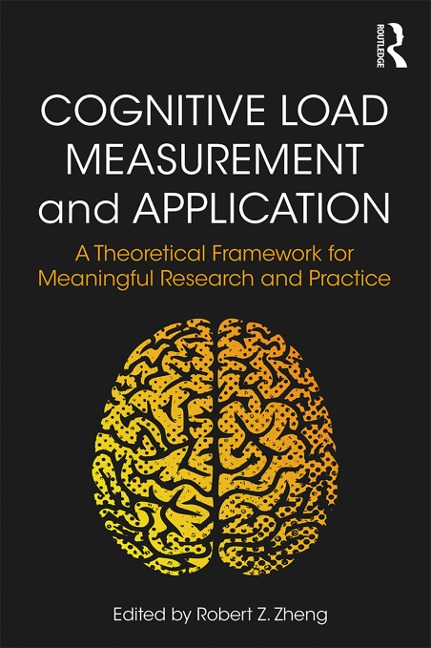
Cognitive Load Measurement and Application provides up-to-date research and theory on the functional role of cognitive load measurement and its application in multimedia and visual learning. Grounded in a sound theoretical framework, this edited volume introduces methodologies and strategies that effect high-quality cognitive load measurement in learning. Case studies are provided to aid readers in comprehension and application within various learning situations, and the book concludes with a review of the possible future directions of the discipline.
Robert Z. Zheng is Associate Professor of Educational Psychology at the University of Utah, USA.
Part I: Theoretical Perspectives on Cognitive Load Measurement 1. The Role of Independent Measures of Load In Cognitive Load Theory 2. Subjective Measures of Cognitive Load: What Can They Reliably Measure? 3. A Critical Analysis of the Theoretical Construction and Empirical Measurement of Cognitive Load 4. The Boundary of Different Approaches in Cognitive Load Measurement: Strengths and Limitations Part II: Methodology in Cognitive Load Measurement and Application 5. Cognitive Load as a Local Characteristic of Cognitive Processes: Implications for Measurement Approaches 6. Secondary Task as a Measure of Cognitive Load 7.Assessing Working Memory Dynamics with Electroencephalography: Implications for Research on Cognitive Load 8. The Use of Ocular-Motor Measures in a Convergent Approach to Studying Cognitive Load 9. Cognitive Load as a Measure of Capture of the Focus of Attention 10. Multimodal and Data-Driven Cognitive Load Measurement Part III: Practices in Cognitive Load Measurement 11. Measuring Cognitive Load in Medical and Health Professions Simulation Training 12. Exploring the Choices for an Effective Method for Cognitive Load Measurement in Asynchronous Interactions of E-Learning 13. Case Studies in Cognitive Load Measurement 14. Connecting Form and Function: Understanding the Role That Cognitive Load Plays in Students' Ability to Construct Representations of Chemical Structure 15. Neuroergonomic Methods of Assessing Learning
Dieses eBook wird im PDF-Format geliefert und ist mit einem Adobe Kopierschutz (DRM) versehen. Sie können dieses eBook mit allen Geräten lesen, die das PDF-Format und den Adobe Kopierschutz (DRM) unterstützen.
Zum Beispiel mit den folgenden Geräten:
• tolino Reader
Laden Sie das eBook direkt über den Reader-Shop auf dem tolino herunter oder übertragen Sie das eBook auf Ihren tolino mit einer kostenlosen Software wie beispielsweise Adobe Digital Editions.
• Sony Reader & andere eBook Reader
Laden Sie das eBook direkt über den Reader-Shop herunter oder übertragen Sie das eBook mit der kostenlosen Software Sony READER FOR PC/Mac oder Adobe Digital Editions auf ein Standard-Lesegeräte mit epub- und Adobe DRM-Unterstützung.
• Tablets & Smartphones
Möchten Sie dieses eBook auf Ihrem Smartphone oder Tablet lesen, finden Sie hier unsere kostenlose Lese-App für iPhone/iPad und Android Smartphone/Tablets.
• PC & Mac
Lesen Sie das eBook direkt nach dem Herunterladen mit einer kostenlosen Lesesoftware, beispielsweise Adobe Digital Editions, Sony READER FOR PC/Mac oder direkt über Ihre eBook-Bibliothek in Ihrem Konto unter „Meine eBooks“ - „online lesen“.
Schalten Sie das eBook mit Ihrer persönlichen Adobe ID auf bis zu sechs Geräten gleichzeitig frei.
Bitte beachten Sie, dass die Kindle-Geräte das Format nicht unterstützen und dieses eBook somit nicht auf Kindle-Geräten lesbar ist.