
Stöbern
genialokal zum Startbildschirm hinzufügen
Installieren Sie die genialokal App auf Ihrem Startbildschirm für einen schnellen Zugriff und eine komfortable Nutzung.
Installieren Sie die genialokal App auf Ihrem Startbildschirm für einen schnellen Zugriff und eine komfortable Nutzung.
Tippen Sie einfach auf Teilen:
 Und dann auf "Zum Home-Bildschirm [+]".
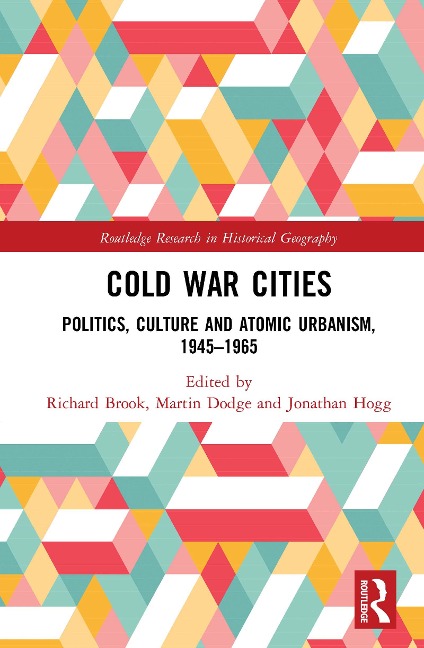
This book examines the impact of the Cold War in a global context and focuses on city-scale reactions to the atomic warfare. It explores urbanism as a weapon to combat the dangers of the communist intrusion into the American territories and promote living standards for the urban poor in the US cities. The Cold War saw the birth of 'atomic urbanisation', central to which were planning, politics and cultural practices of the newly emerged cities. This book examines cities in the Arctic, Europe, Asia and Australasia in detail to reveal how military, political, resistance and cultural practices impacted on the spaces of everyday life. It probes questions of city planning and development, such as: How did the threat of nuclear war affect planning at a range of geographic scales? What were the patterns of the built environment, architectural forms and material aesthetics of atomic urbanism in difference places? And, how did the 'Bomb' manifest itself in civic governance, popular media, arts and academia? Understanding the age of atomic urbanism can help meet the contemporary challenges that cities are facing. The book delivers a new dimension to the existing debates of the ideologically opposed superpowers and their allies, their hemispherical geopolitical struggles, and helps to understand decades of growth post-Second World War by foregrounding the Cold War.
Richard Brook is an architect and Reader at Manchester School of Architecture, UK. He is author of Manchester Modern (2017). He has talked, written, curated and published extensively on post-war British architecture. He researches the policies of planning and regulation and their impact on urban form. Martin Dodge is a Senior Lecturer in Human Geography at the University of Manchester, UK. His major research interests are currently visual culture and the politics of mapping, and infrastructural geographies read through historical and archival perspectives. Jonathan Hogg is a Senior Lecturer in History at the University of Liverpool, UK. He has conducted extensive research on the cultural and social history of the British nuclear state. His recent publications offer a new interpretation of nuclear culture and the Cold War by tracing the tensions between 'official' and 'unofficial' nuclear narratives.
Cold War Cities: Spatial Planning, Social and Political Processes, and Cultural Practices in the Age of Atomic Urbanism, 1945-1965 Part 1: Planning the Cold War City 1. Properties of Science: How Industrial Research and the Suburbs Reshaped Each Other in Cold-War Pittsburgh 2. The City of Bristol: Ground Zero in the Making 3. Towards a Prosperous Future Through Cold War Planning: Stalinist Urban Design in the Industrial Towns of Sillamäe and Kohtla-Järve, Estonia 4. Nuclear Anxiety in Postwar Japan's City of the Future Visual Essay: Urbanism of Fear: A Tale of Two Chinese Cold War Cities Part 2: Building the Cold War City 5. The Warsaw Metro and the Warsaw Pact: From Deep Cover to Cut-and-Cover 6. Competing Militarisation and Urban Development During the Cold War: How a Soviet Air Base Came to Dominate Tartu, Estonia 7. In-Between the East and the West: Architecture and Urban Planning in 'Non-Aligned' Skopje 8. Atomic Urbanism Under Greenland's Ice Cap: Camp Century and Cold War Architectural Imagination Visual Essay: Warfare or Welfare? Civil Defence and Emergency Planning in Danish Urban Welfare Architecture Part 3: Culture and Politics in the Cold War City 9. Urban Space, Public Protest, and Nuclear Weapons in Early Cold War Sydney 10. In the Middle of the Atomic Arena: Visible and Invisible NATO Sites in Verona During the Nineteen Fifties 11. Conceiving the Atomic Bomb Threat Between West and East: Mobilisation, Representation and Perception Against the A-bomb in 1950s Red Bologna 12. Making a 'Free World' City: Urban Space and Social Order in Cold War Bangkok Visual Essay: Cold War Telecommunication and Urban Vulnerability - Underground Exchange and Microwave Tower in Manchester
Dieses eBook wird im PDF-Format geliefert und ist mit einem Adobe Kopierschutz (DRM) versehen. Sie können dieses eBook mit allen Geräten lesen, die das PDF-Format und den Adobe Kopierschutz (DRM) unterstützen.
Zum Beispiel mit den folgenden Geräten:
• tolino Reader
Laden Sie das eBook direkt über den Reader-Shop auf dem tolino herunter oder übertragen Sie das eBook auf Ihren tolino mit einer kostenlosen Software wie beispielsweise Adobe Digital Editions.
• Sony Reader & andere eBook Reader
Laden Sie das eBook direkt über den Reader-Shop herunter oder übertragen Sie das eBook mit der kostenlosen Software Sony READER FOR PC/Mac oder Adobe Digital Editions auf ein Standard-Lesegeräte mit epub- und Adobe DRM-Unterstützung.
• Tablets & Smartphones
Möchten Sie dieses eBook auf Ihrem Smartphone oder Tablet lesen, finden Sie hier unsere kostenlose Lese-App für iPhone/iPad und Android Smartphone/Tablets.
• PC & Mac
Lesen Sie das eBook direkt nach dem Herunterladen mit einer kostenlosen Lesesoftware, beispielsweise Adobe Digital Editions, Sony READER FOR PC/Mac oder direkt über Ihre eBook-Bibliothek in Ihrem Konto unter „Meine eBooks“ - „online lesen“.
Schalten Sie das eBook mit Ihrer persönlichen Adobe ID auf bis zu sechs Geräten gleichzeitig frei.
Bitte beachten Sie, dass die Kindle-Geräte das Format nicht unterstützen und dieses eBook somit nicht auf Kindle-Geräten lesbar ist.