Und dann auf "Zum Home-Bildschirm [+]".

Stöbern
genialokal zum Startbildschirm hinzufügen
Installieren Sie die genialokal App auf Ihrem Startbildschirm für einen schnellen Zugriff und eine komfortable Nutzung.
Installieren Sie die genialokal App auf Ihrem Startbildschirm für einen schnellen Zugriff und eine komfortable Nutzung.
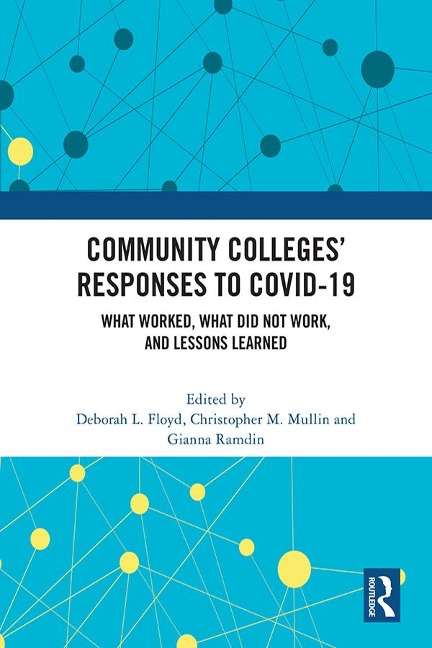
In 2021, community college practitioners, scholars, researchers, and leaders documented the challenge of what worked, what did not work, and lessons learned during the era of the COVID-19 pandemic. This book summarizes the works of 39 authors who collectively wrote 14 peer reviewed papers in areas of leadership, curriculum, funding, social and racial tension, technology and digital access, self, family and community, and health and safety. Readers are challenged to embrace this era with innovative zeal and to continue to document community colleges' evolutionary changes during this pandemic era. The book will be useful to higher education practitioners, scholars, and leaders, as well as individuals in organizations who are interested in how community colleges responded to challenges of change during the COVID-19 pandemic. The chapters in this book were originally published as a special issue of the Community College Journal of Research and Practice.
Deborah L. Floyd is Professor of Higher Education Leadership and Research Methodology at Florida Atlantic University, Boca Raton, USA. She is also the Editor-in-Chief of the Community College Journal of Research and Practice. Her research focuses on higher education leadership, community colleges, contemporary challenges, and baccalaureate models. Christopher M. Mullin is Strategy Director for Data & Measurement at Lumina Foundation for Education, USA. His research interests include the influence of state P-20 education structures on the educational decisions of both institutions and individuals. Gianna Ramdin is Associate Editor of the Community College Journal of Research and Practice. She is also Associate Graduate Faculty of Educational Leadership & Research Methodology, Florida Atlantic University, Boca Raton, USA. Her primary research areas are the study of campus greening, and sustainable initiatives on university and college campuses.
1. Community Colleges Evolve during the COVID 19 Pandemic: What Worked, What Did Not Work, and Lessons Learned Leadership 2. Are We Doing Enough? COVID Responses from Urban and Rural Community Colleges 3. The 21st Century's Pandemic - One Florida College's Response and Actions to Finding a Safe Path through the Initial Impact 4. Lessons Learned from Institutional Responses to COVID- 19: Evidenced- Based Insights from a Qualitative Study of Historically Black Community Colleges Curriculum 5. Learning from COVID- 19: Challenges and Opportunities for International Education in Community Colleges 6. How NSF S- STEM Scholarship Students Experience College during COVID- 19: Lessons to Improve STEM Education 7. Community College English Faculty Pandemic Teaching: Adjustments in the Time of COVID- 19 8. Sustaining STEM Student Learning Support and Engagement during COVID- 19 9. One College Program, Seventy Different Campuses: Dual Enrollment, Community Colleges, and the Unique Challenges Faced during the COVID- 19 Pandemic Funding 10. A Snapshot of Financial Aid Practice during COVID- 19 Technology and Digital Access 11. COVID- 19 Pandemic and the Shift to Digital Learning: Experiences of Students in a Community College in Ghana 12. Beyond the Digital Divide: Allowing for the Evolution of the College Community during the Pandemic13. Navigating the Storm: Community Colleges' Decision to Pivot to Virtual International Education in Response to the COVID- 19 Pandemic 14. Recommendations for Community Colleges in a Post- COVID- 19 World: What Worked, What Did Not and Assorted Commentary on Lessons Learned in One Community College Self, Family, and Community 15. Basic Needs Initiatives at Texas Community College Hispanic- Serving Institutions: Changes in Service Offerings during the Covid- 19 Pandemic
Dieses eBook wird im PDF-Format geliefert und ist mit einem Adobe Kopierschutz (DRM) versehen. Sie können dieses eBook mit allen Geräten lesen, die das PDF-Format und den Adobe Kopierschutz (DRM) unterstützen.
Zum Beispiel mit den folgenden Geräten:
• tolino Reader
Laden Sie das eBook direkt über den Reader-Shop auf dem tolino herunter oder übertragen Sie das eBook auf Ihren tolino mit einer kostenlosen Software wie beispielsweise Adobe Digital Editions.
• Sony Reader & andere eBook Reader
Laden Sie das eBook direkt über den Reader-Shop herunter oder übertragen Sie das eBook mit der kostenlosen Software Sony READER FOR PC/Mac oder Adobe Digital Editions auf ein Standard-Lesegeräte mit epub- und Adobe DRM-Unterstützung.
• Tablets & Smartphones
Möchten Sie dieses eBook auf Ihrem Smartphone oder Tablet lesen, finden Sie hier unsere kostenlose Lese-App für iPhone/iPad und Android Smartphone/Tablets.
• PC & Mac
Lesen Sie das eBook direkt nach dem Herunterladen mit einer kostenlosen Lesesoftware, beispielsweise Adobe Digital Editions, Sony READER FOR PC/Mac oder direkt über Ihre eBook-Bibliothek in Ihrem Konto unter „Meine eBooks“ - „online lesen“.
Schalten Sie das eBook mit Ihrer persönlichen Adobe ID auf bis zu sechs Geräten gleichzeitig frei.
Bitte beachten Sie, dass die Kindle-Geräte das Format nicht unterstützen und dieses eBook somit nicht auf Kindle-Geräten lesbar ist.