
Stöbern
genialokal zum Startbildschirm hinzufügen
Installieren Sie die genialokal App auf Ihrem Startbildschirm für einen schnellen Zugriff und eine komfortable Nutzung.
Installieren Sie die genialokal App auf Ihrem Startbildschirm für einen schnellen Zugriff und eine komfortable Nutzung.
Tippen Sie einfach auf Teilen:
 Und dann auf "Zum Home-Bildschirm [+]".
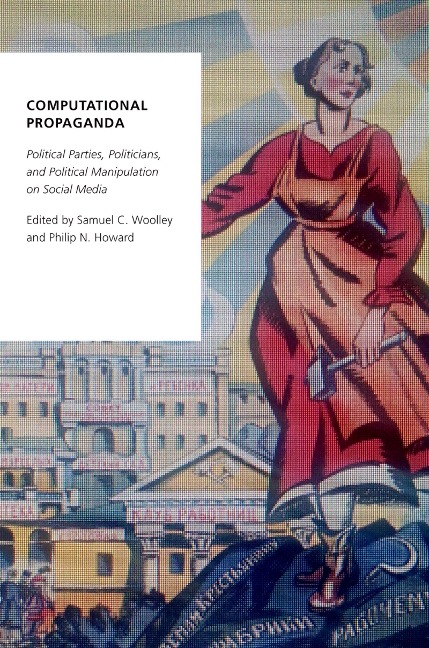
Social media platforms do not just circulate political ideas, they support manipulative disinformation campaigns. While some of these disinformation campaigns are carried out directly by individuals, most are waged by software, commonly known as bots, programmed to perform simple, repetitive, robotic tasks. Some social media bots collect and distribute legitimate information, while others communicate with and harass people, manipulate trending algorithms, and inundate systems with spam. Campaigns made up of bots, fake accounts, and trolls can be coordinated by one person, or a small group of people, to give the illusion of large-scale consensus. Some political regimes use political bots to silence opponents and to push official state messaging, to sway the vote during elections, and to defame critics, human rights defenders, civil society groups, and journalists. This book argues that such automation and platform manipulation, amounts to a new political communications mechanism that Samuel Woolley and Philip N. Noward call "computational propaganda." This differs from older styles of propaganda in that it uses algorithms, automation, and human curation to purposefully distribute misleading information over social media networks while it actively learns from and mimicks real people so as to manipulate public opinion across a diverse range of platforms and device networks. This book includes cases of computational propaganda from nine countries (both democratic and authoritarian) and four continents (North and South America, Europe, and Asia), covering propaganda efforts over a wide array of social media platforms and usage in different types of political processes (elections, referenda, and during political crises).
Samuel C. Woolley is Assistant Professor in the School of Journalism at the University of Texas, Austin. Philip N. Howard is Director and Professor at the Oxford Internet Institute at University of Oxford. They are the co-founders of the Computational Propaganda Project. This research endeavour is focused on the study of the manipulation of public opinion via online spaces. The project is based at the Oxford Internet Institute at the University of Oxford.
Part I: Theoretical Introduction and Analytical Frame Introduction: Computational Propaganda Worldwide Chapter 1 - Russia: The Origins of Digital Misinformation Chapter 2 - Ukraine: External Threats and Internal Challenges Chapter 3 - Canada: Building Bot Typologies Chapter 4 - Poland: Unpacking the Ecosystem of Social Media Manipulation Chapter 5 - Taiwan: Digital Democracy Meets Automated Autocracy Chapter 6 - Brazil: Political Bot Intervention During Pivotal Events Chapter 7 - Germany: A Cautionary Tale Chapter 8 - United States: Manufacturing Consensus Online Chapter 9 - China: An Alternative Model of a Widespread Practice Conclusion: Political Parties, Politicians, and Computational Propaganda Index
Dieses eBook wird im PDF-Format geliefert und ist mit einem Adobe Kopierschutz (DRM) versehen. Sie können dieses eBook mit allen Geräten lesen, die das PDF-Format und den Adobe Kopierschutz (DRM) unterstützen.
Zum Beispiel mit den folgenden Geräten:
• tolino Reader
Laden Sie das eBook direkt über den Reader-Shop auf dem tolino herunter oder übertragen Sie das eBook auf Ihren tolino mit einer kostenlosen Software wie beispielsweise Adobe Digital Editions.
• Sony Reader & andere eBook Reader
Laden Sie das eBook direkt über den Reader-Shop herunter oder übertragen Sie das eBook mit der kostenlosen Software Sony READER FOR PC/Mac oder Adobe Digital Editions auf ein Standard-Lesegeräte mit epub- und Adobe DRM-Unterstützung.
• Tablets & Smartphones
Möchten Sie dieses eBook auf Ihrem Smartphone oder Tablet lesen, finden Sie hier unsere kostenlose Lese-App für iPhone/iPad und Android Smartphone/Tablets.
• PC & Mac
Lesen Sie das eBook direkt nach dem Herunterladen mit einer kostenlosen Lesesoftware, beispielsweise Adobe Digital Editions, Sony READER FOR PC/Mac oder direkt über Ihre eBook-Bibliothek in Ihrem Konto unter „Meine eBooks“ - „online lesen“.
Schalten Sie das eBook mit Ihrer persönlichen Adobe ID auf bis zu sechs Geräten gleichzeitig frei.
Bitte beachten Sie, dass die Kindle-Geräte das Format nicht unterstützen und dieses eBook somit nicht auf Kindle-Geräten lesbar ist.