Und dann auf "Zum Home-Bildschirm [+]".

Stöbern
genialokal zum Startbildschirm hinzufügen
Installieren Sie die genialokal App auf Ihrem Startbildschirm für einen schnellen Zugriff und eine komfortable Nutzung.
Installieren Sie die genialokal App auf Ihrem Startbildschirm für einen schnellen Zugriff und eine komfortable Nutzung.
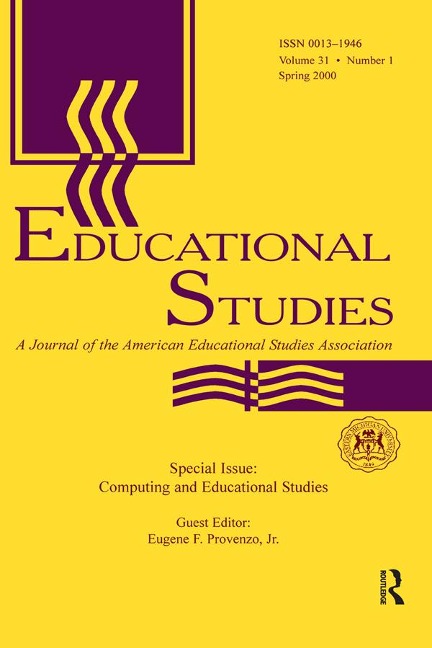
This special issue calls for a greater awareness of computing as a critical area of study for those interested in educational studies. Its purpose is to open up a wider dialogue about computing and education than has previously existed in the field. The questions raised provide the basis for a lively discussion and analysis of the role of educational studies in interpreting the role of computing in our culture and educational system. This issue also provides a model for exploring other topics of similar significance and importance to the field in future issues of the journal.
Jr., Eugene F. Provenzo
Contents: E.F. Provenzo, Jr., Introduction. ARTICLES:E.F. Provenzo, Jr., Computing, Culture, and Educational Studies. R. Kurth-Schai, C.R. Green, Conversation, Compostition, and Courage: Re-envisioning Technologies for Education and Democracy. D.H. Wexler, Integrating Computer Technology: Blurring the Roles of Teachers, Students, and Experts. BOOK REVIEWS:L.L. Chiappone,Collective Intelligence: Mankind's Emerging World in Cyberspace by Pierre Levy. K. Graziadei,Brave New Schools: Challenging Cultural Illiteracy Through Global Learning Networks by Jim Cummins and Dennis Sayers. L.L. Chiappone,Life on the Screen: Identity in the Age of the Internet by Sherry Turkle. E.D. Cramer, Literacy Online: The Promise (and Peril) of Reading and Writing Computers by Myron C. Tuman. E.D. Cramer,The Gutenberg Elegies: The Fate of Reading in an Electronic Age by Sven Birkets. L.C. Barza,Growing Up Digital: The Rise of the Net Generation by Don Tapscott. A. Campbell,Points of Viewing Children's Thinking: A Digital Ethnographers Journey by Ricki Goldman-Segall. P. Marinaccio, The Children's Machine: Rethinking School in the Age of the Computer by Seymour Papert. E.E. Brown,Writing Space: The Computer, Hypertext and the History of Writing by Jay David Bolter. M.C. Mits Cash,Technopoly: The Surrender of Culture to Technology by Neil Postman. L.C. Barza,The Connected Family: Bridging the Digital Generation Gap by Seymour Papert. K. Graziadei, Hyper/Text/Theory by George P. Landow, Ed. M.C. Mits Cash,The Cultural Dimensions of Educational Computing: Understanding the Non-Neutrality of Educational Computing by C.A. Bowers. A. Campbell,Computers as Theatre by Brenda Laurel.
Dieses eBook wird im PDF-Format geliefert und ist mit einem Adobe Kopierschutz (DRM) versehen. Sie können dieses eBook mit allen Geräten lesen, die das PDF-Format und den Adobe Kopierschutz (DRM) unterstützen.
Zum Beispiel mit den folgenden Geräten:
• tolino Reader
Laden Sie das eBook direkt über den Reader-Shop auf dem tolino herunter oder übertragen Sie das eBook auf Ihren tolino mit einer kostenlosen Software wie beispielsweise Adobe Digital Editions.
• Sony Reader & andere eBook Reader
Laden Sie das eBook direkt über den Reader-Shop herunter oder übertragen Sie das eBook mit der kostenlosen Software Sony READER FOR PC/Mac oder Adobe Digital Editions auf ein Standard-Lesegeräte mit epub- und Adobe DRM-Unterstützung.
• Tablets & Smartphones
Möchten Sie dieses eBook auf Ihrem Smartphone oder Tablet lesen, finden Sie hier unsere kostenlose Lese-App für iPhone/iPad und Android Smartphone/Tablets.
• PC & Mac
Lesen Sie das eBook direkt nach dem Herunterladen mit einer kostenlosen Lesesoftware, beispielsweise Adobe Digital Editions, Sony READER FOR PC/Mac oder direkt über Ihre eBook-Bibliothek in Ihrem Konto unter „Meine eBooks“ - „online lesen“.
Schalten Sie das eBook mit Ihrer persönlichen Adobe ID auf bis zu sechs Geräten gleichzeitig frei.
Bitte beachten Sie, dass die Kindle-Geräte das Format nicht unterstützen und dieses eBook somit nicht auf Kindle-Geräten lesbar ist.