
Stöbern
genialokal zum Startbildschirm hinzufügen
Installieren Sie die genialokal App auf Ihrem Startbildschirm für einen schnellen Zugriff und eine komfortable Nutzung.
Installieren Sie die genialokal App auf Ihrem Startbildschirm für einen schnellen Zugriff und eine komfortable Nutzung.
Tippen Sie einfach auf Teilen:
 Und dann auf "Zum Home-Bildschirm [+]".
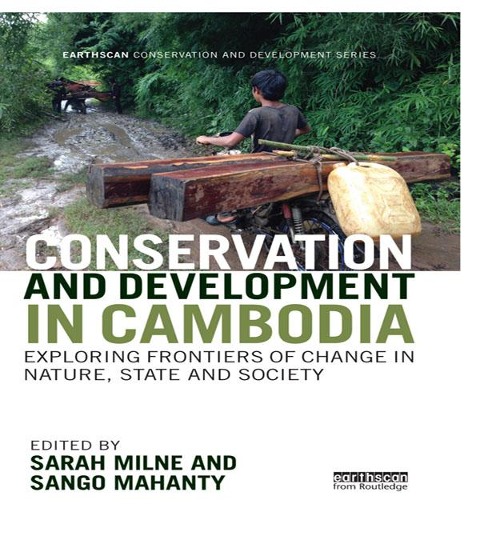
Written by leading authorities from Australasia, Europe and North America, this book examines the dynamic conflicts and synergies between nature conservation and human development in contemporary Cambodia. After suffering conflict and stagnation in the late twentieth century, Cambodia has experienced an economic transformation in the last decade, with growth averaging almost ten per cent per year, partly through investment from China. However this rush for development has been coupled with tremendous social and environmental change which, although positive in some aspects, has led to rising inequality and profound shifts in the condition, ownership and management of natural resources. High deforestation rates, declining fish stocks, biodiversity loss, and alienation of indigenous and rural people from their land and traditional livelihoods are now matters of increasing local and international concern. The book explores the social and political dimensions of these environmental changes in Cambodia, and of efforts to intervene in and 'improve' current trajectories for conservation and development. It provides a compelling analysis of the connections between nature, state and society, pointing to the key role of grassroots and non-state actors in shaping Cambodia's frontiers of change. These insights will be of great interest to scholars of Southeast Asia and environment-development issues in general.
Sarah Milne is a Postdoctoral Fellow in the Resources, Environment and Development group, Crawford School of Public Policy, College of Asia and the Pacific, Australian National University. Sango Mahanty is an ARC Future Fellow in the Resources, Environment and Development group, Crawford School of Public Policy, College of Asia and the Pacific, Australian National University.
1. The Political Ecology of Cambodia's Transformation Sarah Milne and Sango Mahanty 2. Shackled to Nature? The Post-conflict State and its Symbiotic Relationship with Natural Resources Sarah Milne, Pak Kimchoeun, and Michael Sullivan Part 1: Transformation, Complexity and Contestation in Nature-Society Relations 3. Lost in Transition: Landscape, Ecological Gradients and Legibility on the Tonle Sap Floodplain Andrew S. Roberts 4. Can Market Integration Improve Livelihoods and Safeguard the Environment? The Case of Hybrid Rice Varieties in Cambodia's Agricultural Heartland Maylee Thavat 5. Land is Life: An Analysis of the Role 'Grand Corruption' Plays in Enabling Elite Grabbing of Land in Cambodia Megan MacInnes 6. Contested Development and Environment: Chinese-backed Hydropower and Infrastructure Projects in Cambodia Michael Sullivan Part 2: Interventions in Natural Resource Management 7. Managing Protected Areas in Cambodia: The Challenge for Conservation Bureaucracies in a Hostile Governance Environment Richard Paley 8. In Whose Name and in Whose Interests? An Actor-oriented Analysis of Community Forestry in Bey, a Khmer village in Northeast Cambodia Robin Biddulph 9. The Forest Carbon Commodity Chain in Cambodia's Voluntary Carbon Market Sango Mahanty, Amanda Bradley and Sarah Milne Part 3: Social Movements and Radical Responses to Transformation 10. What about the 'Unprotected' Areas? Building on Traditional Forms of Ownership and Land Use for Dealing with New Contexts Jeremy Ironside 11. Cultures and Histories of Resistance in Cambodia Margaret Slocomb 12. A 'People's' Irrigation Reservoir on the Tonle Sap Floodplain John Marston and Chhuon Hoeur 13. Story-telling and Social Change: A Case Study of the Prey Lang Community Network Terry Parnell
Dieses eBook wird im PDF-Format geliefert und ist mit einem Adobe Kopierschutz (DRM) versehen. Sie können dieses eBook mit allen Geräten lesen, die das PDF-Format und den Adobe Kopierschutz (DRM) unterstützen.
Zum Beispiel mit den folgenden Geräten:
• tolino Reader
Laden Sie das eBook direkt über den Reader-Shop auf dem tolino herunter oder übertragen Sie das eBook auf Ihren tolino mit einer kostenlosen Software wie beispielsweise Adobe Digital Editions.
• Sony Reader & andere eBook Reader
Laden Sie das eBook direkt über den Reader-Shop herunter oder übertragen Sie das eBook mit der kostenlosen Software Sony READER FOR PC/Mac oder Adobe Digital Editions auf ein Standard-Lesegeräte mit epub- und Adobe DRM-Unterstützung.
• Tablets & Smartphones
Möchten Sie dieses eBook auf Ihrem Smartphone oder Tablet lesen, finden Sie hier unsere kostenlose Lese-App für iPhone/iPad und Android Smartphone/Tablets.
• PC & Mac
Lesen Sie das eBook direkt nach dem Herunterladen mit einer kostenlosen Lesesoftware, beispielsweise Adobe Digital Editions, Sony READER FOR PC/Mac oder direkt über Ihre eBook-Bibliothek in Ihrem Konto unter „Meine eBooks“ - „online lesen“.
Schalten Sie das eBook mit Ihrer persönlichen Adobe ID auf bis zu sechs Geräten gleichzeitig frei.
Bitte beachten Sie, dass die Kindle-Geräte das Format nicht unterstützen und dieses eBook somit nicht auf Kindle-Geräten lesbar ist.