
Stöbern
genialokal zum Startbildschirm hinzufügen
Installieren Sie die genialokal App auf Ihrem Startbildschirm für einen schnellen Zugriff und eine komfortable Nutzung.
Installieren Sie die genialokal App auf Ihrem Startbildschirm für einen schnellen Zugriff und eine komfortable Nutzung.
Tippen Sie einfach auf Teilen:
 Und dann auf "Zum Home-Bildschirm [+]".
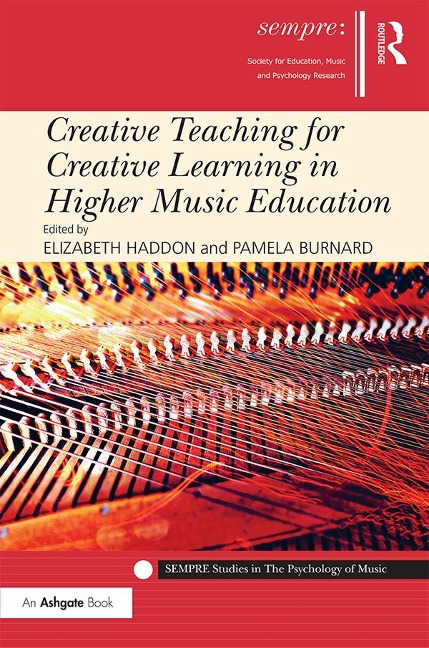
This edited volume explores how selected researchers, students and academics name and frame creative teaching and learning as constructed through the rationalities, practices, relationships, events, objects and systems that are brought to educational sites and developed by learning communities. The concept of creative learning questions the starting-points and opens up the outcomes of curriculum, and this frames creative teaching not only as a process of learning but as an agent of change. Within the book, the various creativities that are valued by different stakeholders teaching and studying in the higher music sector are delineated, and processes and understandings of creative teaching are articulated, both generally in higher music education and specifically through their application within the design of individual modules. This focus makes the text relevant to scholars, researchers and practitioners across many fields of music, including those working in musicology, composition, performance, music education, and music psychology. The book contributes new perspectives on our understanding of the role of creative teaching and learning and processes in creative teaching across the domain of music learning in higher music education sectors.
Elizabeth Haddon is Research Fellow in the Music Department at the University of York, UK, where she leads the MA in Music Education: Instrumental and Vocal Teaching and also teaches piano. Her research focuses on pedagogy, creativity and musical performance, particularly in the higher education sector, and includes the book Making Music in Britain: Interviews with those behind the notes (Ashgate, 2006) as well as articles in peer-reviewed journals, book chapters and presentations at international conferences. Pamela Burnard is Professor of Arts, Creativities and Education at the Faculty of Education, University of Cambridge, UK. She holds degrees in Music Performance, Music Education, Education and Philosophy. Her primary interest is creativities research for which she is internationally recognised. She is the author/co-author/editor of twelve books and multiple refereed journals. She is convenor of the Creativities in Intercultural Arts Network (CIAN), co-convenor of the British Education Research Association Creativities in Education SIG, and host and convenor of the Building Interdisciplinary Bridges Across Cultures (BIBAC) International Biennial Conference. She serves on numerous editorial boards and is a Fellow of the Royal Society of Arts.
Introduction Elizabeth Haddon Part 1: Articulating Experience in Secondary and Higher Music Education 1. Pre-higher Education Creativity: Composition in the Classroom Steven Berryman 2. A Student Perspective on Creativity in Higher Music Education Natalie Edwards, James Whittle and Alice Wright 3. Creativity in Higher Music Education: Views of University Music Lecturers Elizabeth Haddon 4. Considering Creative Teaching in Relation to Creative Learning: Developing a Knowing-Doing Orientation for Change in Higher Music Education Pamela Burnard Part 2: Developing the Creative Lecturer and Teacher 5. Thinking, Making, Doing: Perspectives on Practice-Based, Research-Led Teaching in Higher Music Education Louise Harris 6. Practice-as-Research: A Method for Articulating Creativity for Practitioner-Researchers Martin Blain 7. Perspectives on Research-Led Teaching John Robert Ferguson 8. Teaching the Supreme Art: Pre-service Teacher Perceptions of Creative Opportunities in the Higher Education Music Class Kari Veblen, H. Elisha Jo and Stephen J. Messenger 9. Pre-service Teachers Converting Motherhood into Creative Capital through Composing with Sound Clare Hall 10. Deconstructing and Re-imagining Repertoire in Music Teacher Training Tim Palmer Part 3: Philosophies, Practices and Pedagogies: Teaching for Creative Learning 11. Imagined Structures: Creative Approaches for Musical Analysis Mark Hutchinson and Tim Howell 12. Curiosity, Apathy, Creativity and Deference in the Musical Subject-Object Relationship Nicky Losseff 13. Recontextualised Learning through Embedded Creativity: Developing a Module that Applies Historically Informed Performance Practice to Baroque Music Christina Guillaumier, Ruth Slater and Peter Argondizza 14. There and Now: Creativity across Cultures Neil Sorrell 15. Dalcroze Eurhythmics: Bridging the Gap between the Academic and the Practical through Creative Teaching and Learning Karin Greenhead, John Habron and Louise Mathieu 16. Creativity and Community in an Entrepreneurial Undergraduate Music Module Fay Hield and Stephanie Pitts 17. Fostering Effective Group Creativity Ambrose Field. Index
Dieses eBook wird im PDF-Format geliefert und ist mit einem Adobe Kopierschutz (DRM) versehen. Sie können dieses eBook mit allen Geräten lesen, die das PDF-Format und den Adobe Kopierschutz (DRM) unterstützen.
Zum Beispiel mit den folgenden Geräten:
• tolino Reader
Laden Sie das eBook direkt über den Reader-Shop auf dem tolino herunter oder übertragen Sie das eBook auf Ihren tolino mit einer kostenlosen Software wie beispielsweise Adobe Digital Editions.
• Sony Reader & andere eBook Reader
Laden Sie das eBook direkt über den Reader-Shop herunter oder übertragen Sie das eBook mit der kostenlosen Software Sony READER FOR PC/Mac oder Adobe Digital Editions auf ein Standard-Lesegeräte mit epub- und Adobe DRM-Unterstützung.
• Tablets & Smartphones
Möchten Sie dieses eBook auf Ihrem Smartphone oder Tablet lesen, finden Sie hier unsere kostenlose Lese-App für iPhone/iPad und Android Smartphone/Tablets.
• PC & Mac
Lesen Sie das eBook direkt nach dem Herunterladen mit einer kostenlosen Lesesoftware, beispielsweise Adobe Digital Editions, Sony READER FOR PC/Mac oder direkt über Ihre eBook-Bibliothek in Ihrem Konto unter „Meine eBooks“ - „online lesen“.
Schalten Sie das eBook mit Ihrer persönlichen Adobe ID auf bis zu sechs Geräten gleichzeitig frei.
Bitte beachten Sie, dass die Kindle-Geräte das Format nicht unterstützen und dieses eBook somit nicht auf Kindle-Geräten lesbar ist.