
Stöbern
genialokal zum Startbildschirm hinzufügen
Installieren Sie die genialokal App auf Ihrem Startbildschirm für einen schnellen Zugriff und eine komfortable Nutzung.
Installieren Sie die genialokal App auf Ihrem Startbildschirm für einen schnellen Zugriff und eine komfortable Nutzung.
Tippen Sie einfach auf Teilen:
 Und dann auf "Zum Home-Bildschirm [+]".
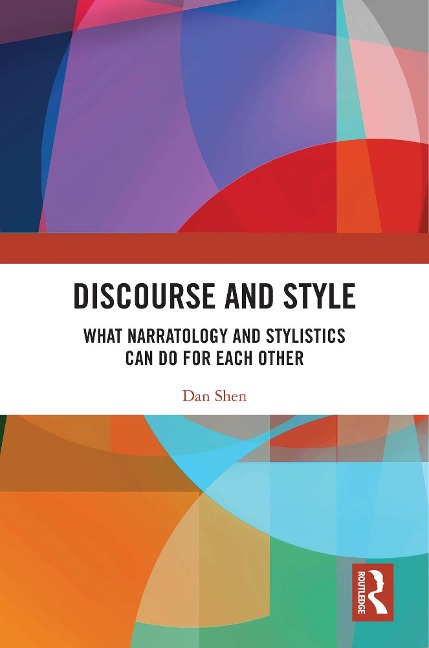
This book examines overlaps, differences, and complementarities between narratology and stylistics, and shows the consequences of this examination for the practical analysis of prose narrative. Narratology identifies discourse as one of its two main objects of study (story being the other), and stylistics, of course, designates style as its concern. Too often, however, work in each of these fields proceeds without attention to developments in the other. This book corrects that situation by looking beneath the superficial similarities between the "discourse" of narratology and the "style" of fictional stylistics. The author shows that the two seemingly interchangeable terms actually refer to different textual elements. For example, both narratology and stylistics identify point of view as an important element of discourse and style, respectively, but each approach conceives of it differently and thus analyzes it differently. This book argues that the different analyses are complementary and shows how they can be brought together. This synthesis leads to richer conceptions of point of view as well as more comprehensive and precise analyses of its functions and effects in individual narratives. For its theoretical and interpretive contributions, this book will appeal to scholars and students in narrative studies, literary stylistics, and literary theory and criticism.
Dan Shen is Boya Chair Professor of English at Peking University, China. She is on the advisory boards of Narrative and Style, and the editorial board of Language and Literature. She has published nine books, including Style and Rhetoric of Short Narrative Fiction: Covert Progressions Behind Overt Plots and Dual Narrative Dynamics with Routledge.
Introduction 1. Distinction and relation between narratology's story and discourse 2. Difference between narratology's discourse and fictional stylistics' style 3. Existing interdisciplinary studies between narratology and stylistics 4. Two most notable overlapping areas between discourse and style 5. Point of view/focalization: Distinction and classification 6. Difference behind similarity: Third-person center of consciousness and first-person retrospective narration 7. Modes of point of view or focalization: Functions and effects 8. Transgressions of modes of point of view or focalization 9. Modes of speech presentation: Functions and effects 10. Peculiarities of speech presentation in Chinese prose fiction Conclusion
Dieses eBook wird im PDF-Format geliefert und ist mit einem Adobe Kopierschutz (DRM) versehen. Sie können dieses eBook mit allen Geräten lesen, die das PDF-Format und den Adobe Kopierschutz (DRM) unterstützen.
Zum Beispiel mit den folgenden Geräten:
• tolino Reader
Laden Sie das eBook direkt über den Reader-Shop auf dem tolino herunter oder übertragen Sie das eBook auf Ihren tolino mit einer kostenlosen Software wie beispielsweise Adobe Digital Editions.
• Sony Reader & andere eBook Reader
Laden Sie das eBook direkt über den Reader-Shop herunter oder übertragen Sie das eBook mit der kostenlosen Software Sony READER FOR PC/Mac oder Adobe Digital Editions auf ein Standard-Lesegeräte mit epub- und Adobe DRM-Unterstützung.
• Tablets & Smartphones
Möchten Sie dieses eBook auf Ihrem Smartphone oder Tablet lesen, finden Sie hier unsere kostenlose Lese-App für iPhone/iPad und Android Smartphone/Tablets.
• PC & Mac
Lesen Sie das eBook direkt nach dem Herunterladen mit einer kostenlosen Lesesoftware, beispielsweise Adobe Digital Editions, Sony READER FOR PC/Mac oder direkt über Ihre eBook-Bibliothek in Ihrem Konto unter „Meine eBooks“ - „online lesen“.
Schalten Sie das eBook mit Ihrer persönlichen Adobe ID auf bis zu sechs Geräten gleichzeitig frei.
Bitte beachten Sie, dass die Kindle-Geräte das Format nicht unterstützen und dieses eBook somit nicht auf Kindle-Geräten lesbar ist.