
Stöbern
genialokal zum Startbildschirm hinzufügen
Installieren Sie die genialokal App auf Ihrem Startbildschirm für einen schnellen Zugriff und eine komfortable Nutzung.
Installieren Sie die genialokal App auf Ihrem Startbildschirm für einen schnellen Zugriff und eine komfortable Nutzung.
Tippen Sie einfach auf Teilen:
 Und dann auf "Zum Home-Bildschirm [+]".
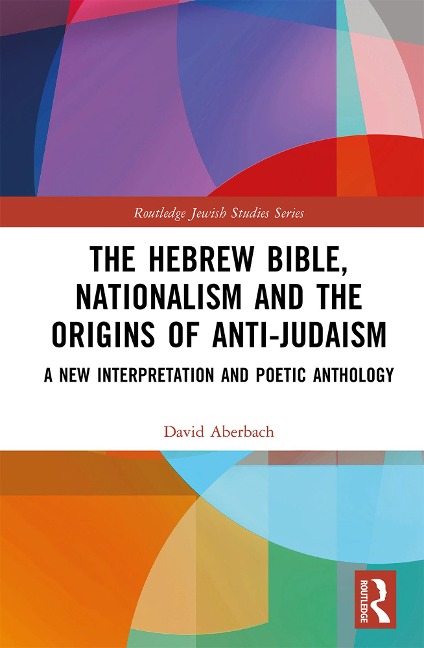
In the attempts to unify divided peoples on the basis of a shared past, both historical and mythical, this book illumines aspects of cultural nationalism common since the Middle Ages. As an edited work, the Bible includes texts mostly depicting long-gone historical eras extending over several centuries. Following on from Aberbach's previous work National Poetry, Empires, and War, this book argues that works of this nature - notably the Mujo-Halil songs in Albania, the Irish stories of Cuchulain, the songs of the Nibelungen in Germany, or the Finnish legends collected in The Kalevala - have an ancient precedent in the Hebrew Bible (to which national literatures often allude and refer), a subject largely neglected in biblical studies. The self-critical element in the Hebrew Bible, common in later national literature, is examined as the basis of later anti-Semitism, as the Bible was not confined to Jews but was adopted in translation by many other national groups. With several dozen original translations from the Hebrew, this book highlights how the Bible influenced and was distorted by later national cultures. Written without jargon, this book is intended for the general reader, but is also an important contribution to the study of the Bible, nationalism, and Jewish history.
David Aberbach is Professor of Hebrew and Comparative Studies at McGill University.
Foreword by Dr. Athena Leoussi. Preface and Acknowledgments. Introduction. 1. The edited Bible as united nation. 2. Biblical nationalism and universalism. 3. Editing and moral judgment. 4. Nationalism and oral traditions. 5. National unity as literary aim. 6. Defeat and national literature. 7. Imperialism and the Fertile Crescent. 8. Aaron, Jeroboam and the golden calves. 9. National self-image: guilt and betrayal. 10. Judean views of the lost Kingdom of Israel. 11. Judean views of the lost Kingdom of Judah. 12. Myth and nationalism. 13. From Eden to the ruined kingdom. 14. Revenge and national poetry. 15. Dissidence, exile, and populist nationalism. 16. Second Isaiah and the reborn nation. 17. The Bible, the Nation, and the 'Holy Poor'. 18. 'A light for the nations'. Conclusion. the Hebrew Bible and origins of anti-Judaism. Epilogue on Love: The Song of Songs. Bibliography.
Dieses eBook wird im PDF-Format geliefert und ist mit einem Adobe Kopierschutz (DRM) versehen. Sie können dieses eBook mit allen Geräten lesen, die das PDF-Format und den Adobe Kopierschutz (DRM) unterstützen.
Zum Beispiel mit den folgenden Geräten:
• tolino Reader
Laden Sie das eBook direkt über den Reader-Shop auf dem tolino herunter oder übertragen Sie das eBook auf Ihren tolino mit einer kostenlosen Software wie beispielsweise Adobe Digital Editions.
• Sony Reader & andere eBook Reader
Laden Sie das eBook direkt über den Reader-Shop herunter oder übertragen Sie das eBook mit der kostenlosen Software Sony READER FOR PC/Mac oder Adobe Digital Editions auf ein Standard-Lesegeräte mit epub- und Adobe DRM-Unterstützung.
• Tablets & Smartphones
Möchten Sie dieses eBook auf Ihrem Smartphone oder Tablet lesen, finden Sie hier unsere kostenlose Lese-App für iPhone/iPad und Android Smartphone/Tablets.
• PC & Mac
Lesen Sie das eBook direkt nach dem Herunterladen mit einer kostenlosen Lesesoftware, beispielsweise Adobe Digital Editions, Sony READER FOR PC/Mac oder direkt über Ihre eBook-Bibliothek in Ihrem Konto unter „Meine eBooks“ - „online lesen“.
Schalten Sie das eBook mit Ihrer persönlichen Adobe ID auf bis zu sechs Geräten gleichzeitig frei.
Bitte beachten Sie, dass die Kindle-Geräte das Format nicht unterstützen und dieses eBook somit nicht auf Kindle-Geräten lesbar ist.