Und dann auf "Zum Home-Bildschirm [+]".

Stöbern
genialokal zum Startbildschirm hinzufügen
Installieren Sie die genialokal App auf Ihrem Startbildschirm für einen schnellen Zugriff und eine komfortable Nutzung.
Installieren Sie die genialokal App auf Ihrem Startbildschirm für einen schnellen Zugriff und eine komfortable Nutzung.
Ihr gewünschter Artikel ist in 0 Buchhandlungen vorrätig - wählen Sie hier eine Buchhandlung in Ihrer Nähe aus:

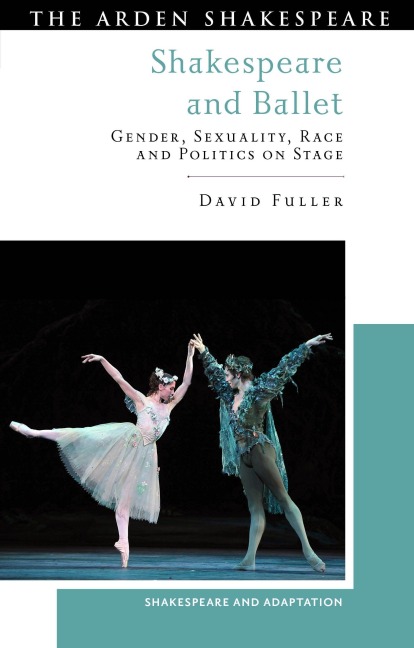
This new and comprehensive study of Shakespearean ballets and their unique interpretive possibilities is also the first to foreground the importance of music to the aesthetics and meanings of Shakespeare dance-works.
Organised around adaptations of key plays, each chapter offers close study of the contrasting interpretations and styles of a number of choreographers and illuminates issues of gender, sexuality, race and politics.
While Shakespeare's work is recreated in diverse forms in theatres all over the world, ballet is potentially one of the most international and inclusive forms of theatrical expression, based in the fundamental expressive potential of the body. Since it moved into the avant-garde more than a century ago, it has been in the forefront of invention and experiment in the theatrical arts and yet the hundreds of ballets which have been based on Shakespeare's work have received scant attention in Shakespearean scholarship and criticism.
David Fuller explores a wide range of Shakespeare's oeuvre as it has been recreated in this form, with studies of ballets based on some of his most famous works, including The Taming of the Shrew, A Midsummer Night's Dream, the Sonnets, Romeo and Juliet, Hamlet, Othello, Macbeth,and The Tempest. With analysis of productions from the 1940s to the present by British, American and European choreographers, it reads these as forms of creative criticism which reflect wider developments in society and in so doing show Shakespeare as perpetually contemporary.
David Fuller is Emeritus Professor of English in the University of Durham, UK. From 2002 to 2007 he was the University's Orator. He trained as a musicologist, and has written on a range of literary topics from Medieval to Modern. He is the author of Blake's Heroic Argument(1988), James Joyce's 'Ulysses' (1992), Signs of Grace(with David Brown, 1995). He has edited Tamburlaine the Great (1998) for the Clarendon Press complete works of Marlowe, co-edited (with Patricia Waugh) The Arts and Sciences of Criticism (OUP, 1999), and edited Blake: Selected Poetry and Prose (Longman, 2000, 2008).
List of Illustrations Acknowledgements Preface Chapter 1: Introduction Chapter 2: The Taming of the Shrew Chapter 3: A Midsummer Night's Dream Chapter 4: The Sonnets Chapter 5: Romeo and Juliet Chapter 6: Hamlet Chapter 7: Othello Chapter 8: Macbeth Chapter 9: The Tempest Chapter 10: Epilogue Notes Select Bibliography Index