
Stöbern
genialokal zum Startbildschirm hinzufügen
Installieren Sie die genialokal App auf Ihrem Startbildschirm für einen schnellen Zugriff und eine komfortable Nutzung.
Installieren Sie die genialokal App auf Ihrem Startbildschirm für einen schnellen Zugriff und eine komfortable Nutzung.
Tippen Sie einfach auf Teilen:
 Und dann auf "Zum Home-Bildschirm [+]".
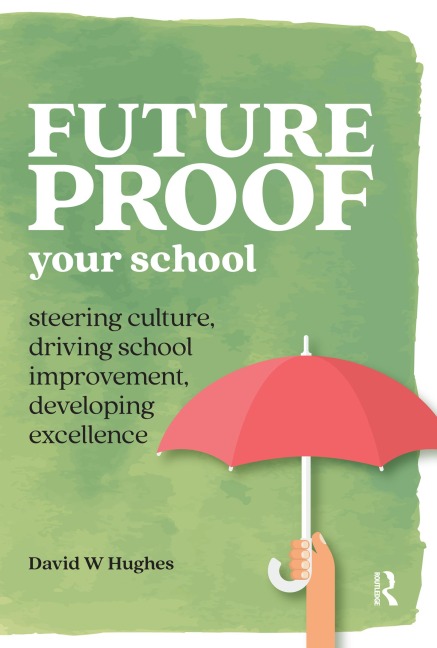
Wouldn't it be great if you could equip your school and yourself to face whatever the future might throw at you! Schools face myriad calls on their time and creativity yet have finite internal resources to respond to them. This can result in piecemeal changes, and reactive rather than pro-active approaches. This book reduces, filters and prioritises the demands on staff energy to the central task of all schools - to achieve the best engagement of and learning outcomes for all learners (including the staff themselves). Schools often feel constrained by their current context, their previous performance, their demographics or available staff. This book provides an holistic and effective approach to change management that is simple, engages all stakeholders, is built around the current expertise and culture of the school and, most importantly, is sustainable. It is suitable for headteachers, senior or aspiring leaders, and those driving change through initiatives, but also individual teachers who are interested in effective practice as a route towards personal well-being and professional satisfaction.
David Hughes was a teacher and senior leader within the secondary and tertiary sectors for over 24 years, working in a range of both successful and failing schools. He has led and managed improvement projects at local authority, regional and national levels. Whilst working on the Building Schools for the Future programme, he was seconded for almost two years to support the development of the Opening Minds curriculum, devised in collaboration with the Confederation of British Industry as a twenty-first century learning model for schools, which mirrored the world's most effective educational systems and addressed the attitudes, behaviours and competences required of the modern learner. He is an associate of the University of Nottingham School of Education and a writer for the educational press.
Introduction 1. Culture and school improvement 2. Leadership models of school culture: some disturbing developments 3. Pupils: passive or active participants in your school? 4. Parents 5. The INSET conundrum: training opportunities or continuous professional development? 6. The ICT fixation: promoting sustainable change 7. Culture and Intellectual Property: recognising the talent in your school 8. A holistic view of school development needs 9. The mechanism for sustained change: the learning vortex 10. Gearing up your ICT team as school improvement partners 11. Developing a whole school learning specification for a specific project 12. Providing an evidence base for improvement: current state analysis and training needs analysis 13. Analysing your school and shaping structures for improvement 14. The state of learning: an international perspective
Dieses eBook wird im PDF-Format geliefert und ist mit einem Adobe Kopierschutz (DRM) versehen. Sie können dieses eBook mit allen Geräten lesen, die das PDF-Format und den Adobe Kopierschutz (DRM) unterstützen.
Zum Beispiel mit den folgenden Geräten:
• tolino Reader
Laden Sie das eBook direkt über den Reader-Shop auf dem tolino herunter oder übertragen Sie das eBook auf Ihren tolino mit einer kostenlosen Software wie beispielsweise Adobe Digital Editions.
• Sony Reader & andere eBook Reader
Laden Sie das eBook direkt über den Reader-Shop herunter oder übertragen Sie das eBook mit der kostenlosen Software Sony READER FOR PC/Mac oder Adobe Digital Editions auf ein Standard-Lesegeräte mit epub- und Adobe DRM-Unterstützung.
• Tablets & Smartphones
Möchten Sie dieses eBook auf Ihrem Smartphone oder Tablet lesen, finden Sie hier unsere kostenlose Lese-App für iPhone/iPad und Android Smartphone/Tablets.
• PC & Mac
Lesen Sie das eBook direkt nach dem Herunterladen mit einer kostenlosen Lesesoftware, beispielsweise Adobe Digital Editions, Sony READER FOR PC/Mac oder direkt über Ihre eBook-Bibliothek in Ihrem Konto unter „Meine eBooks“ - „online lesen“.
Schalten Sie das eBook mit Ihrer persönlichen Adobe ID auf bis zu sechs Geräten gleichzeitig frei.
Bitte beachten Sie, dass die Kindle-Geräte das Format nicht unterstützen und dieses eBook somit nicht auf Kindle-Geräten lesbar ist.