
Stöbern
genialokal zum Startbildschirm hinzufügen
Installieren Sie die genialokal App auf Ihrem Startbildschirm für einen schnellen Zugriff und eine komfortable Nutzung.
Installieren Sie die genialokal App auf Ihrem Startbildschirm für einen schnellen Zugriff und eine komfortable Nutzung.
Tippen Sie einfach auf Teilen:
 Und dann auf "Zum Home-Bildschirm [+]".
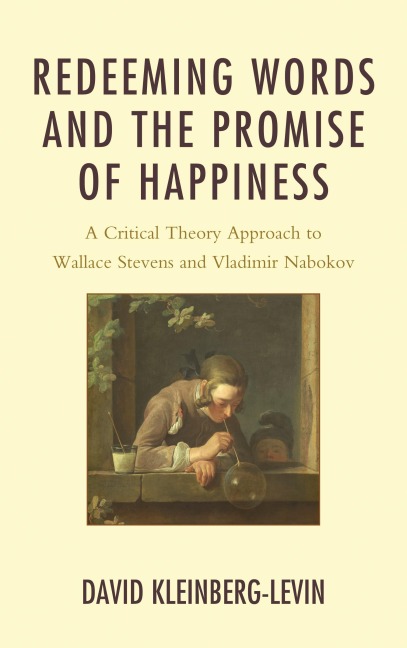
This book boldly crosses traditional academic boundaries, offering an original, philosophically informed argument about the nature of language, reading and interpreting the poetry of Wallace Stevens and the novels of Vladimir Nabokov. Redeeming Words and the Promise of Happiness is a work both in literary criticism and in philosophy. The approach is strongly influenced by Walter Benjamin's philosophy of language and Theodor Adorno's aesthetic theory, but the other philosophers-notably Plato, Kant, Hegel, Emerson, Nietzsche, Heidegger, and Wittgenstein-figure significantly in the reading and interpretation.
Kleinberg-Levin argues that despite its damaged, corrupted condition, language is in its very existence the bearer of a utopian or messianic promise of happiness. Moreover, he argues, by reconciling sensuous sense and intelligible sense; showing the sheer power of words to create fictional worlds and deconstruct what they have just created; and redeeming the revelatory power of words-the power to turn the familiar into something astonishing, strange or perplexing-the two writers in this study sustain our hope for a world of reconciled antagonisms and contradictions, evoking in the way they freely play with the sounds and meanings of words, some intimations of a new world-but our world here, this very world, not some heavenly world-in which the promise of happiness might be redeemed.
Reflecting on the poetry of Stevens, Kleinberg-Levin argues that the poet defies the correspondence theory of truth so that words may be faithful to truth as transformative and revelatory. He also argues that in the pleasure we get from the sensuous play of words, there is an anticipation of the promise of happiness that challenges the theological doctrine of an otherworldly happiness. And in reading Nabokov, Kleinberg-Levin shows how that writer inherits Mallarmé's conception of literature, causing with his word plays the sudden reduction of the fictional world he has just created to its necessary conditions of materiality. The novel is revealed as a work of fiction; we see its conditions of possibility, created and destroyed before our very eyes. But the pleasure in seeing words doing this, and the pleasure in their sensuous materiality, are intimations of the promise of happiness that language bears. Using a Kantian definition of modernism, according to which a work is modernist if it reveals and questions inherited assumptions about its necessary conditions of possibility, these studies show how and why both Stevens and Nabokov are exemplars of literary modernism.
David Kleinberg-Levin is currently Professor Emeritus, Department of Philosophy, Northwestern University.
Part I. Between Wild Sense and Plain Sense: The Language of Truth in the Poetry of Wallace Stevens
Chapter One: Truth
Chapter Two: Reason's Folly
Chapter Three: The Realism of the Imagination
Chapter Four: Word-Play: Language on Holiday
Chapter Five: Redemption?
Part II. Facing the Surface: Nabokov After Mallarmé
Chapter Six: Modernism
Chapter Seven: Mischievous Predecessors
Chapter Eight: Transparencies and Metamorphoses: Nabokov's Language Games
Chapter Nine: When the Promise of Happiness Appears: Redeeming the Dust on the Surface
Chapter Ten: Paradise of Memory and Imagination
Dieses eBook wird im PDF-Format geliefert und ist mit einem Adobe Kopierschutz (DRM) versehen. Sie können dieses eBook mit allen Geräten lesen, die das PDF-Format und den Adobe Kopierschutz (DRM) unterstützen.
Zum Beispiel mit den folgenden Geräten:
• tolino Reader
Laden Sie das eBook direkt über den Reader-Shop auf dem tolino herunter oder übertragen Sie das eBook auf Ihren tolino mit einer kostenlosen Software wie beispielsweise Adobe Digital Editions.
• Sony Reader & andere eBook Reader
Laden Sie das eBook direkt über den Reader-Shop herunter oder übertragen Sie das eBook mit der kostenlosen Software Sony READER FOR PC/Mac oder Adobe Digital Editions auf ein Standard-Lesegeräte mit epub- und Adobe DRM-Unterstützung.
• Tablets & Smartphones
Möchten Sie dieses eBook auf Ihrem Smartphone oder Tablet lesen, finden Sie hier unsere kostenlose Lese-App für iPhone/iPad und Android Smartphone/Tablets.
• PC & Mac
Lesen Sie das eBook direkt nach dem Herunterladen mit einer kostenlosen Lesesoftware, beispielsweise Adobe Digital Editions, Sony READER FOR PC/Mac oder direkt über Ihre eBook-Bibliothek in Ihrem Konto unter „Meine eBooks“ - „online lesen“.
Schalten Sie das eBook mit Ihrer persönlichen Adobe ID auf bis zu sechs Geräten gleichzeitig frei.
Bitte beachten Sie, dass die Kindle-Geräte das Format nicht unterstützen und dieses eBook somit nicht auf Kindle-Geräten lesbar ist.