
Stöbern
genialokal zum Startbildschirm hinzufügen
Installieren Sie die genialokal App auf Ihrem Startbildschirm für einen schnellen Zugriff und eine komfortable Nutzung.
Installieren Sie die genialokal App auf Ihrem Startbildschirm für einen schnellen Zugriff und eine komfortable Nutzung.
Tippen Sie einfach auf Teilen:
 Und dann auf "Zum Home-Bildschirm [+]".
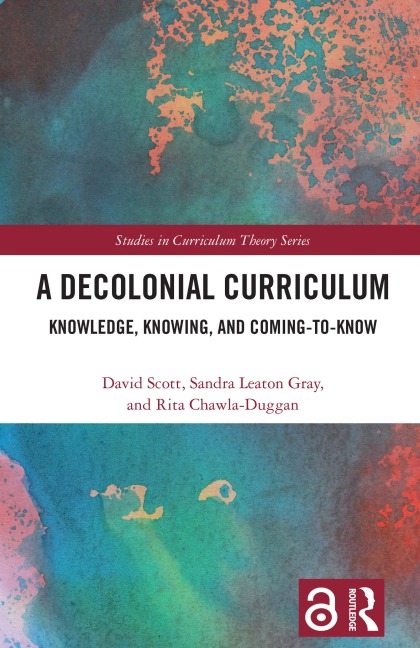
A Decolonial Curriculum advances the claim that a decolonial and transcolonial curriculum must be grounded in a substantive account of what human beings do, have done and might yet do. It proposes 12 fundamental domains of human life - knowing, communicating, genealogising, positioning, cognising, understanding, enhancing, philosophising, acting in the world, valuing, embodying and creating - as generative elements for curriculum design. Taken together, these domains offer a non-reductive framework that resists the false dichotomy between 'colonial' epistemologies and 'indigenous' ways of knowing and being. Rather than opposing knowledge traditions, the book argues for a pedagogy that is dialogical, embodied and reflexive, while recognising the limits of decolonial critique alone. It therefore advances a transcolonial pedagogy oriented towards hybrid, relational and productive epistemic formations, capable of preparing learners for materially and historically interconnected futures. It is an essential read for academics, educators, policy-makers and anyone engaged in designing, developing and rethinking curriculum.
David Scott is Emeritus Professor of Curriculum, Pedagogy and Assessment at University College London, UK. Sandra Leaton Gray is Professor of Education Futures at University College London, UK. Rita Chawla-Duggan is Associate Professor of Education at University of Bath, UK.
Foreword Preface Chapter 1:Curriculum, Knowledge, Learning and Ethics Chapter 2:A Decolonial Pedagogy Chapter 3:Knowledge and Coming-to-Know Chapter 4:Modalities of Communication Chapter 5:Temporalities and Histories Chapter 6:Spatialities and Positionings Chapter 7:Scientific Knowledge and Pedagogy Chapter 8:Hermeneutics and Interpretation Chapter 9:Technologies and Enhancements Chapter 10:Philosophising and a No-Thought Pedagogy - Krishnamurti and Aurobindo Chapter 11:Ethics and Learning Chapter 12:Valorisations and Valuings Chapter 13:Embodied Knowledge and Pedagogy Chapter 14:Performance and Creativity Chapter 15:A Decolonial and Transcolonial Curriculum Chapter 16:Institutionality, Textuality, Reflexivity and Authorship References Index