
Stöbern
genialokal zum Startbildschirm hinzufügen
Installieren Sie die genialokal App auf Ihrem Startbildschirm für einen schnellen Zugriff und eine komfortable Nutzung.
Installieren Sie die genialokal App auf Ihrem Startbildschirm für einen schnellen Zugriff und eine komfortable Nutzung.
Tippen Sie einfach auf Teilen:
 Und dann auf "Zum Home-Bildschirm [+]".

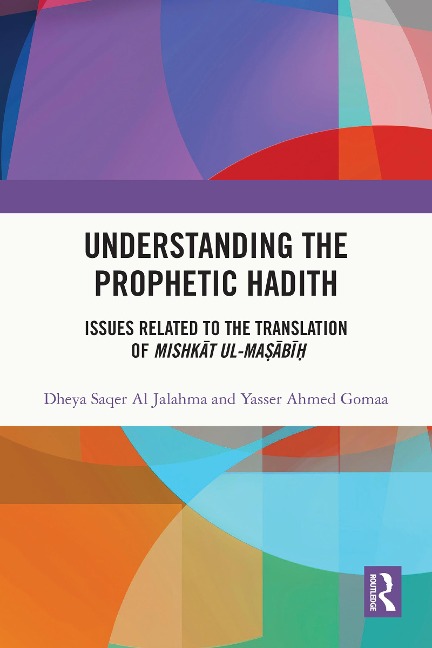
This book examines two English translations of Mishkat ul-Mäabi- by Al-Tabrizi and reflects on some of the key issues relating to Hadith translation. The highly instructional nature of the Prophetic Hadith means that the comprehensibility of any translation is of great importance to a non-Arabic-speaking Muslim, and there is a need to analyze available translations to determine whether these texts can function properly in the target culture. The volume considers the relevance of skopos theory, the concept of loyalty, and the strategies of the translators in question. There are also chapters that focus on the translation of Islamic legal terms and metaphors related to women, formulaic expressions, and reported nonverbal behavior in Fazlul Karim's (1938) and Robson's (1960) versions of the text.
Dheya Saqer Al Jalahma -is an Assistant Professor of Translation Studies, Department of English Language and Literature, College of Arts, University of Bahrain, Kingdom of Bahrain. Yasser Ahmed Gomaa is an Associate Professor of Linguistics, Department of English Language and Literature, Faculty of Arts, Assiut University, Egypt.
Introduction 1 Understanding The Hadith: Issues Related to The Hadith and its Translation 2 The Relevance of Skopos Theory to the Translation of The Hadith 3 Translation Mishkat ul-Mäabi- into English: Theoretical and Methodological Issues 4 The Translation of 'Islamic-Legal Terms' and 'Metaphors' Related to Women in Karim's and Robson's Versions of Mishkat ul-Mäabi- 5 The Translation of Formulaic Expressions in Karim's and Robson's Versions of Mishkat ul-Mäabi- 6 The Translation of Reported Non-Verbal Behaviour in Karim's and Robson's Versions of Mishkat ul-Mäabi- Conclusion