
Stöbern
genialokal zum Startbildschirm hinzufügen
Installieren Sie die genialokal App auf Ihrem Startbildschirm für einen schnellen Zugriff und eine komfortable Nutzung.
Installieren Sie die genialokal App auf Ihrem Startbildschirm für einen schnellen Zugriff und eine komfortable Nutzung.
Tippen Sie einfach auf Teilen:
 Und dann auf "Zum Home-Bildschirm [+]".

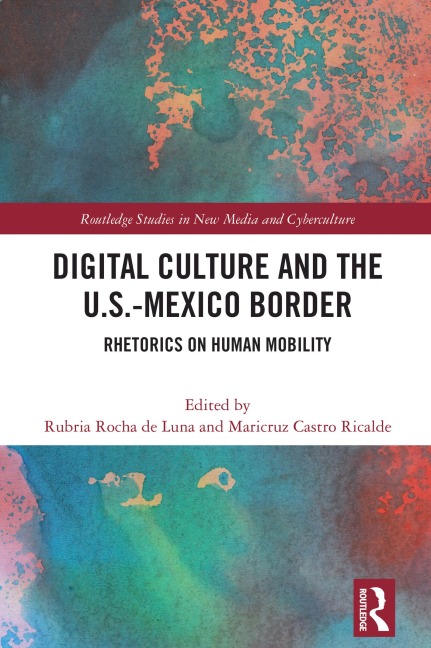
Conceptualizing how digital artifacts can function as a frontier mediated by technology in the geographical, physical, sensory, visual, discursive, and imaginary, this volume offers an interdisciplinary analysis of digital material circulating online in a way that creates a digital dimension of the Mexico-U.S. border. In the context of a world where digital media has helped to shape geopolitical borders and impacted human mobility in positive and negative ways, the book explores new modes of expression in which identification, memory, representation, persuasion, and meaning-making are created, experienced, and/or circulated through digital technologies. An interdisciplinary team of scholars looks at how quick communications bring closer transnational families and how online resources can be helpful for migrants, but also at how digital media can serve to control and reinforce borders via digital technology used to create a system of political control that reinforces stereotypes. The book deconstructs digital artifacts such as the digital press, social media, digital archives, web platforms, technological and artistic creations, visual arts, video games, and artificial intelligence to help us understand the anti-immigrant and dehumanizing discourse of control, as well as the ways migrants create vernacular narratives as digital activism to break the stereotypes that afflict them. This timely and insightful volume will interest scholars and students of digital media, communication studies, journalism, migration, and politics.
Rubria Rocha de Luna is Postdoctoral Researcher in the Digital Humanities Research Group, School of Humanities and Education at Tecnologico de Monterrey, México. Maricruz Castro Ricalde is Digital Humanities Co-leader in the School of Humanities and Education at Tecnologico de Monterrey, México.
Introduction Section 1: Memory, Identity, and Representation of Human Mobility through Social Media and Digital Archives 1. Digital Archives and Women's Identity: Transborder Rhetorical Practices in Late 19th and Early 20th Century Periodicals 2. The Migrant Woman in the Language of the Mexican Digital Press 3. Embracing the 'American Dream' Social Media Imaginary vs. the Daily American Nightmare for Immigrant Women 4. Crossing the Darien with TikTok: Self-representation and Digital Solidarities in Forced Migrants from Venezuela in Transit to the U.S. 5. Music, Migration, and Mexicanness in the Digital World Section 2: Art and Imaginaries: Border Experiences Mediated by Technology 6. The Rhetoric of Empathy: Digital Storytelling Co-creators Seeking to Humanize Migration and Deportation 7. Towards a Hyper-Aesthetics of Migration: Transnational Identities, Hyperborders, and Hypermediacy in the Visual Narratives of Evan Apodaca and Alex Rivera 8. Reimagining the U.S.-Mexico Borderlands through Contemporary Ecocritical Art 9. Rearticulating Ex-votos within Digital Spaces 10. Visual Imaginaries from Artificial Intelligence on the United States-Mexico Border. Section 3: Digital Constraints: Representations and Modes of Border Political Control 11. Sleep Dealer (Alex Rivera, 2008): Reconfiguration of Limits/Borders in a Cyborg/Cybernetic Culture 12. "Mi entrevista en Juárez": The Digital Rhetorics of YouTube Immigration Videos 13. Higher Education for Dreamers Returning to Mexico: Vagueness of Official Communications from a User Experience Perspective 14. Engaging Action: Procedural Rhetoric and Agentive Arguments in Border Crossing Videogames 15. Migration Policy in Mexico and Situated Knowledge: The Denial of Justice as a Form of Discrimination