Und dann auf "Zum Home-Bildschirm [+]".

Stöbern
genialokal zum Startbildschirm hinzufügen
Installieren Sie die genialokal App auf Ihrem Startbildschirm für einen schnellen Zugriff und eine komfortable Nutzung.
Installieren Sie die genialokal App auf Ihrem Startbildschirm für einen schnellen Zugriff und eine komfortable Nutzung.
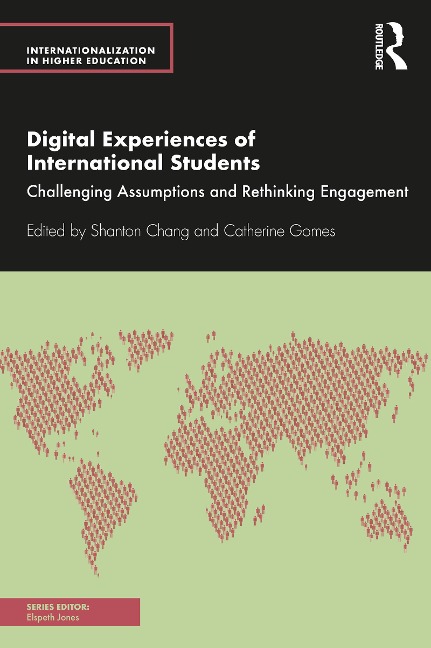
Exploring the impact of the digital environment on international students, carefully selected global contributors examine how digital experiences have been used to internationalize higher education. Using fascinating case studies and current research, this book considers the digital experiences of students as a result of their engagement with international education providers and stakeholders from a transnational and trans-disciplinary perspective. Looking specifically at the digital transitions and networks that international students experience during their time studying overseas, this book examines the ways in which the curriculum and higher education institutions' engagement strategies have been shaped by the digital environment. Split into three sections, this book: - looks at the broad experiences of international students, covering the digital transitions and networks that students experience during their time studying overseas - explores the ways in which the curriculum has been shaped by the digital environment - considers the ways in which higher education institutions and other service providers implement digital engagement strategies to communicate more effectively with international students. Digital Experiences of International Students is essential reading for practitioners, academics, researchers, administrators, policy-makers, and anyone with an interest in learning and teaching in a digital age.
Shanton Chang is an Associate Professor in Information Systems at the School of Computing and Information Systems and Associate Dean (International) at the Melbourne School of Engineering, The University of Melbourne, Australia. Catherine Gomes is an Associate Professor in the School of Media and Communication at RMIT University, Australia.
SECTION 1: THE INTERNATIONAL STUDENT EXPERIENCE 1. The Digital Information Ecology of International Students: Understanding the Complexity of Communication 2. Digital Environments and the Aspirations of International Students 3. Social Media and Social Adjustment: An International Student Perspective 4. Information Behaviours of Returned International Students: Case Study of Saudi Arabian Female Students SECTION 2: INTERNATIONAL STUDENTS AND THE DIGITALIZED CURRICULUM 5. Engaging Students Through Virtual Mobility: A Systematic Mapping Review 6. Cultural Learning Preferences, Blended Learning and the Internationalization of Curriculum 7. Utilizing LINE as a Tool for a U.S.-Japan Transnational Education Course SECTION 3: STRATEGIES HIGHER EDUCATION INSTITUTIONS USE IN THEIR DIGITAL ENGAGEMENTS WITH INTERNATIONAL STUDENTS 8. Connected Transitioning Communities for International Students via Social Media 9. Creating an Online Orientation Course: The Journey to Internationalizing the Campus
Dieses eBook wird im PDF-Format geliefert und ist mit einem Adobe Kopierschutz (DRM) versehen. Sie können dieses eBook mit allen Geräten lesen, die das PDF-Format und den Adobe Kopierschutz (DRM) unterstützen.
Zum Beispiel mit den folgenden Geräten:
• tolino Reader
Laden Sie das eBook direkt über den Reader-Shop auf dem tolino herunter oder übertragen Sie das eBook auf Ihren tolino mit einer kostenlosen Software wie beispielsweise Adobe Digital Editions.
• Sony Reader & andere eBook Reader
Laden Sie das eBook direkt über den Reader-Shop herunter oder übertragen Sie das eBook mit der kostenlosen Software Sony READER FOR PC/Mac oder Adobe Digital Editions auf ein Standard-Lesegeräte mit epub- und Adobe DRM-Unterstützung.
• Tablets & Smartphones
Möchten Sie dieses eBook auf Ihrem Smartphone oder Tablet lesen, finden Sie hier unsere kostenlose Lese-App für iPhone/iPad und Android Smartphone/Tablets.
• PC & Mac
Lesen Sie das eBook direkt nach dem Herunterladen mit einer kostenlosen Lesesoftware, beispielsweise Adobe Digital Editions, Sony READER FOR PC/Mac oder direkt über Ihre eBook-Bibliothek in Ihrem Konto unter „Meine eBooks“ - „online lesen“.
Schalten Sie das eBook mit Ihrer persönlichen Adobe ID auf bis zu sechs Geräten gleichzeitig frei.
Bitte beachten Sie, dass die Kindle-Geräte das Format nicht unterstützen und dieses eBook somit nicht auf Kindle-Geräten lesbar ist.